Sealing Alone or Sealing Plus Treatment?
Pick what fits what you're seeing. Either way, we start by finding the gaps they're using to get in.
Sealing Only
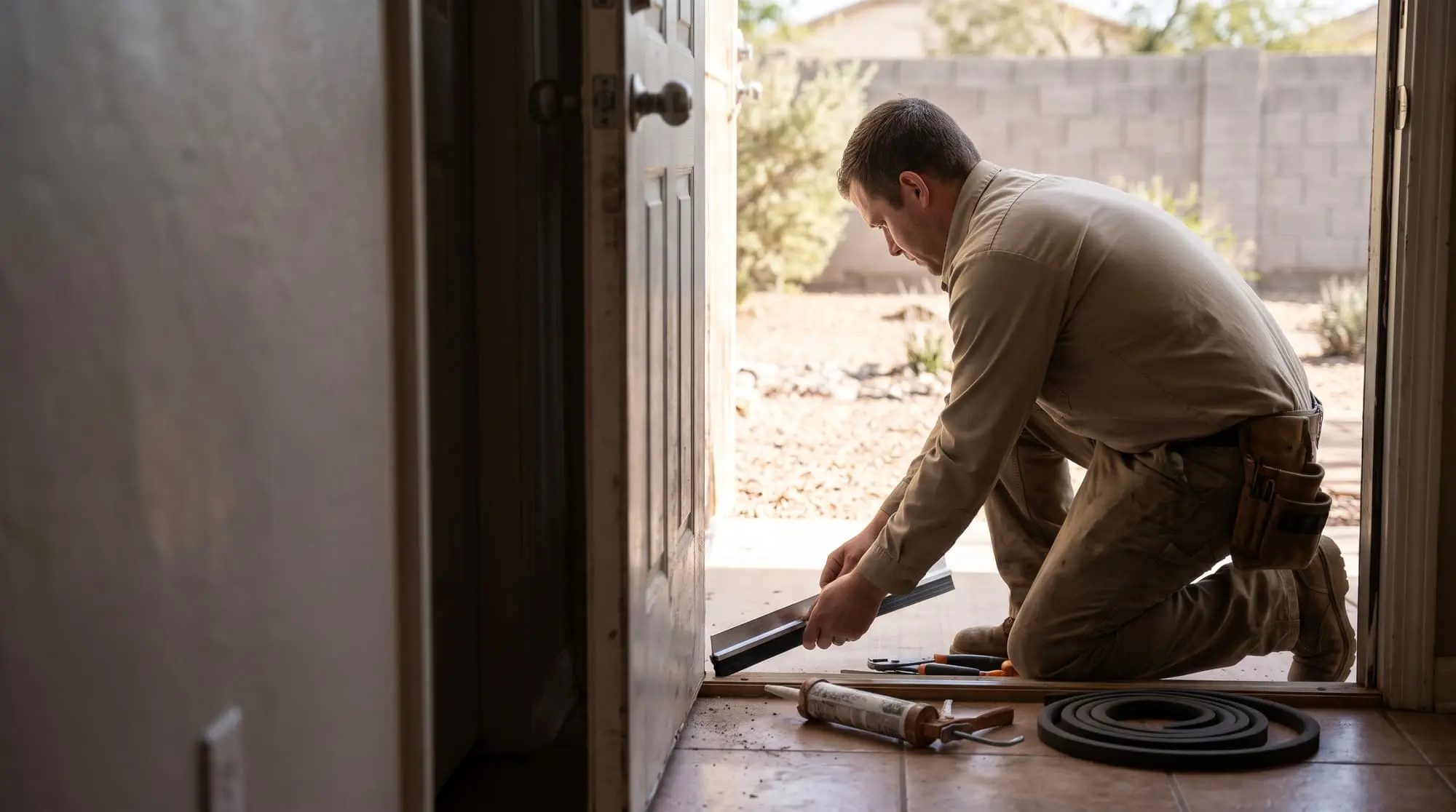
We close the gaps they walk through: door sweeps and weatherstripping, screened weep holes, and the gaps around pipes, vents and screens.
Ask About SealingSealing Plus Treatment
Seal the house and treat the ones already living in the walls and yard. University of Arizona's approach uses both, and so do we.
Ask About BothHelp Me Decide
Not sure what your house needs? Tell us where you're finding them, and we'll tell you what we'd seal first and why.
Help Me Decide
Signs Your Home Needs Scorpion Sealing
Stand inside with the lights off and look at your exterior doors. University of Arizona's test is simple: if you can see daylight around a door, a scorpion can get in.
You'll also want us out if:
- You keep finding them by the same door or window
- The garage door doesn't sit tight to the floor
- There are gaps around the pipes under your sinks
- Screens are torn
- Branches touch the roof
If you've had the house treated and they still walk in, sealing is usually the missing piece.
Request a Call BackWhat We Seal to Keep Scorpions Out
Here's what we seal to keep scorpions out of your house, from the doors at floor level to the branches touching the roof.
Door sweeps and weatherstripping
Tight sweeps and weatherstripping on every exterior door, the one from the garage included. UA's rule: no light showing around the door.
Weep holes, screened instead of plugged
Weep holes let the stucco wall breathe, so we cover them with coarse steel mesh. UA says not to plug them.
Pipes, wires and wall openings
Caulk or steel wool around pipes, conduit and anything else that goes through a wall.
Window screens and vents
Tight, intact screens on windows and vents, attic vents too.
Branches that bridge to the roof
Branches that touch or hang over the roof get trimmed back, so scorpions lose their way up.
What Scorpion Sealing Can and Can't Do
University of Arizona calls pest-proofing the home by far the most effective way to cut down scorpion run-ins and stings. That's sealing.
It won't make a house perfect. A gap a credit card could slip under is enough for a scorpion, and houses settle and shift. So sealing works best with a treatment for the ones already inside and a quick check now and then.
Scorpion Sealing for Paradise Valley Homes and Walls
Hollow block walls are a favorite hiding place, and UA suggests stuccoing and capping them so they're less inviting. Paradise Valley lots tend to have a lot of wall.
On a hillside lot, check with the Town before anyone changes a wall or fence. Hillside walls and fences need Town approval, and it's easier to ask first.
Scorpion Sealing Questions
Sealing raises a few fair questions, like whether you still need treatment, how much you can do yourself, and what to do about the weep holes in the stucco.
Does sealing replace scorpion treatment?
No. Sealing keeps more of them outside; treatment deals with the ones already living in the walls and yard. UA's approach uses both, and so do we.
Can I seal my house myself?
A lot of it, yes: door sweeps, weatherstripping and caulk are weekend jobs. Call us for the spots that are hard to find or reach, and for the weep holes, which should be screened, not sealed shut.
Should the weep holes in my stucco be sealed?
No. University of Arizona says to cover them with coarse steel mesh instead, because they let the wall vent and drain.
Will sealing stop every scorpion?
No one can promise that. It cuts down the number that get in, which is why UA ranks it first and why we start there.
Other Ways We Handle Scorpions
Already finding them inside? Pair sealing with a treatment for the ones living in the walls. Want to know which doors and walls they favor first? We can map them after dark. Then a plan with check-ins catches new gaps as the house settles.
Questions? Request a call back and we'll walk you through it.
Ready for Scorpion Sealing in Paradise Valley?
Request a call back and we'll set up a time to come out. Tell us where you're finding them and how often.