What Kind of Blacklight Inspection Do You Need?
Pick what fits. Either way, we come after dark, when bark scorpions are out and glowing under the UV light.
A Night Inspection
One check after dark to see where they're living, roughly how many there are, and the walls and gaps they're using.
Ask About an InspectionBefore You Buy a Home
Closing on a house in the Town? We check the walls, the yard and the doors after dark, so you know what you're buying into.
Ask About a Check Before ClosingHelp Me Decide
Not sure an inspection is what you need? Tell us what you're seeing, and we'll tell you what we'd do and why.
Help Me Decide
When to Book a Blacklight Scorpion Inspection
During the day you'd never know they're there. A night check with UV light answers the questions that keep you up: how many are out there, and where they're coming from.
It makes the most sense:
- When you've just moved in
- When you're finding them inside but can't tell how they get in
- When you're deciding whether sealing is worth it
- After a treatment, to see if it's working
- Before you close on a house
How Our Night Scorpion Inspection Works
Here's how a blacklight scorpion inspection goes, from picking the right hour to walking you through what we found.
We come after dark, at the right hour
University of Arizona tracked bark scorpions moving most between 7 and 11 pm, and again from 3 am to sunrise. Summer checks between 8 and 11 pm catch them out.
We check the places they live
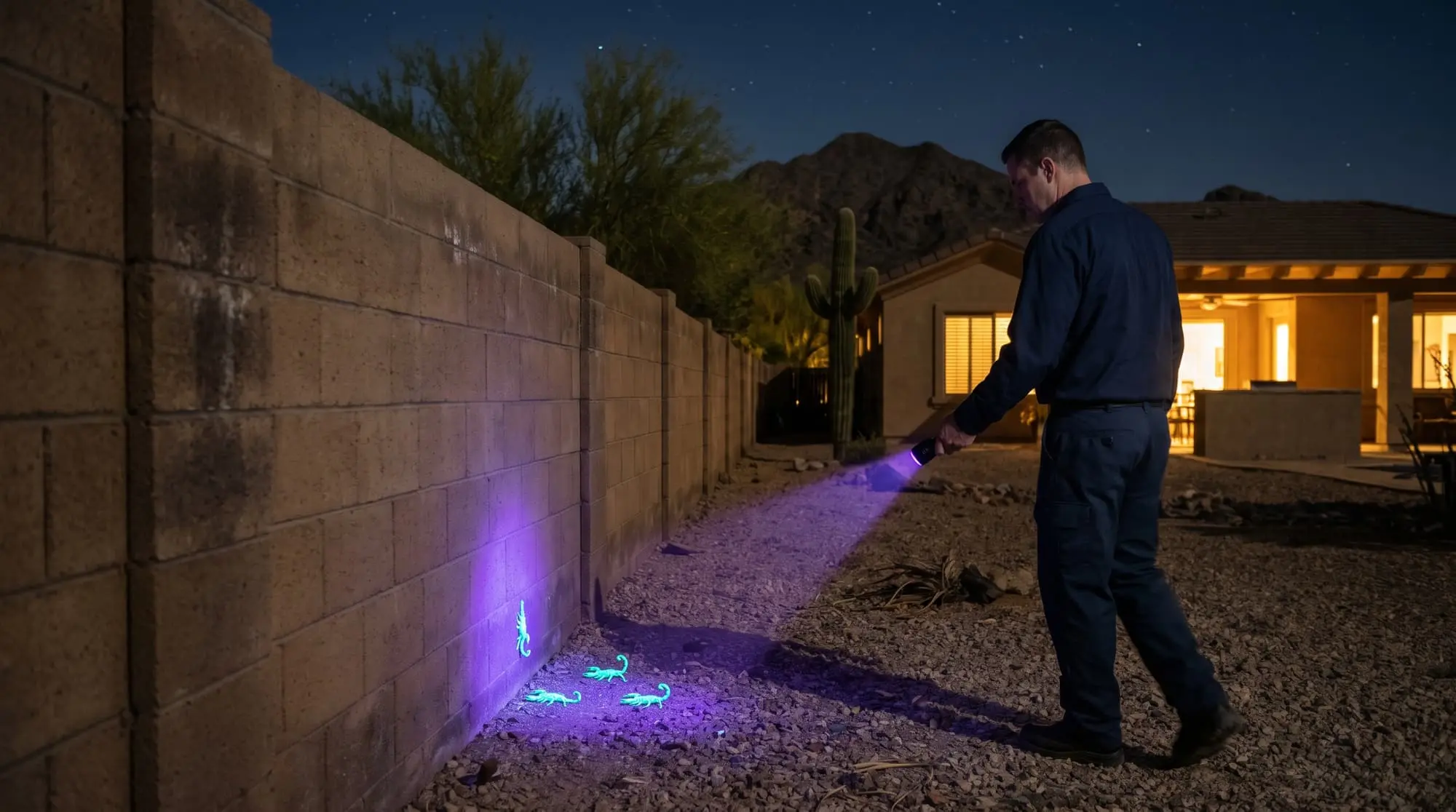
Block walls, the base of the house, rock and wood piles, the garage, patios and pool decks.
They light up under the UV
Scorpions glow bright green under UV light because of a substance in their outer shell, so we can spot them from several yards away.
We walk you through what we found
Where they're clustered, how many, and the walls and gaps they're using, so you can decide on sealing, treatment or both.
What a Blacklight Scorpion Check Can and Can't Show
A UV light only shows the scorpions that are out. The ones tucked inside a wall or under a rock stay hidden, so a quiet night doesn't always mean a clear yard.
Repeat checks help. UA says repeated blacklight collections over a summer can cut a local population and often do better than spraying alone. One safety note from UA: never look straight into a UV light.
Source: University of Arizona on scorpion habits and blacklighting
Blacklight Scorpion Checks on Paradise Valley Lots
The Town's General Plan protects dark skies, and big lots mean fewer neighbors' lights spilling into the yard. That makes for a good night to look.
On a one-acre lot with a long block wall, a wash or a hillside behind the house, we start where the yard meets the desert and work in toward the doors.
Blacklight Scorpion Inspection Questions
If you've never had a scorpion inspection after dark, here's what to know before we show up with the UV light: when it happens, what it can find and what comes next.
Can I blacklight my own yard?
Yes, and plenty of people here do. Use a UV flashlight, wear closed shoes, use long tongs if you collect any, and never shine the light in anyone's eyes. When we do it, we're also looking for where they're getting in.
What time does a scorpion inspection happen?
After dark. University of Arizona suggests 8 to 11 pm in summer for UV collections.
Will the inspection find scorpions inside my walls?
Only the ones that come out. The light shows what's exposed, which is why the gaps and walls they're using matter as much as the count.
What if you find a lot of scorpions?
Then you know where to start: sealing the gaps nearest the clusters, treatment where they're living, and follow-up checks.
Other Ways We Handle Scorpions
Once you know where they are, treating the spots they're living in is the next step, along with door sweeps, screens and pipe gaps. For homes that light up every summer, monthly or every-other-month visits keep it from building back up.
Questions? Request a call back and we'll walk you through it.
Ready for Blacklight Scorpion Inspection in Paradise Valley?
Request a call back and we'll set up a time to come out. Tell us where you're finding them and how often.