Is a Cat in Danger From a Scorpion Sting?
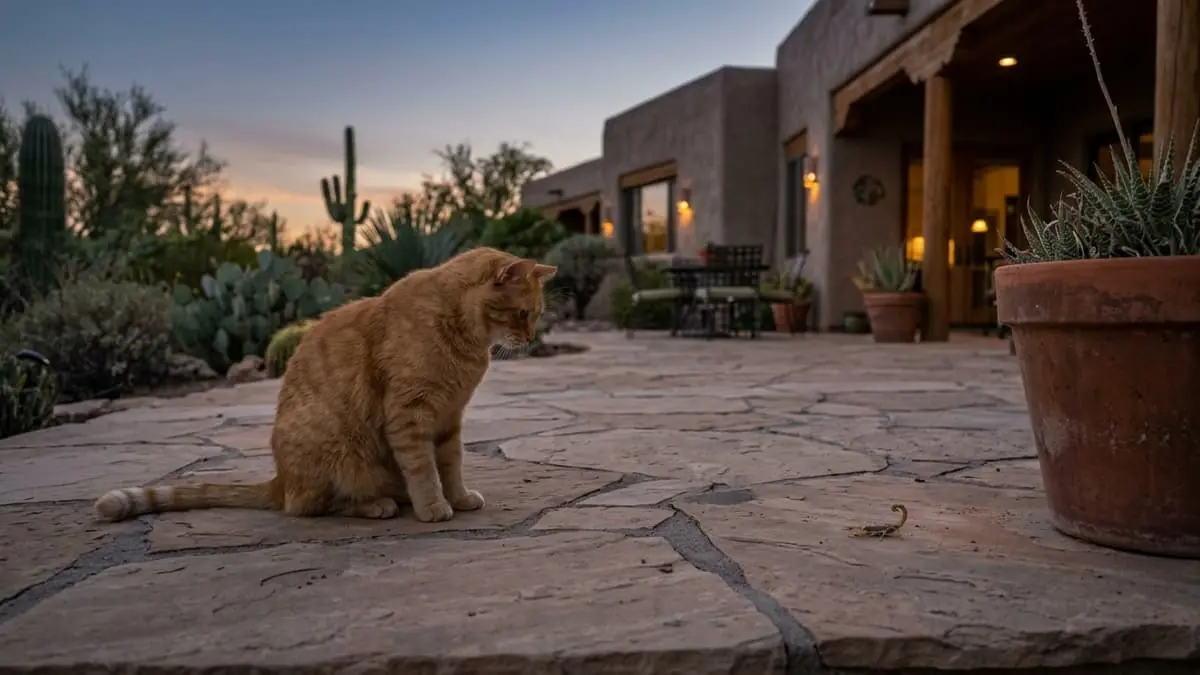
Yes. UA's warning that cats can take several stings says plainly that cats aren't immune to bark scorpion venom.
In the Arizona poison center's pet study, five of the seven stung cats developed serious signs. In the same pet study, serious effects showed up in 39% of small dogs and 13% of large dogs.
The poison center says seven cats is too few for firm conclusions. The Merck Veterinary Manual's page on scorpion stings doesn't cover cats specifically, so this post leans mostly on the poison center's study for cats.
Why Cats Get Stung More Than Once
Cats get stung more than once because they keep playing with the scorpion instead of backing off. UA says a cat may play with a scorpion and take several stings before the venom affects it.
Bark scorpions ("barks") are small, they move, and they climb. UA says the bark is the only Arizona scorpion with a strong habit of climbing, and it often sits on a wall or hangs upside down.
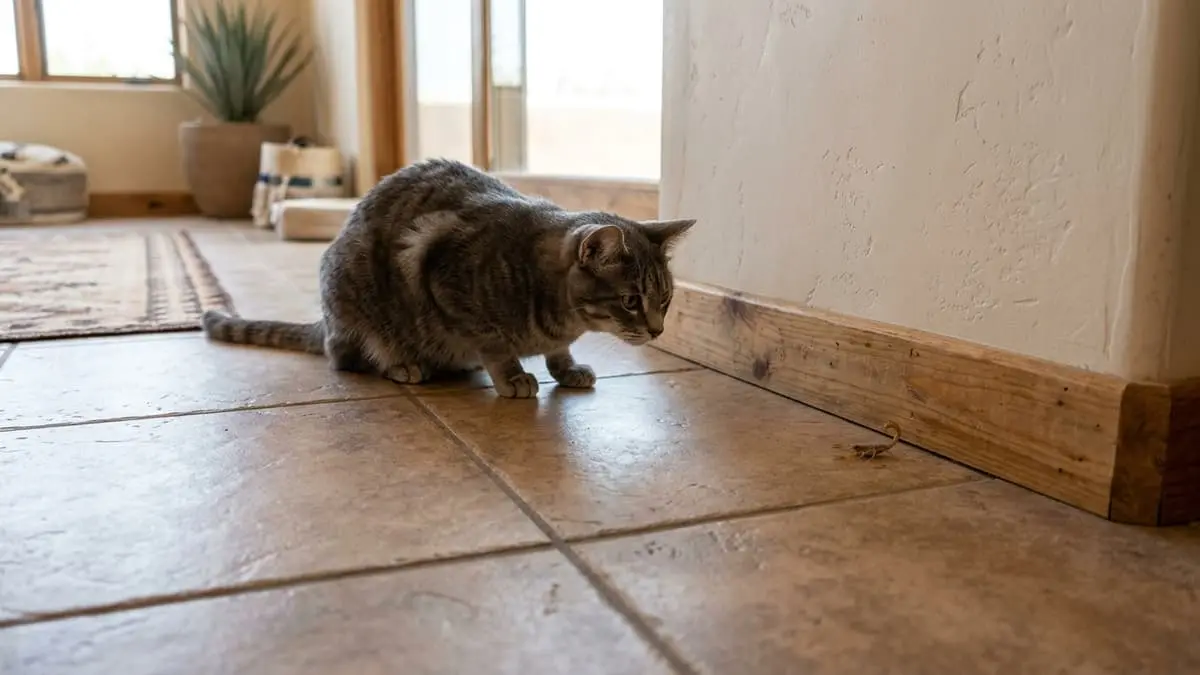
So a cat bats at it and paws it across the tile. In the poison center's study, a stung dog usually yelped and jumped back, while UA's description of cats is that they keep playing.
Cat Stung by a Scorpion: What the Poison Center Found
All seven stung cats in the Arizona poison center's pet study had effects at the sting site, and five of them (71%) developed serious signs. The serious signs were tremors, agitation, roving eyes and changes in breathing.
The Arizona Poison and Drug Information Center followed seven cat owners and 65 dog owners whose pets were stung by scorpions. You can read the poison center's notes on its seven stung cats yourself.
The poison center told cat owners to watch closely for at least 4 hours after a sting.
Signs to Watch For in a Stung Cat
Here's what I'd watch for, based on the four serious signs the Arizona poison center saw in stung cats:
- Tremors or shaking
- Agitation
- Roving eyes, meaning eyes that move around on their own
- Changes in breathing
You may not see the sting happen. Your cat might have been up at 3 a.m. chasing something along the baseboard and just seem off in the morning.
If you see any of those four signs, treat it as a sting until your vet says otherwise.
What to Do if Your Cat Is Stung
Call your vet or an emergency animal hospital. Call right away if you see tremors, agitation, roving eyes or a change in breathing.
If it were my cat, I'd keep it inside in one room where I could watch it while I called. Tell the vet what you saw and when.
If a person in the house was stung too, call Poison Control at 1-800-222-1222, or 911 for a severe reaction. Save your vet and the nearest emergency animal hospital in your phone now, so you're not searching at night.
How Indoor Cats End Up Finding Scorpions
Barks come inside, so indoor cats find them too. UA says bark scorpions get in under poorly fitted doors, through window vents and through weep holes.
Once barks are inside the walls, UA says, they can come out around electrical plates and pipe collars. That puts them on the same floors your cat walks.
Damp Rooms Where Cats and Barks Meet
Bathrooms and laundry rooms are common places to meet a bark, according to Banner Health's poison center. UA adds that damp towels on the floor strongly attract scorpions looking for moisture.
If the litter box or the cat's bed is in the laundry room, I'd check that corner with a blacklight.
Barks on the Walls and Ceiling
If your cat is staring at the wall or the ceiling, look where it's looking. UA says barks climb textured walls and cross ceilings, and there's more on how a bark ends up on the ceiling.
How to Lower the Odds for Your Cat
Check the house with a blacklight before bed, keep towels off the floor, and seal the gaps under doors. UA suggests a UV light check inside the home before bed, since scorpions glow under blacklight.
Run the light over the floors, the baseboards and the cat's favorite corners. Don't look into the UV light yourself, because UA warns it can damage your eyes.
Pull the cat's bed away from the wall and shake it out now and then. UA says tight door sweeps and weather-stripping help keep barks from getting in.
For dogs, water bowls and the pet door, read the main post on scorpions and pets in Paradise Valley.
If you're hoping the cat will handle the scorpions for you, read whether a cat actually keeps barks in check. If you're planning a treatment, read what to ask before anyone treats around your cat first.
Questions About Cats and Scorpion Stings
Cats aren't immune to bark scorpion venom, and a cat that keeps catching scorpions indoors means barks are getting in. You'll also see how long to keep watch and how cats compare with dogs.
Are cats immune to scorpion stings?
No. UA says cats aren't immune to bark scorpion venom, though they may play with a scorpion and take several stings before it affects them.
How long should I watch my cat after a sting?
At least 4 hours, according to the Arizona poison center's advice to cat owners in its pet study. Call your vet or an emergency animal hospital as well.
Are stings worse for cats than for dogs?
They were in the Arizona poison center's pet study: serious signs showed up in 5 of 7 cats, compared with 39% of small dogs and 13% of large dogs. The cat group was small, so the poison center didn't draw firm conclusions.
My cat catches scorpions all the time. Should I worry?
Yes. UA says cats may take several stings while they play, and a cat finding barks indoors means barks are getting into your house.
Getting Help With Scorpions in a Cat Household
Call us if your cat keeps finding barks in the house, and we'll come out. UA advises calling a pest management professional who knows scorpions if you regularly find them inside your home.
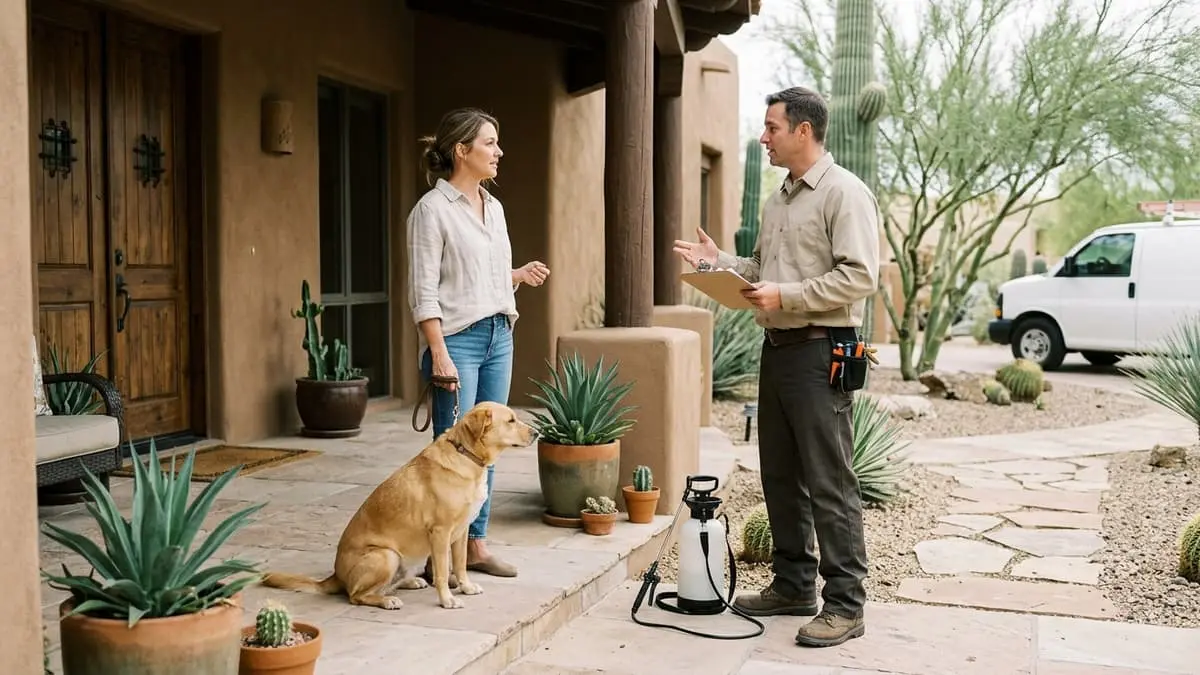
Call to set up a scorpion treatment for the whole house. We treat where barks hide, inside and out, then check back. If you've been wondering who to call about scorpions in Paradise Valley, that's us.
When you call, tell us where your cat eats, where it sleeps and where the litter box is. We'll plan the visit around it.