Why Dogs and Cats Run Into Bark Scorpions
Dogs and cats run into bark scorpions because they sniff, dig and play where barks hide, at the hours barks come out. "Barks" is the local name for bark scorpions, the small tan scorpions that climb walls.
Where Barks Hide in the Yard
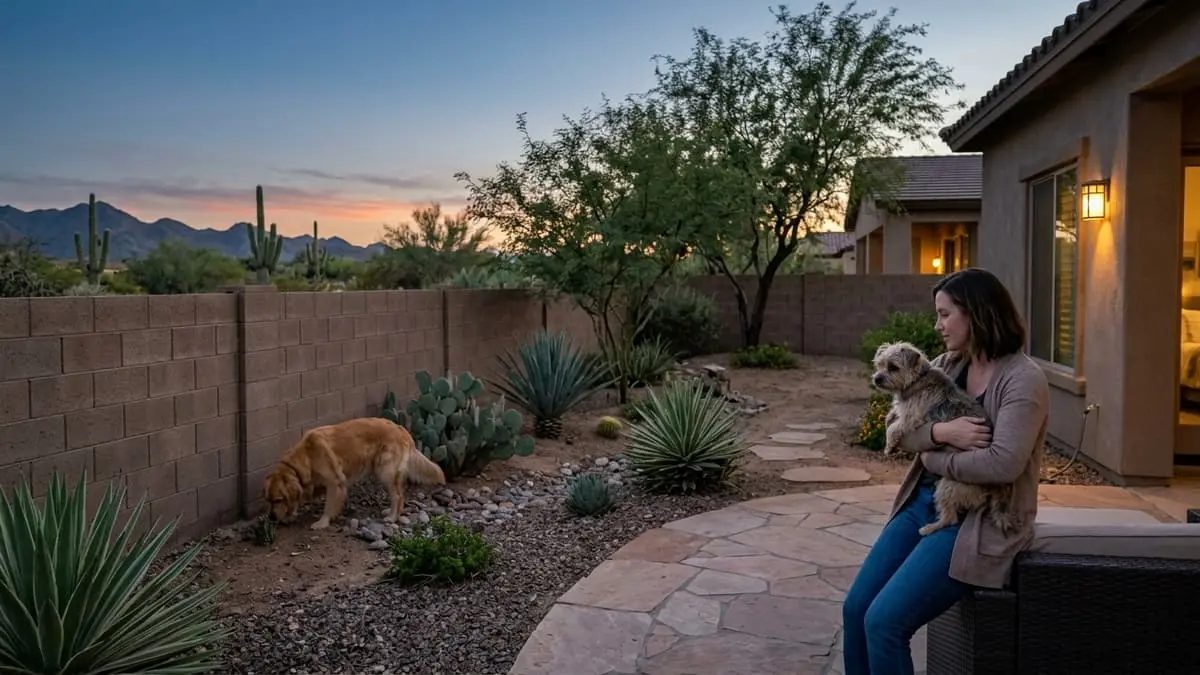
Barks hide in the places a dog sniffs first. The University of Arizona's Cooperative Extension (UA) says bark scorpions spend the day in cracks and crevices, under rocks, logs and tree bark, and inside walls.
UA's scorpion guide also cites research in which 95% of bark scorpions chose hollow block walls over every other shelter around homes and yards. For the full list, read about every spot barks tuck into around a Paradise Valley house.
When Barks Come Out at Night
Barks move most between 7 and 11 at night and from 3 a.m. to sunrise, according to UA's tracking studies. Those are the hours of your dog's last trip out before bed and first trip out in the morning.
UA says nights above 70°F are ideal for bark scorpions. In the low desert they're active most of the year and slow down from November through March.
Why Cats Go After Barks on the Wall
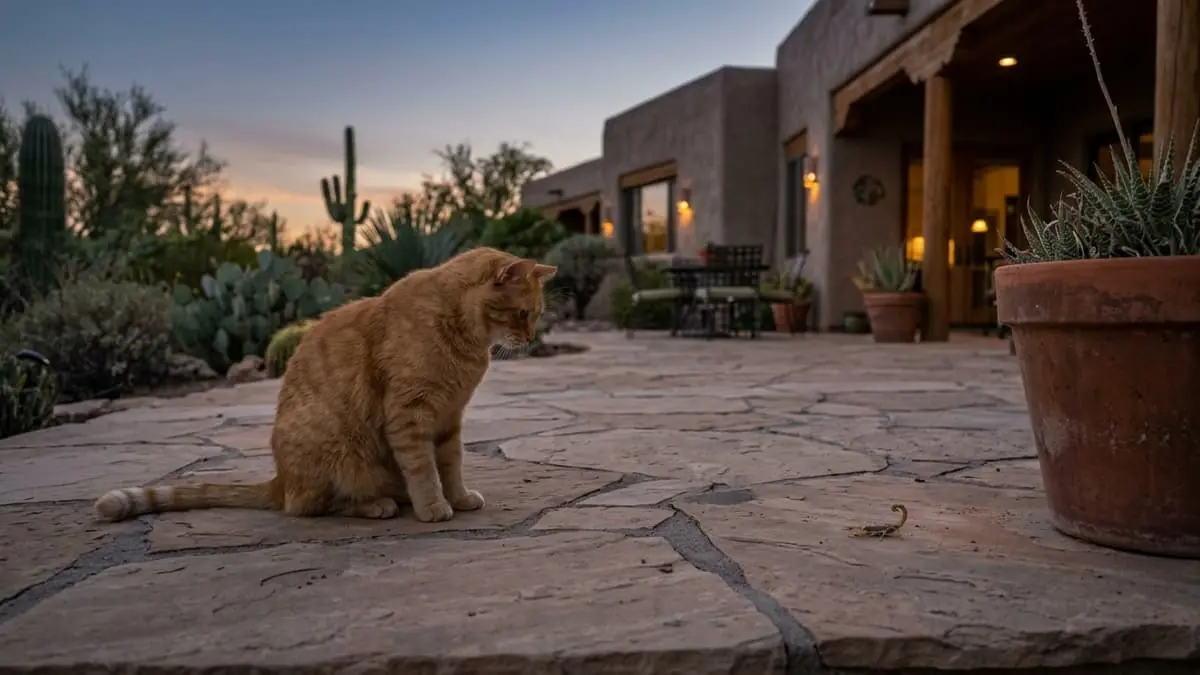
Cats go after barks because barks climb, and a scorpion moving across a wall looks like a toy. UA says the bark is the only Arizona scorpion with a strong habit of climbing, and it often sits on a wall or hangs upside down.
UA's scorpion guide says cats aren't immune to bark scorpion venom. It says a cat may play with a scorpion and take several stings before the venom affects it.
Why Big Paradise Valley Yards Can Hold More Barks
Big, watered yards can hold more barks than open desert. The Town's resident guide says most of Paradise Valley is zoned for lots of at least one acre, so your dog has a lot of ground to cover.
UA says homes with irrigated landscapes can support much higher scorpion numbers than open desert. So a green yard off Tatum Boulevard or up on Mummy Mountain can hold more barks than the bare desert past your back wall.
Scorpions and Pets: How Small Dogs, Big Dogs and Cats Compare
Big dogs handle bark scorpion stings best, small dogs have serious signs more often, and cats have the hardest time. That's what the Arizona Poison and Drug Information Center found when it followed pets stung by scorpions, with 65 dog owners and 7 cat owners taking part.
The Arizona poison center's write-up of its pet sting study is short. If you own a dog or a cat, I'd read it.
How the Stung Dogs Did
Most stung dogs in the poison center's study did relatively well. Larger dogs handled stings better and recovered faster than small ones.
Serious effects (tremors, restlessness or changes in breathing) showed up in 39% of the small dogs and 13% of the large dogs. The effects lasted about 8 hours on average.
Within 4 hours, 71% of the large dogs and 61% of the small dogs were much better.
How the Stung Cats Did
Five of the seven stung cats in the poison center's study developed serious signs:
- Tremors
- Agitation
- Roving eyes
- Breathing changes
All seven had effects at the sting site.
The poison center says seven cats is too few for firm conclusions. It still told cat owners to watch their cats closely for at least 4 hours after a sting.
What the Merck Veterinary Manual Says
The Merck Veterinary Manual says scorpions in the U.S. are unlikely to cause a full venom reaction in pets, though the stings can be very painful. For dogs, it describes mostly local pain, swelling, redness and itching, and it calls whole-body signs uncommon.
So the poison center's study and the Merck manual don't line up perfectly. Here's how I read them together: most stings hurt and pass, some don't, and small dogs and cats need the closest watch.
Whatever size your pet is, call your vet or an emergency animal hospital after a sting.
Signs a Dog or Cat Has Been Stung
A stung dog usually:
- Yelps
- Jumps back
- Limps
- Shakes or rubs its head
- Paws at and licks the spot
Those were the most common signs in the Arizona poison center's pet study.
Signs in a Stung Dog
A dog usually lets you know right away. Dogs explore with their nose and front paws, so those are the first places I'd check.
For what to watch after that, read about the first hours after a dog gets stung.
Signs in a Stung Cat
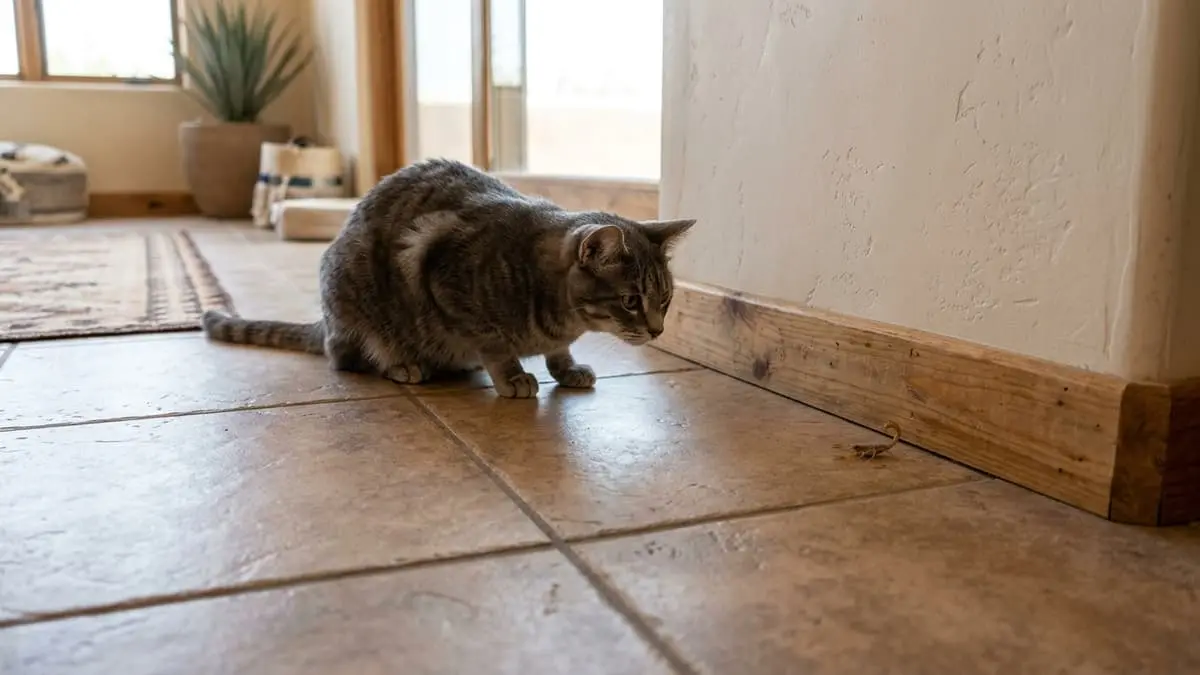
A stung cat may show you less. You might only notice that your cat seems twitchy or agitated, or is breathing differently, after a night of batting at something by the baseboard.
Tremors, agitation, roving eyes and breathing changes are the serious signs the Arizona poison center saw in stung cats, so don't wait them out. If you have a cat, read why a cat that plays with barks is at real risk.
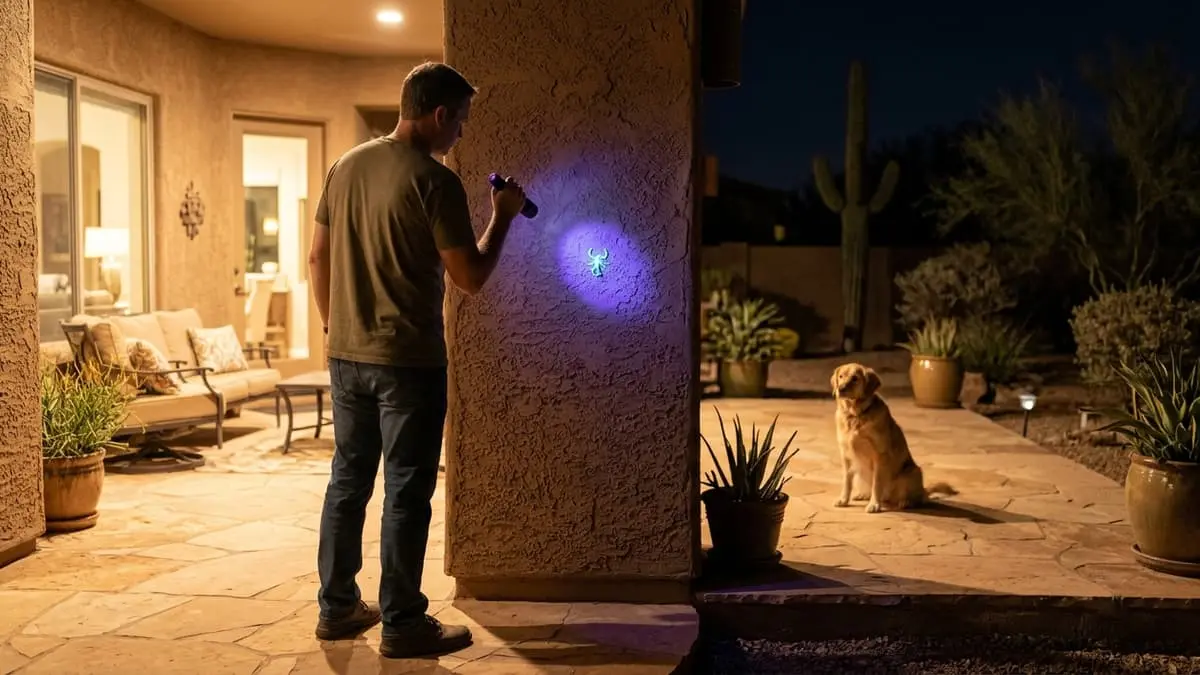
How to Check the Yard Before the Dog's Last Trip Out
Turn on the patio light and run a blacklight over the yard before your dog goes out at night. If it were my dog, I'd do it every warm night, since UA's tracking studies show barks move most after dark.
Use a Blacklight on the Path and the Walls
Scorpions glow under ultraviolet light, and UA says you can spot them from several yards away. Run the light along:
- The path to the grass
- The base of the wall
- The edge of the patio
- Under the patio furniture
Don't look straight into the UV light. UA warns it can damage your eyes.
Keep the Dog Away From Rock Piles and Woodpiles
Keep your dog on open ground at night, away from rock piles, stacked firewood and clutter along the wall. UA names rocks, logs and debris as daytime hiding spots for barks.
UA advises keeping wood, rocks and debris from piling up against the house, and stacking firewood 6 inches off the ground.
Bring Wet Towels and Dog Beds Inside at Night
Bring your dog's towel, toys and outdoor bed inside at night. UA says damp towels on the floor strongly attract scorpions looking for moisture, and wet towels left by the pool overnight do the same.
That includes the towel you dry the dog with after a swim.
How to Set Up Water Bowls, Pet Beds and the Pet Door
Keep water bowls from making puddles, keep pet beds off the wall, and close the gaps around the pet door.
Keep Outdoor Water Bowls From Making Puddles
Set outdoor water bowls on a dry, hard spot and fix any drip nearby. UA says bark scorpions eat crickets, roaches and other insects, and drink water from small puddles.
A bowl that tips or overflows on the patio makes a puddle. So does a hose bib that drips into the gravel.
Keep Pet Beds Off the Wall and Shake Them Out
Pull pet beds away from the wall and shake them out before your pet lies down. Banner Health's poison center tells people to move their own beds away from walls and check bedding before use, and I'd treat a dog bed the same way.
Banner and UA both suggest setting crib legs in glass jars, because scorpions can't climb clean glass. A dog bed can't do that, but you can keep it out of dark corners.
Check the Laundry Room if the Cat Sleeps There
If your cat's bed or litter box sits next to the washer, check that corner with your blacklight now and then. Banner says scorpion encounters are common in damp rooms like bathrooms and laundry rooms.
Close the Gaps Around the Pet Door
Make sure no light shows around the pet door's flap and frame when you look from inside. That's UA's test for any outside door, and UA says scorpions get in under and around poorly fitted doors.
Dawn Gouge, one of the authors of UA's scorpion guide, said in a radio interview that a gap a penny can slip under is wide enough. If you have the house sealed, ask for the pet door to be checked too.
Does a Cat That Hunts Scorpions Help?
Not much, and it puts the cat at risk. UA says a cat can take several stings while it plays with a scorpion, and 5 of the 7 stung cats in the Arizona poison center's study developed serious signs.
A cat also can't reach most of them. UA says bark scorpions often live together and can gather in large numbers inside hollow block walls.
I wouldn't count on a cat for scorpion control. There's a separate post on whether a cat can really keep scorpion numbers down.
How to Treat a Home With Pets for Scorpions
Start with sealing. UA says pest-proofing the home is by far the most effective way to cut scorpion contact and stings, and that bark scorpions are hard to manage with pesticides alone.
Most of that work is physical:
- Tight door sweeps
- Weather-stripping
- Steel mesh over weep holes
- Caulk around pipes and other wall openings
UA also says catching scorpions with a blacklight night after night works better than spraying again and again.
If treatment is part of the plan, ask us what we're using, where it goes and when your dog can go back out. The full list is in what to ask before anyone treats a house with pets.
UA says scorpions are extremely difficult to get rid of completely. The realistic goal is fewer barks near your pets.
What to Do if Your Pet Gets Stung
Call your vet or an emergency animal hospital. Do that for a big dog, a small dog or a cat.
If a person in the house is stung, call Poison Control at 1-800-222-1222, or 911 for a severe reaction.
Save your vet's number and the nearest emergency animal hospital in your phone now. UA's tracking studies show barks move most after dark, so a sting can easily happen at night.
When you call, say what you saw and when it happened, and describe the scorpion if you saw it.
Questions Pet Owners Ask About Scorpions
Pet owners want to know whether dogs and cats are immune to stings, whether a dog's size changes things, and whether every scorpion can be kept out of the yard.
Are dogs immune to scorpion stings?
No. In the Arizona poison center's pet study, most dogs did relatively well, but serious effects such as tremors and breathing changes showed up in 39% of small dogs and 13% of large dogs.
Are cats immune to bark scorpion venom?
No. UA's scorpion guide says cats aren't immune, though they may play with a scorpion and take several stings before the venom affects them.
Does a big dog handle a sting better than a small one?
Yes, in the Arizona poison center's pet study. Large dogs handled stings better and recovered faster than small dogs.
Can I keep every scorpion out of the yard?
No. UA says bark scorpions are extremely difficult to get rid of completely, but sealing the house, clearing hiding spots and regular blacklight checks can bring the numbers down.
Getting Help With Scorpions Around Your Pets
Call us if barks keep turning up where your pets eat and sleep. UA advises calling a pest management professional who knows scorpions if you regularly find them inside your home.
On a scorpion prevention plan with set visits, we come back monthly, every other month or quarterly, and re-treat between visits. It's how we handle scorpion control around Paradise Valley homes with pets all year.
When you call, tell us about every animal in your house and yard, and we'll plan the visit around them.