Do Scorpions Live in Block Walls?
Yes, and hollow block walls are the shelter they pick most often. When researchers gave bark scorpions a choice of hiding spots around buildings and landscapes, 95% preferred hollow block walls, according to the University of Arizona (UA).
UA says bark scorpions are often found around homes and hollow-block perimeter walls. They can gather in large numbers inside the block walls around homes, schools and child care sites.
Why Bark Scorpions Choose Hollow Block Walls
Bark scorpions choose hollow block walls because the blocks protect them from extreme heat and cold and the hollow cores can hold water. That's from a UA newsletter on scorpions packing into block walls.
UA also says bark scorpions aren't territorial and often live together, sometimes in dense groups where food is plentiful. A block wall next to a planting bed full of crickets and roaches gives them shelter, water and food in one place.
How Scorpions Get Inside a Block Wall
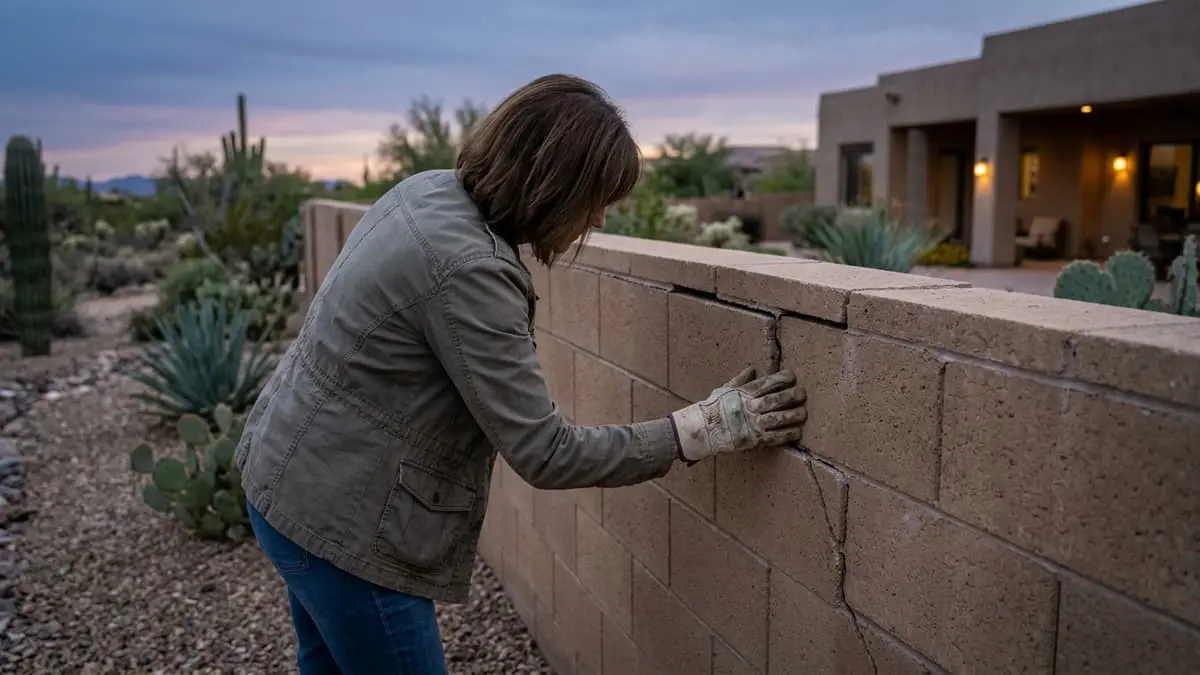
Scorpions get inside a block wall through narrow cracks, UA says. They don't need a big opening.
Where to look for gaps on your wall
I'd check these spots, starting with the cracks:
- Cracks in the mortar joints and the block faces
- Any chipped or missing stucco that shows bare block
- The top, since an uncapped wall, or a cracked or loose cap, leaves the hollow cores open
- Old holes from fence hardware or light fixtures
- The spot where the wall meets the house or a gate post
What UA's advice says about the openings
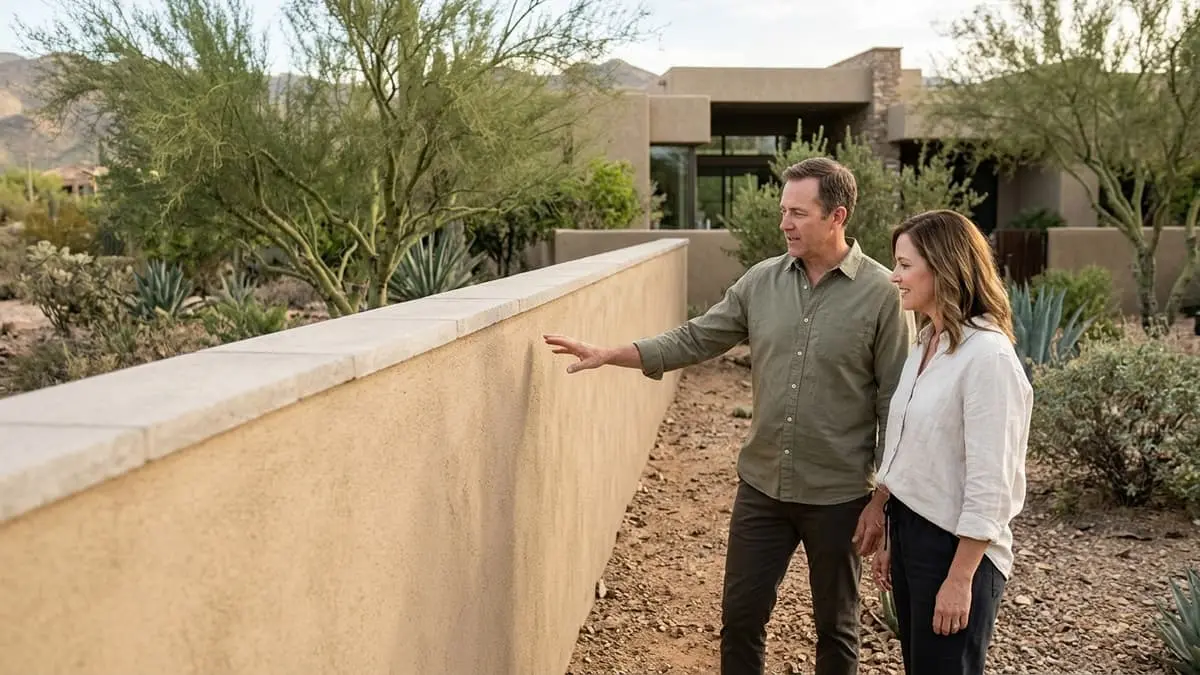
UA says to cap and stucco hollow block walls. That tells you the open tops and the bare, cracked faces are how scorpions get in.
What Capping and Stucco Do for a Block Wall
Capping and stucco make a block wall less inviting by closing the open tops and covering the cracks. UA's scorpion guide and a UA newsletter both recommend them.
A cap closes the open tops of the block cores. Stucco covers the face of the wall and its cracks, so there are fewer ways in.
UA says this makes the wall less inviting. It doesn't close every crack forever, so scorpions can still find a way in.
Scorpions in Block Walls in Winter and During Teardowns
In winter, bark scorpions cluster in sheltered, undisturbed spaces, and a block wall is one of them. UA says they're less active from November through March, and that winter clusters sometimes turn up during remodeling or when block walls are taken down.
If you're tearing out an old wall or rebuilding a section, you may find a cluster inside. Wear gloves and boots, and tell the crew before they start.
UA also says scorpions move when construction or landscaping disturbs the soil. The house closest to the work may see more scorpions for a while.
What Our Techs Check on a Block Wall
Our techs check a block wall at night with UV lights, because that's when scorpions are out and glowing. UA's pest-proofing guide says they're visible under black light from several yards away.
We look at:
- Whether the top is capped all the way along and whether the cap is solid
- The cracks, chips and bare spots in the stucco
- The places where the wall meets the house
- What's piled against the wall
UA says not to let wood, rocks, clutter or debris build up against the house, and I'd keep it off a wall that runs past your back door too.
If you want to look yourself first, UA suggests UV checks between 8 and 11 pm in summer, in boots, with long tongs. UA warns that UV light can damage your eyes, so don't look straight into it.
How Scorpions Get From the Block Wall to the House
From the wall, bark scorpions walk to the house at night and climb. UA's tracking found they typically forage less than 35 yards a night around buildings, so a wall within 35 yards of your house is within one night's walk.
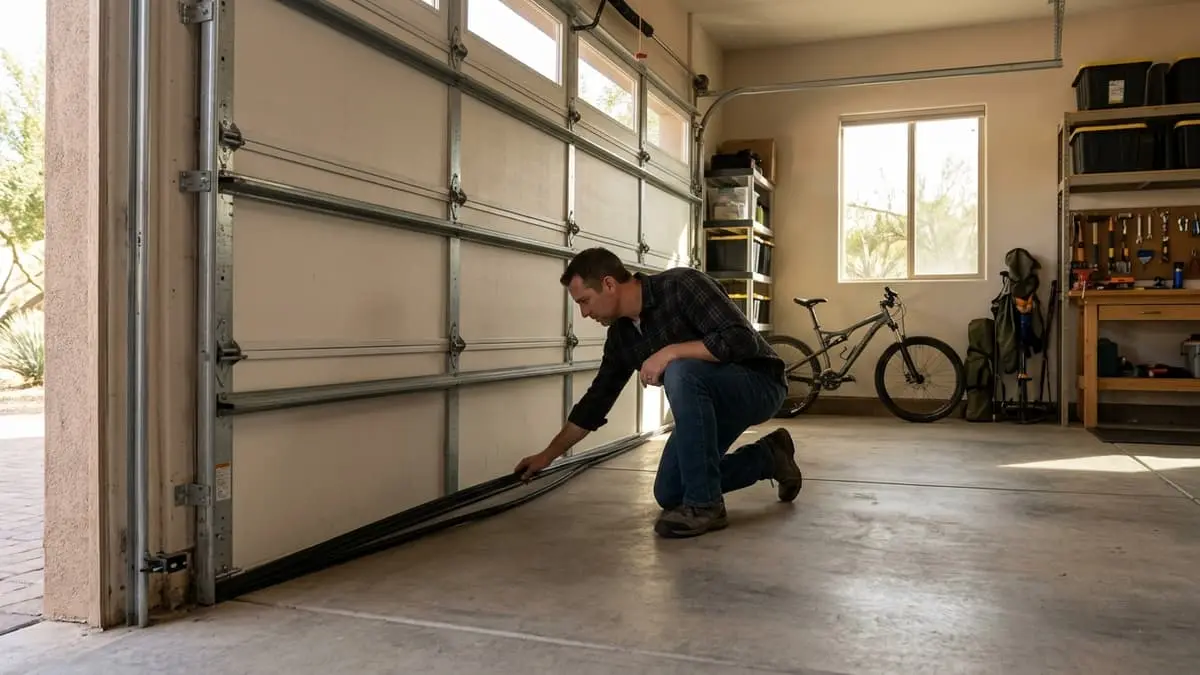
Once they reach the house, they climb, so it helps to know what a bark scorpion can and can't climb. If the wall runs past the garage, check the garage door gap and what's stacked inside too.
Sealing the house itself is a separate job: doors, weep screeds, vents and pipes. If you're deciding on it, read whether sealing the whole house pays off, and for every other hiding spot on the property, see all the places scorpions spend the day.
Why Spraying Alone Doesn't Fix a Block Wall
Spraying alone doesn't fix a block wall because the wall is still there for them to hide in. UA says bark scorpions are hard to manage with pesticides alone, and that pest-proofing and changing the habitat work better.
UA also says clearing scorpions out of a whole landscape would take unhealthy and illegal amounts of chemicals and would only work for a while.
Call Us About Your Block Wall and Sealing
If you think your block wall is full of scorpions, call us and we'll come out to check it after dark. We'll show you where they're going in and out, and which parts of the wall are open.
Then we seal up the house so fewer of them get inside: tight door sweeps and weather-stripping, screened weep holes and closed gaps around pipes. We can also go over capping and stucco for the wall, and the Town approval a hillside wall needs.
Call us about sealing work on block walls and the house, and see scorpion work sized for one-acre lots and long walls for the rest of what we do. We're licensed through the Arizona Department of Agriculture's Pest Management Division, and any company you hire should show its license number on its ads and paperwork.