The four most common low desert scorpions, and the one that matters
UA lists four scorpions as the most common in the low desert, and only the bark is a medical concern:
- The Arizona bark scorpion (Centruroides sculpturatus)
- The Arizona giant hairy scorpion (Hadrurus arizonensis), often called the desert hairy scorpion
- The Arizona stripe-tailed scorpion (Paravaejovis spinigerus)
- The yellow ground scorpion (Vaejovis confusus)
UA says all native scorpions can sting, but only the bark's sting is hazardous to human health. So in a Paradise Valley yard, the question that matters is bark or not bark.
Bark scorpion vs desert hairy scorpion at a glance
The bark is small, slender and climbs, and the hairy is big, heavy and stays on the ground. Size is the first giveaway: a bark is about 1 to 3 inches, depending on the source, and UA says a hairy often tops 5 inches.
Where you find them is the second. Barks climb walls and ceilings and hide in block walls, cracks and wall voids, while UA says the hairy lives under rocks and in shallow burrows and is rarely found in buildings.
The sting is the difference that counts. UA calls the bark the only scorpion of medical concern in the U.S., and a UA newsletter compares the hairy's sting to a bee sting.
How to spot a bark scorpion: slender tail, slender pincers
A bark has relatively slender legs and pincers and a long, slender tail, UA says. The Arizona Poison and Drug Information Center says the tail segments and pincers are thinner than those of the less toxic species.
Color is a weak clue. A UA newsletter calls barks light tan or yellow-brown, UA's scorpion guide says they range from pale to darker with stripes or a checkered pattern, and Banner Health's poison center says color isn't a reliable way to identify one.
Size is a weak clue too, because health sources disagree. Banner says 1 to 1.5 inches and UA says adults run 2 to 3, so I'd plan on anything from about 1 to 3 inches.
For how barks live, climb and hide, see the full rundown on Arizona's bark scorpion.
How to spot a desert hairy scorpion: big, heavy, pale legs
A desert hairy is the largest scorpion in the U.S., UA says, with adults often over 5 inches. A UA newsletter says they reach up to 6.
UA describes the hairy as heavy-bodied, darker on top, with pale sides and pale buff legs. Next to a bark, it looks like a different kind of animal.
UA says the hairy's venom is mild and that it eats bark scorpions. A hairy under a rock at the back of the yard is a different situation from a bark on the bedroom wall.
The climbing test: a scorpion on the wall is a bark
If it's up on a wall or ceiling, it's almost certainly a bark. A UA school and home IPM newsletter calls the bark the only Arizona scorpion with both the ability and a strong tendency to climb, and says it often sits straight up on a wall or upside down.
The test only works one way. A scorpion on the floor could be any of the four, including a bark that just came down off the wall, so on the ground you need the other clues.
Banner says barks can climb almost anything except clean glass or plastic. There's a separate post on the climbing habits that put barks on ceilings.
Stripe-tailed and yellow ground scorpions: the two small ones mistaken for barks
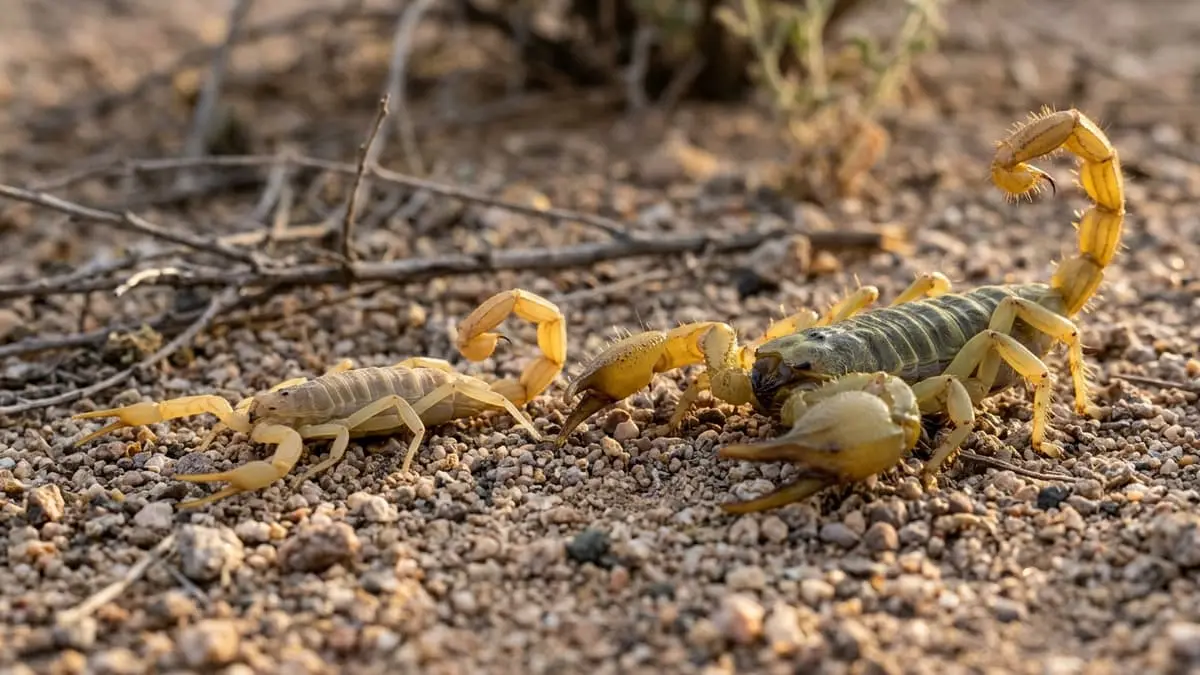
The stripe-tailed and yellow ground scorpions are the two UA says are often mistaken for barks. UA says both are burrowers, both are full grown at under 3 inches, and both have relatively mild venom that usually doesn't need medical care.
The stripe-tailed scorpion is heavily armored, with bulkier pincers and a bulkier tail than a bark, UA says. A UA newsletter adds that it has thin dark stripes on the underside of its tail.
The yellow ground scorpion has delicate pincers but a wider, chunkier tail, according to UA. So I'd look at the tail first: a bark's tail is long and thin, and a tail that looks thick for the body points to one of these two.
Close-up features that confirm a bark: stinger tooth and triangular sternum
A bark has a small tooth at the base of the stinger and a long, triangular sternum (the plate on its underside), according to UA's pest-proofing guide. UA says other Arizona species have a five-sided sternum, and both features may take a magnifier to see.
A blacklight won't settle it. Scorpions glow green under UV light, and Banner says even fossil scorpions glow, so the glow tells you it's a scorpion, not which kind.
If it turns out not to be a scorpion at all, UA names a few creatures with scorpion in their name that aren't scorpions.
After a sting, the species can wait
Call Poison Control at 1-800-222-1222 after any sting, or 911 for a severe reaction, and sort out the species later. UA advises calling for any sting because everyone reacts differently.
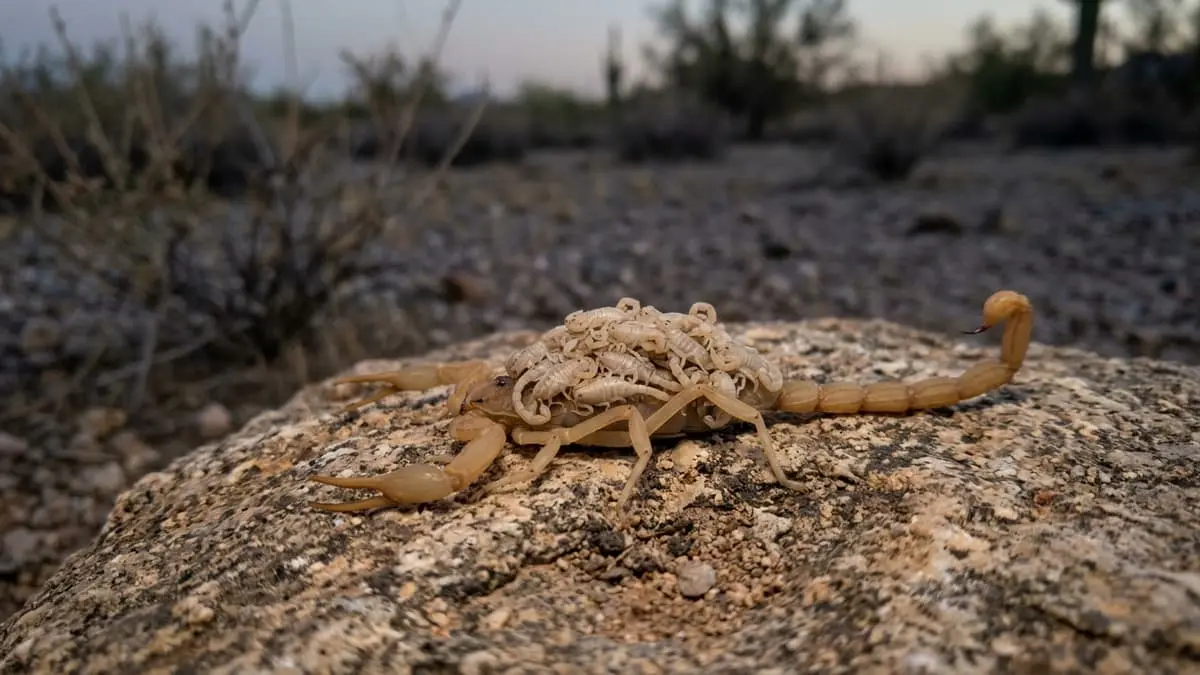
If the scorpion was a small one, or you saw a mother with young on her back, I wrote about what changes when the scorpion is a baby.
Quick answers: which scorpion is which
The desert hairy has mild venom by UA's account, rarely comes inside and eats bark scorpions. A bark is harder to pin down, because its color isn't a reliable clue.
Is the desert hairy scorpion dangerous?
UA says its venom is mild, and a UA newsletter compares the sting to a bee sting. UA still advises calling Poison Control at 1-800-222-1222 after any sting, since everyone reacts differently.
Do desert hairy scorpions come inside?
Rarely, according to UA. The hairy lives under rocks and in shallow burrows.
Does a desert hairy scorpion eat bark scorpions?
Yes. UA's scorpion guide says the giant hairy scorpion eats bark scorpions.
Can I tell a bark scorpion by its color?
Not reliably. Banner says color isn't a dependable clue, and UA says barks range from pale to darker, with stripes or a checkered pattern.
Getting a scorpion identified in Paradise Valley
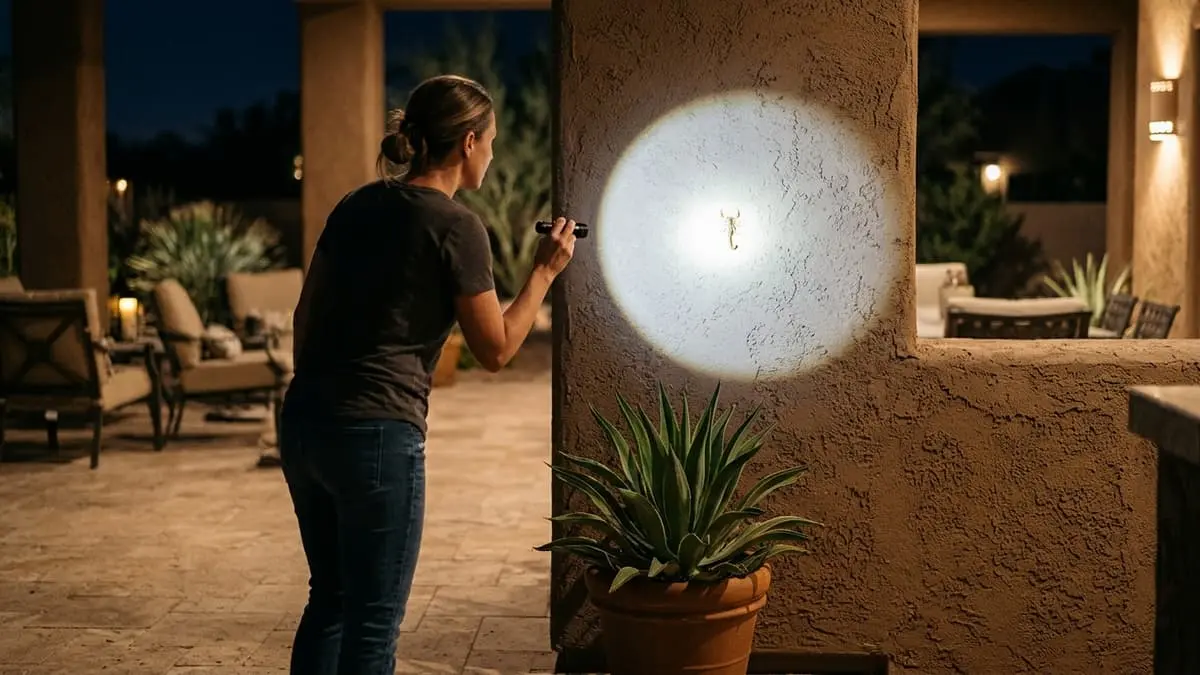
Call us and we'll come out at night, when barks are out on the walls, for a UV inspection that shows which kind you have. We check the block walls, patio, door gaps and weep screeds, and we tell you what we find.
UA says that if you regularly find scorpions inside, it's time to call a pest management professional who knows scorpions. Identifying pests is part of the work Arizona licenses pest control companies to do, through the Arizona Department of Agriculture's Pest Management Division, and a company's license number should be on its ads and paperwork.
A night inspection is where we start scorpion control for Paradise Valley yards and walls.