Why Sealing Works on Bark Scorpions
Sealing works because most scorpions in a house walked in through a gap, and sealing closes the gaps. The University of Arizona traces the routes:
- Under doors that don't fit tight
- Through window vents
- Under walls with openings
- Through the weep holes in the weep screed
Once they're inside a wall, they can move through the house and come out around switch plates and pipe collars.
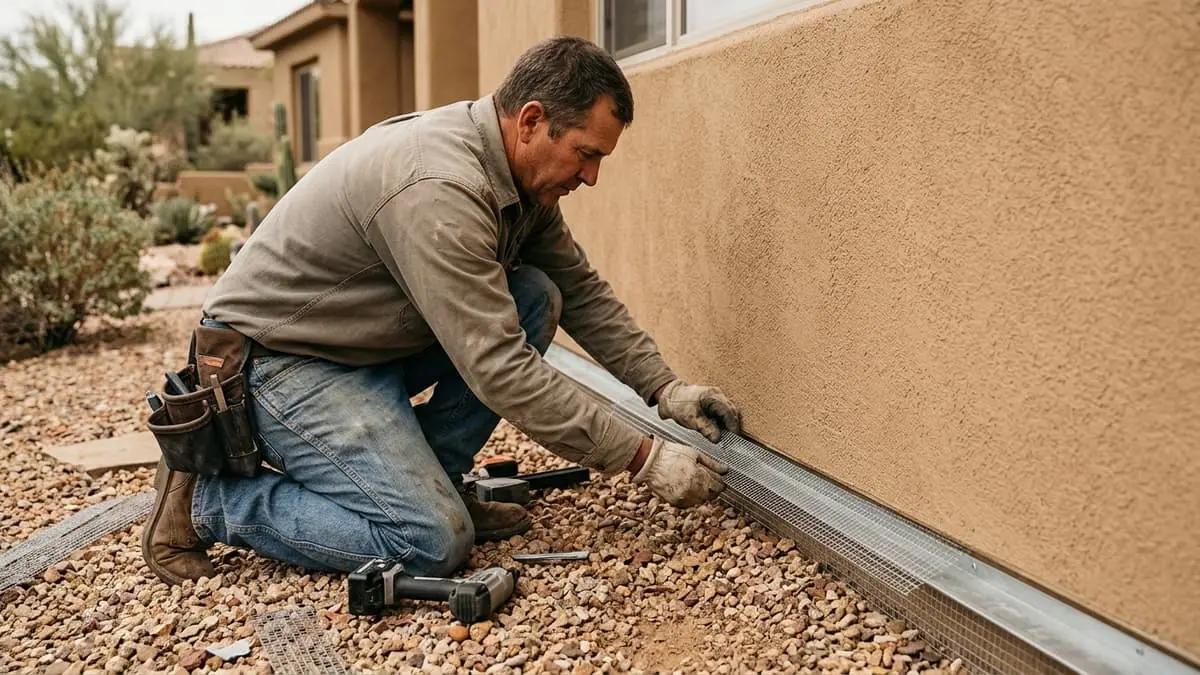
The weep screed is the one most people have never heard of. It's the metal strip along the bottom of a stucco wall, with small holes that let water drain out of the wall. Those holes are a way in, and the University of Arizona's fix is to cover them with coarse steel mesh instead of plugging them, because the wall needs to breathe.
Every gap on the house gets the same treatment: closed in a way that still lets the house do its job. The door still opens, the wall still drains, and a bark scorpion walking the foundation at 10 pm finds far fewer ways in.
How Small a Gap a Scorpion Needs
A bark scorpion needs a very small gap. A University of Arizona entomologist said in a 2015 public radio interview on scorpions that a gap a penny can slip under is wide enough. So a door that looks shut can still let one walk right in.
What Scorpion Sealing Covers
Scorpion sealing covers every place a scorpion can walk in:
- Doors
- Weep screeds
- Vents
- Screens
- Pipes
- The roofline
- The gaps inside where they come out of the walls
When we seal a house, we go around the whole thing, not just the door where you saw one. If it were my house, I'd want the doors and the weep screeds done first.
Doors and Door Sweeps
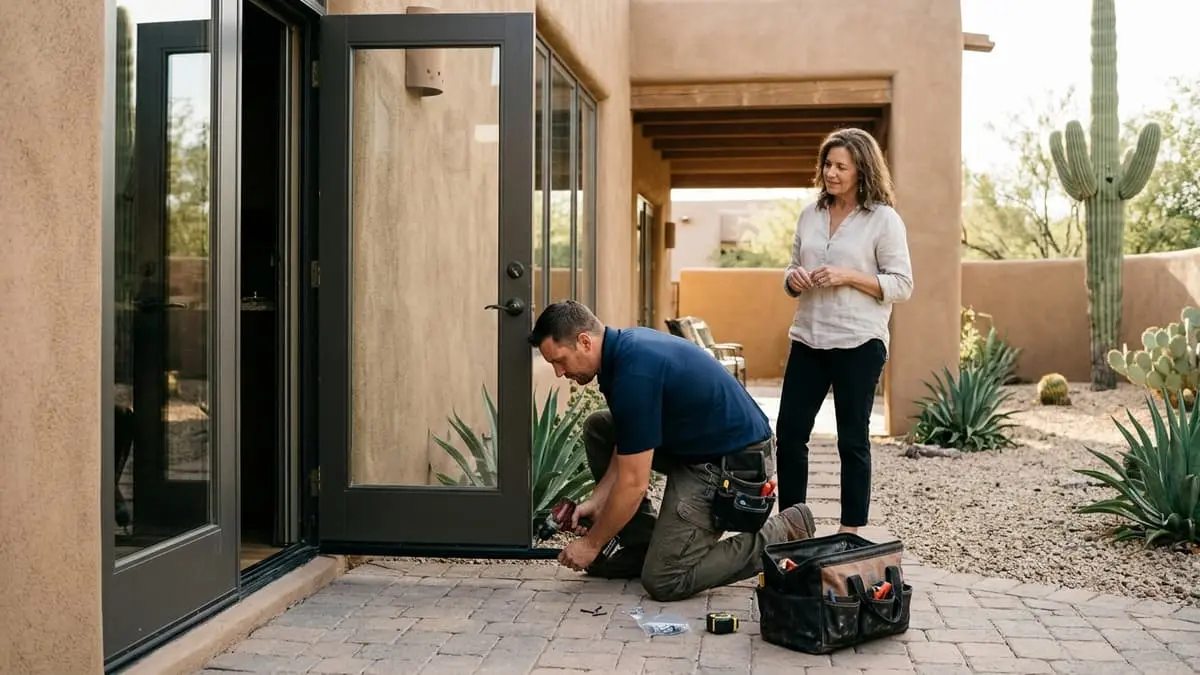
Every outside door gets a tight door sweep and weather-stripping, including the door from the garage into the house. The light-under-the-door test from UA Extension is the standard: from inside, no light should show around a closed door. The University of Arizona also suggests self-closing outside doors or a second screen door where scorpions are common.
Weep Screeds
Weep holes get coarse steel mesh, never caulk. The University of Arizona says not to plug or seal them, because they ventilate the wall.
Vents and Window Screens
Window screens need to fit tight and be free of tears, and vents need screens, attic vents included. A torn or loose screen is an easy way in.
Pipes, Wires and the Roofline
Gaps around pipes, conduits and anything else that comes through a wall get caulked or sealed, and holes get packed with steel wool. The University of Arizona also suggests caulking along the roof eaves.
Switch Plates and Pipe Collars Inside
Inside, our techs check the switch plates and pipe collars, which the University of Arizona says is where scorpions already in a wall come out. Closing those gaps makes it harder for a scorpion in the wall to reach the bathroom or a bedroom.
Hollow Block Walls
Hollow block walls are a separate project. The University of Arizona says to stucco and cap them so they're less inviting, and there's more on capping and stucco on hollow block walls.
What Sealing Can't Do
Sealing can't clear the scorpions out of your yard, your block wall or the wash out back, because it works on the house. The University of Arizona says scorpions are extremely difficult to eradicate, and no amount of caulk changes that.
Seals also wear. The University of Arizona lists worn door sweeps and window screens among the ways scorpions get in, so a sweep that fit tight two summers ago may not now. Doors propped open for the dog, firewood carried inside and laundry left on the floor all work around a sealed house too.
So expect fewer inside, not none. In the rooms where your family sleeps, fewer is what you're after.
How Sealing and Treatment Work Together
Sealing keeps scorpions out of the living space, and treatment works on the ones already in the walls and yard, plus the insects they eat. The University of Arizona puts pest-proofing first and pesticides second, because scorpions are hard to manage with pesticides alone. That's the order behind pest-proofing first, then treatment, then checks.
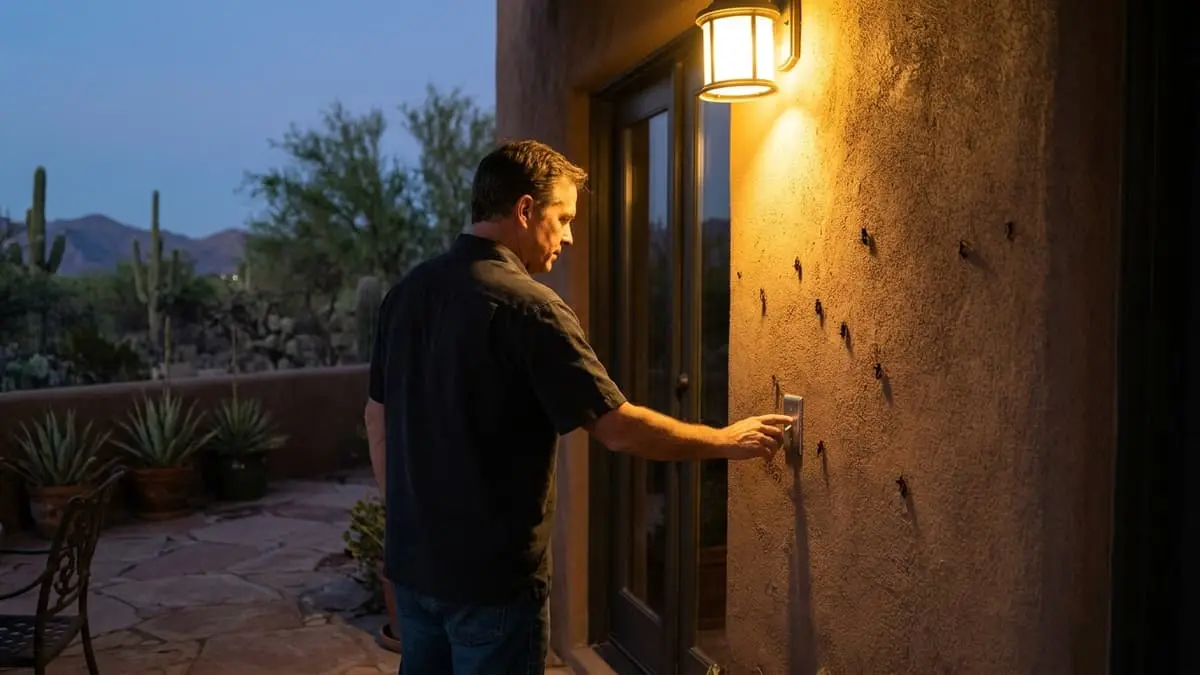
Night checks show whether it's working. A blacklight walk around the outside after a sealing job shows whether scorpions are still getting close, and where. Treatment matters too, and here's why spraying by itself falls short.
Who seals, treats and checks for scorpions in 85253? We do all three, and our Paradise Valley scorpion work starts at the doors because a gap under a door is all a scorpion needs.
Signs Sealing Is Worth It for Your House
Sealing is most likely worth it if you find scorpions inside more than once in a while. That's also the point where the University of Arizona says to call in a professional.
I'd also look at sealing if:
- You can see daylight around your outside doors
- Your weep holes are open
- Your stucco has cracks
- Pipes come through the walls with gaps around them
It matters more with young kids or an older parent at home, since University of Arizona medical toxicologists say young children and older adults are the most vulnerable to a sting.
When You Might Not Need a Full Sealing Job
If you see one a year in the garage and nowhere else, the basics may be enough: door sweeps, clutter off the walls and towels off the floor. Sealing also works better when less is pulling them in, so cut back on the bugs, puddles and woodpiles that lure barks close.
Hillside Lots Need Town Approval for Wall Work
If you're on a hillside lot, check with the Town before anyone changes a wall. The Town's Resident Guide says hillside construction goes through the Hillside Building Committee, and walls, fences, roofing and landscaping there need Town approval. If your home sits on the slopes of Mummy Mountain or the north slopes of Camelback Mountain, ask before a block wall gets capped or rebuilt.
Questions About Sealing Out Scorpions
Before you pay for sealing, it helps to know about the small holes along your stucco, what you can do yourself, and whether sealing replaces treatment or stops every scorpion.
Should I caulk the little holes along the bottom of my stucco?
No. Those are weep holes, and the University of Arizona says not to plug or seal them because they ventilate the wall. Cover them with coarse steel mesh instead.
Can I seal my house against scorpions myself?
Some of it. Door sweeps, weather-stripping, caulk around pipes and fixing torn screens are homeowner jobs. The roofline, the weep screeds around the whole house and block walls are bigger jobs, and that's where a quote helps.
If I seal the house, can I stop scorpion treatment?
The University of Arizona treats pest-proofing as the main step and pesticides as one piece of a bigger plan. Whether you can cut back depends on what the night checks show after the sealing is done.
Will sealing stop every scorpion?
No. The University of Arizona says scorpions are extremely difficult to eradicate, and seals wear over time. The goal is a lot fewer inside the house.
Call Us for a Sealing Quote in Paradise Valley
The best way to know whether sealing is worth it for your house is to have us walk it with you. Call us and we'll come out, check your doors, weep screeds, vents, block walls and pipe openings, and show you the gaps scorpions are using.
Then we'll quote our sealing for doors, weep screeds and pipes and talk through how it fits with treatment and night checks.