Why Scorpions Are So Hard to Get Rid Of
Bark scorpions are hard to get rid of because they hide in tight spots all day, they live in groups, and a watered yard can hold a lot of them. The one you keep finding is almost always a bark scorpion: the small, tan one that climbs walls, rides in on towels and turns up on the ceiling. It's the only scorpion in Arizona considered a real danger to people.
By day they pack into:
- Cracks in stucco and concrete
- Wall voids
- The spaces under rocks and tree bark
- Hollow block walls
They aren't territorial, so a lot of them can share one good spot. The University of Arizona's scorpion bulletin for the desert Southwest says homes with irrigated landscapes can support far more of them than open desert, and that they live five to seven years.
The University of Arizona is blunt about the rest. It says scorpions are extremely difficult to eradicate and hard to manage with pesticides alone. Clearing them out of a whole landscape would take unhealthy and illegal amounts of chemicals, and it would only last a while.
The Realistic Goal Is Fewer Scorpions Inside
The realistic goal is keeping bark scorpions out of the rooms where your family sleeps, bathes and walks around barefoot. Nobody can empty the desert around your house. You can close the ways in and cut the numbers living against the walls.
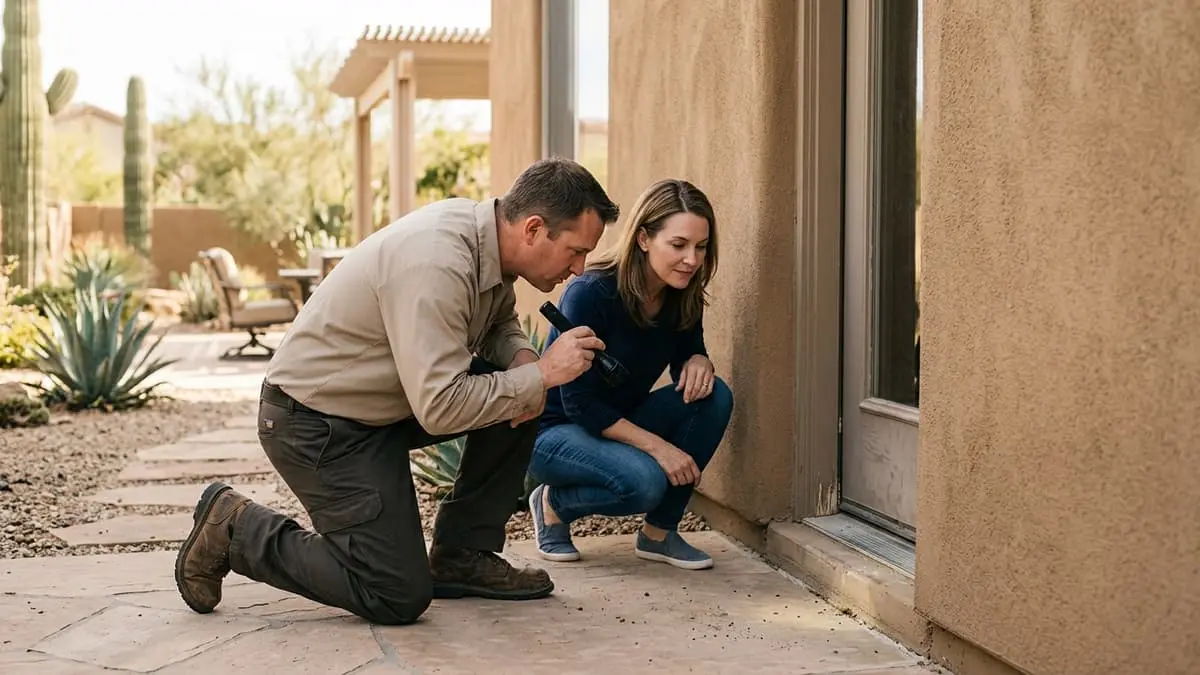
If it were my house, I'd start with one question: where do barks hide around a house? Knowing their spots tells you where to seal, where to clean up and where to look at night.
Step 1: Seal the House to Keep Scorpions Out
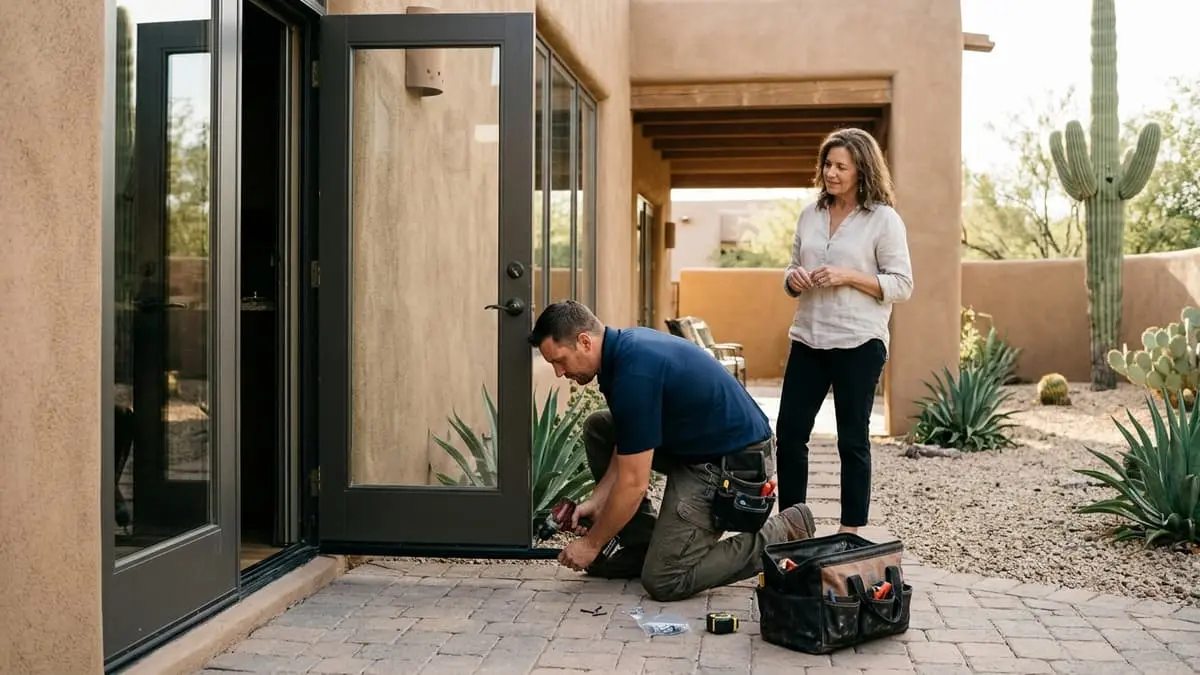
Sealing comes first because the University of Arizona calls pest-proofing the home by far the most effective way to cut down on scorpion run-ins and stings. It's the main way to keep scorpions out of your house. Bark scorpions walk in under doors that don't fit tight, through window vents, and through the small weep holes along the bottom of stucco walls. Once they're inside a wall, they can travel through the house and come out around switch plates and the collars where pipes come through.
Door Sweeps and Weather-Stripping
Every outside door needs a tight door sweep and weather-stripping, and the doors are where I'd start. The University of Arizona's test is simple: close the door, stand inside and look. If daylight shows around the edges, the door isn't sealed.
Weep Holes Along the Bottom of the Stucco
Weep holes get covered with coarse steel mesh, not caulk. The University of Arizona says not to plug or seal them, because they ventilate the wall.
Pipes, Roof Eaves and Window Screens
Gaps around pipes, roof eaves and other openings get caulked, and holes get packed with steel wool. Window screens should fit snug and have no tears.
Hollow Block Walls
Hollow block walls are less inviting once they're stuccoed and capped, according to the University of Arizona. That's a bigger project than a door sweep, but block walls are one of the places bark scorpions like best.
Sealing has limits too, so read up on what sealing closes up, and what it can't before you get a quote.
Step 2: Take Away Food, Water and Hiding Spots
Scorpions stay close to a house that gives them food, water and a dark place to wait out the day, so taking those away from the walls means fewer of them hang around. Most of this takes a Saturday, not a contractor.
Clutter and Firewood Against the House
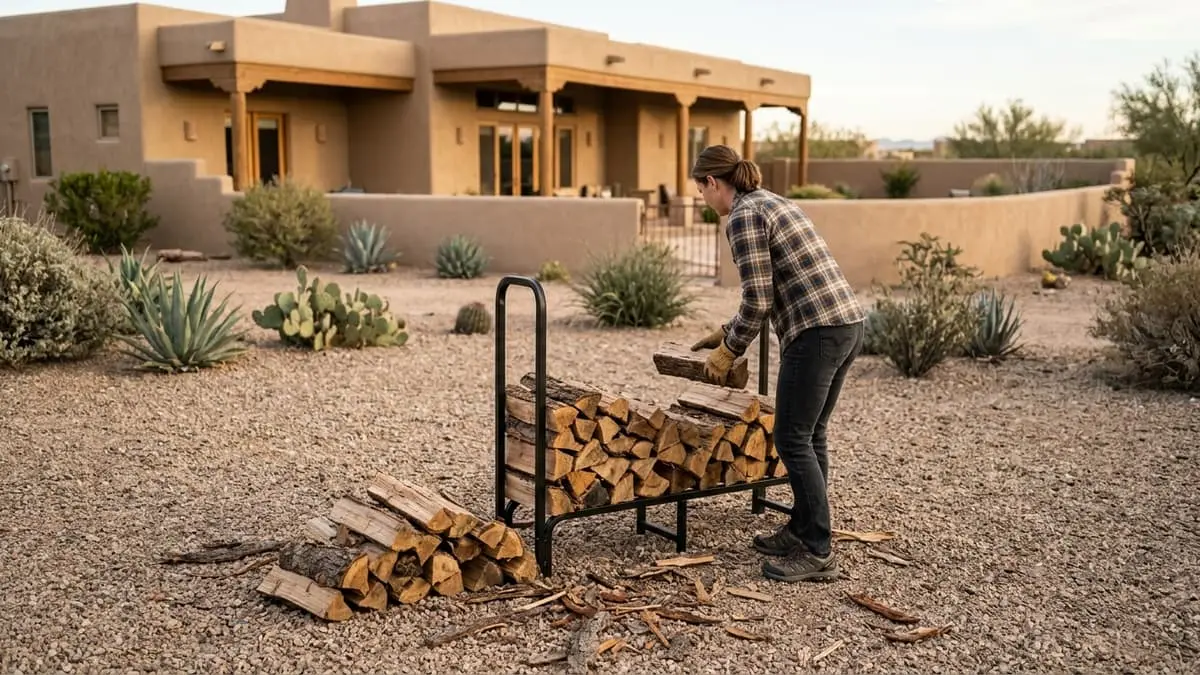
Move wood, rocks, boxes and clutter away from the walls. The University of Arizona says to keep firewood stacked about 6 inches off the ground and never store it indoors.
Shrubs and Branches Touching the House
Prune shrubs and tree branches back from the walls and roof, because branches resting on the roof give scorpions a path up. The University of Arizona also suggests short grass, less low ground cover and garbage cans raised off the ground.
Crickets, Roaches and Damp Towels
Bark scorpions eat crickets, cockroaches and other insects, so a cricket problem tends to bring scorpions with it. Inside, the University of Arizona says damp towels and clothes on the floor strongly attract scorpions looking for moisture.
For the full list, here are the crickets, water and clutter that draw them in, inside the house and around the yard. For the yard itself, I'd walk the lot from the block wall out to the wash.
Step 3: Treat Where Scorpions Hide
Treatment is the third step, and it's where we come in. When you call, we come out, treat the cracks, wall voids and outside walls where scorpions spend the day, and knock down the insects they live on. Treatment can't make up for gaps under the doors and a yard full of hiding spots.
That's why you can pay for regular service and still feel like you're losing the war. The reason is usually the method, not the company, and it comes down to why the spray alone falls behind.
How Often Treatment Should Happen
How often depends on what you're seeing, who lives in the house and the time of year. Our plans run monthly, every other month or quarterly. Before you pick one, ask how often should the spraying happen?
What Happens on a First Visit
On a first visit, we treat inside and out and point out what's drawing scorpions to the house. Here's what our first treatment visit looks like, from what to put away beforehand to what happens after.
Checking the License of Whoever Treats Your House
Arizona licenses pest control companies through the Arizona Department of Agriculture's Pest Management Division, and a company's license number should be on its ads and paperwork, ours included. After the license, go through the questions worth asking before you hire anyone.
Step 4: Check at Night With a Blacklight
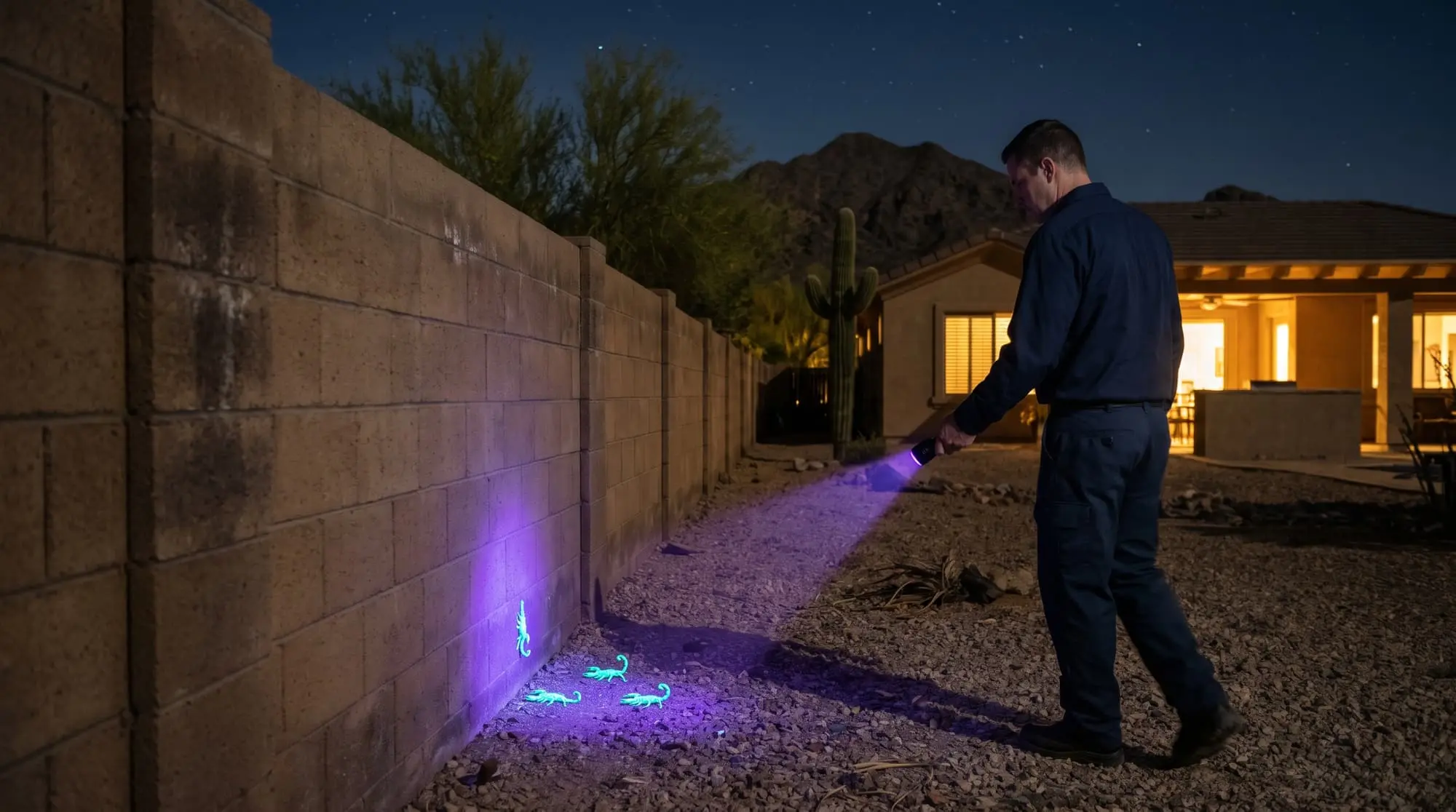
Night checks are the fourth step, because scorpions glow bright green under ultraviolet light and show up from several yards away in the dark. The University of Arizona suggests checking inside the house with a UV light before bed. In summer, it suggests collecting them outside between 8 and 11 pm, wearing boots and using long tongs.
Why Blacklighting Beats Repeat Spraying
The University of Arizona says repeated blacklight collections work better than repeated spraying. Its pest-proofing guide for Arizona homes says collecting scorpions and releasing them far from the house beats repeated pesticide applications. A University of Arizona newsletter adds that three or four collections a summer can cut local numbers well into the next season.
Blacklighting Your Own Yard
You can do this yourself with a UV flashlight, boots and long tongs. Read up on hunting them with a UV flashlight in your own yard first, including the University of Arizona's one rule about the light itself: never look straight into it.
Sticky Traps and the One on the Floor
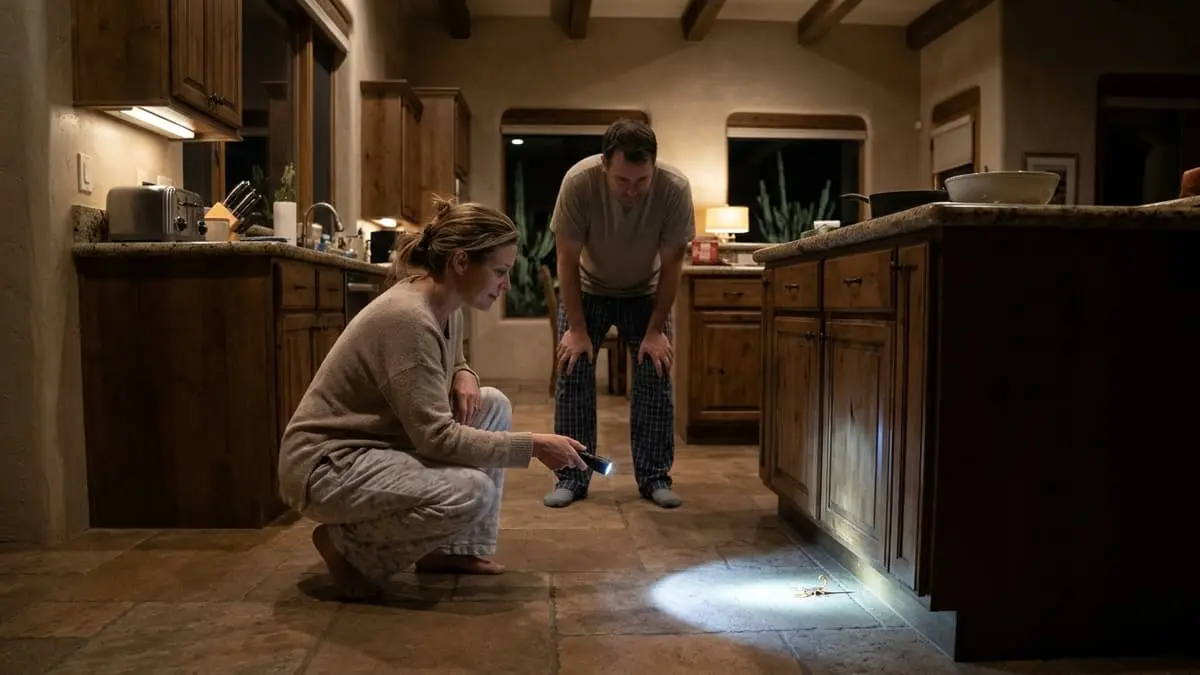
Glue traps show you what's still moving between checks, so some people set sticky traps along the garage wall and the baseboards. When you find one on the kitchen floor at 10 pm, it helps to know how to deal with the one on the floor right now without scattering a mother's babies across the tile.
What You Can Do Yourself, and When to Call Us
You can do most of steps 1, 2 and 4 yourself. Door sweeps, caulk, clearing the walls, moving firewood, picking up towels and blacklighting are all homeowner jobs. Arizona law also lets homeowners apply non-restricted pesticides on residential property they own.
If you're thinking about home remedies, check what the sources say about lavender, cedar oil and ultrasonic plug-ins before you spend money on them.
Call a professional once you're regularly finding scorpions in the house. That's the University of Arizona's advice, and it says to look for a pest management professional experienced with scorpions. With small kids or an older parent at home, I'd call sooner, because University of Arizona medical toxicologists say young children and older adults are the most vulnerable to a sting.
One Scorpion or a Houseful
One sighting doesn't always mean a houseful, because bark scorpions don't build nests. If you're asking is there a nest somewhere in the walls?, the short answer is no, though they do gather in walls.
Seeing Them Every Week After Years of None
If you went years without seeing one and now see them every week, something around the house usually changed. These are the usual reasons they suddenly show up every week, from warm nights to a teardown down the street.
Habits That Lower the Chance of a Sting
While you work on the house, a few habits from the University of Arizona and Banner's poison center make a sting less likely:
- Wear shoes outside at night and slippers inside at night.
- Shake out shoes and clothes before you put them on, and don't leave shoes outside overnight.
- Keep towels and clothes off the floor.
- Pull beds and cribs away from the walls, and keep bedding off the floor.
- Teach kids not to touch a scorpion and to tell a grown-up.
If someone does get stung, call Poison Control at 1-800-222-1222, or 911 for a severe reaction. If a pet gets stung, call your vet or an emergency animal hospital.
Paradise Valley Lots, Washes and Hillsides
Paradise Valley's big lots, washes and hillsides line up with what the University of Arizona says bark scorpions like. Most of the Town is zoned for lots of at least one acre, and the Town describes an extensive wash system, with Mummy Mountain in the middle and the north slopes of Camelback Mountain along the south edge. The University of Arizona says irrigated landscapes, washes and hollow block walls all support more bark scorpions.
The Town's Resident Guide lists pest contacts for mosquitoes, roof rats, sewer roaches and snakes, but not scorpions. Keeping them out of your house is up to you, and that's what our scorpion control in Paradise Valley is for.
Questions About Getting Rid of Scorpions
These answers cover whether scorpions can be cleared out completely, how to keep them out of the house, whether spraying helps, and when it's time to call us.
Can you get rid of scorpions completely?
The University of Arizona says scorpions are extremely difficult to eradicate, so be wary of anyone who promises you'll never see another one. The realistic goal is far fewer inside the house, especially in bedrooms and bathrooms.
How do I keep scorpions out of my house?
Seal up the house. The University of Arizona calls pest-proofing by far the most effective way to reduce scorpion run-ins and stings, and door sweeps and weather-stripping are an easy place to start.
Does spraying for scorpions help at all?
Yes, as one part of the plan. The University of Arizona says scorpions are hard to manage with pesticides alone, so treatment works best alongside sealing, a cleaned-up yard and night checks.
When should I call a professional about scorpions?
The University of Arizona says to call when you regularly find scorpions inside your home. Look for a licensed company with scorpion experience, and check that its license number is on its ads and paperwork.
Call Us to Get Rid of Scorpions in Paradise Valley
If you're finding bark scorpions inside more than once in a while, call us. We'll come out, look at how they're getting in, treat where they hide, and talk with you about sealing, night checks and a schedule that fits your house.
When you're ready, call us to treat where they hide.