Why bark scorpions are the one to worry about with kids
Bark scorpions are the only Arizona scorpion regarded as life-threatening, and small children are at the highest risk of severe reactions. Both points come from the Arizona Poison and Drug Information Center's page on scorpions and who's most at risk.
Barks are the small, tan ones with long, skinny tails, usually 1 to 3 inches long. They climb walls, hang upside down on ceilings and tuck into shoes and towels.
The University of Arizona (UA) says bark scorpion stings are most dangerous to the very young and the very old. That's in UA Extension's publication on desert Southwest scorpions, which I'll call UA's scorpion guide from here on.
Where and when kids get stung
Most stings happen at home, at night, by accident. UA's scorpion guide cites research finding that 98% of scorpion exposures reported to U.S. poison centers happen in or around homes.
The Arizona Poison and Drug Information Center says most stings happen at night during the warm summer months. UA says most stings happen when someone grabs, presses against or steps on a scorpion without seeing it.
For a kid, that's a toddler patting the tile, a bare foot on the patio after dark or a hand reaching into the shoe bin.
Yard features UA ties to bark scorpions
Irrigated plants, hollow block walls, boulders and washes are the yard features UA ties to bark scorpions. Most of the Town is zoned for lots of an acre or more, so if your lot has any of these, start there.
UA says homes with irrigated landscapes can support far more scorpions than open desert. UA also cites a study in which 95% of bark scorpions chose hollow block walls over other shelter.
Daily habits that keep scorpions and kids apart
Five habits do most of the work:
- Shoes up and shaken
- Slippers at night
- Towels off the floor
- Toys inside
- A blacklight check before bed
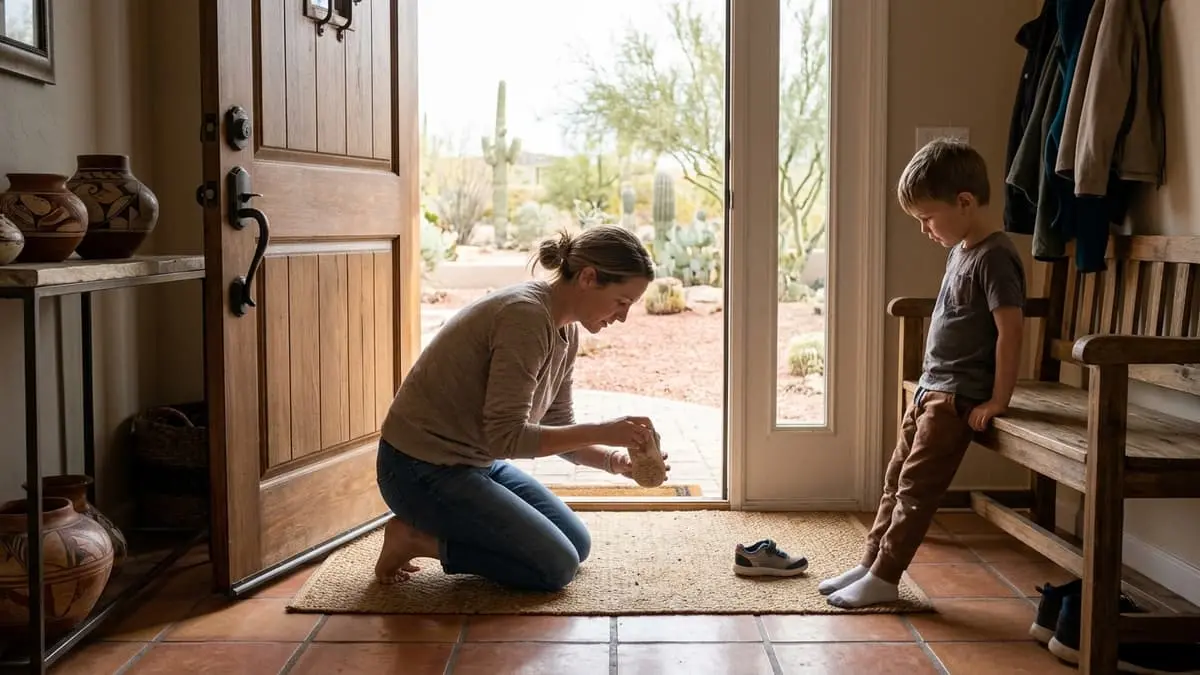
Keep kids' shoes off the floor and shake them out
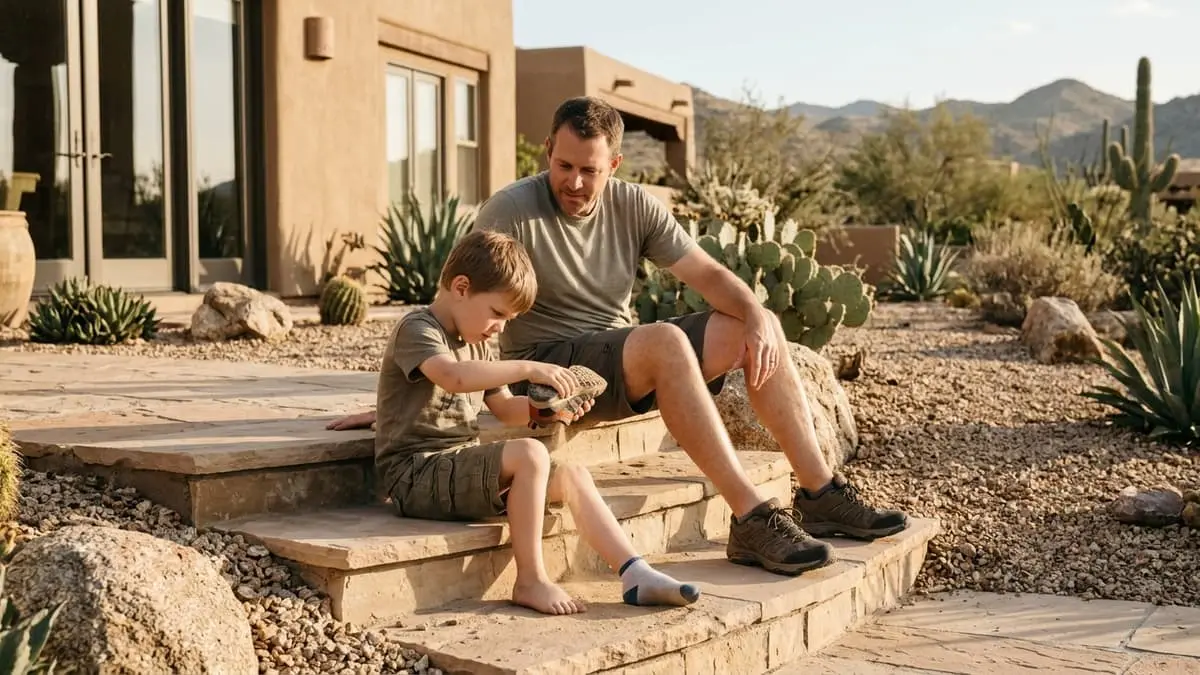
Keep shoes up off the floor, indoors, and shake them before little feet go in. UA's scorpion guide has a photo of a bark scorpion inside a child's shoe and advises against keeping shoes on the floor, especially outside.
If it were my house, I'd put a shelf or rack by the door so the kids' shoes never sit on the tile.
Slippers inside at night, shoes outside at night
UA suggests shoes outdoors at night and slippers indoors at night. That covers the barefoot run to the bathroom at 2 am and the kids chasing each other across the patio after dinner.
Hang up towels and swimsuits
Get damp towels and swimsuits off the floor, because UA says damp towels strongly attract scorpions looking for moisture. UA's school newsletter warns about wet towels left by the pool overnight, too.
Keep dirty clothes in a hamper instead of on the bedroom floor.
Bring toys in from the patio at night
Toys left outside give barks more places to hide. UA lists potted plants, door mats and patio clutter among their daytime hiding spots, and a bin of pool toys by the back door is the same kind of cover.
Do a blacklight check before bed
UA suggests checking inside the house with a UV light before bed, because scorpions glow under blacklight. Here's the order I'd do it in:
- The kids' baseboards
- Under their beds
- The bathroom floor
- The tub
Then pull the covers back before anyone climbs in. The whole check takes a couple of minutes.
Rules the kids learn for themselves
Kids need a few rules of their own, and the right ones change as they grow. If you're wondering what should kids learn about scorpions at each age, there's a whole post on it, from "no touch" for toddlers to blacklighting with teens.
How to set up kids' bedrooms, closets and bathrooms
Kids' bedrooms need beds off the wall, bedding off the floor and closets without shoe piles. UA says bark scorpions scale walls, cross ceilings and can drop into beds, sinks and tubs.
Banner Health's poison center says bark scorpions can climb almost anything except clean glass or plastic. That one fact drives most of the bedroom setup.
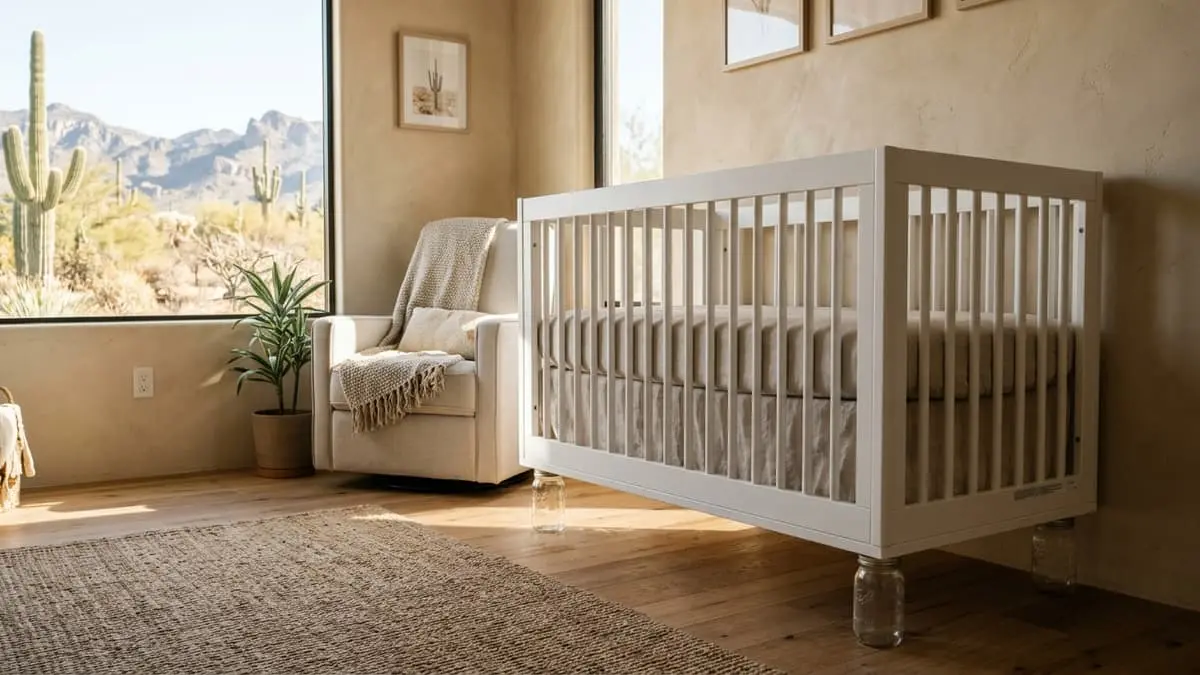
Pull beds and cribs away from the wall
Move every bed and crib out far enough that nothing touches the wall. Keep blankets and bed skirts from hanging to the floor, and shake out sheets and sleep sacks before you use them.
Set crib legs in clean glass jars
UA and Banner's poison center both describe setting crib legs in clean glass jars, because scorpions can't climb clean glass. The full setup, from the jars to what to do about curtains, is in the post on how to keep a scorpion from climbing into the crib.
Keep shoes and clothes off the closet floor
A closet floor needs the same rule as the front door: shoes up, clothes in the hamper. Shoes on the floor and clothes in a heap give barks dark, quiet places to sit.
Give any backpack or sports bag that's been sitting on the floor a shake before small hands dig in.
Check the tub before bath time
Look in the tub before you run the water. UA says scorpions that drop into tubs may not be able to climb back out, and Banner's poison center says scorpions turn up often in damp rooms like bathrooms and laundry rooms.
Hang the bath mat over the edge afterward, because a damp mat on the floor works like a damp towel.
Watch the outlets and pipe openings
Outlets and pipe openings are how scorpions get from inside a wall into a room. UA says that once a scorpion is inside a wall, it can come out around electrical faceplates, pipe collars and similar openings.
In a kid's room, that means the outlets, the light switch plates and any pipes that come through the wall.
How to make the backyard less inviting to bark scorpions
These are the four yard fixes I'd make first:
- The block wall
- Rocks
- Pool towels
- Branches
Summer evenings matter most.
UA tracked bark scorpions and found most movement between 7 and 11 pm and again from 3 am to sunrise. UA also says nights above 70°F suit them best.
Block walls and the gaps under the cap
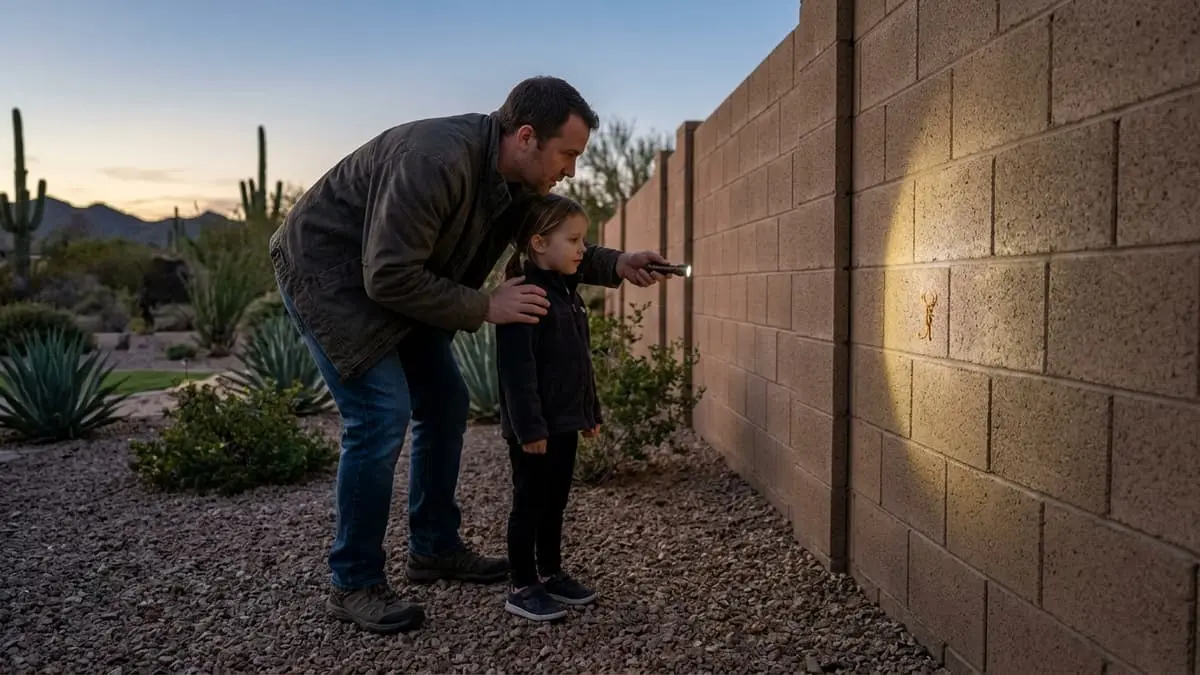
Keep small fingers out of block wall cracks and the gaps under the cap. UA says bark scorpions gather inside hollow block walls and get in through narrow cracks.
UA suggests stucco and caps to make block walls less inviting. The block wall is the first thing I'd check in any yard with kids.
Rocks, logs and woodpiles
Make rock-flipping a grown-up-with-gloves job, because barks spend the day under rocks, logs and tree bark. Keep firewood stacked off the ground and away from the house.
The pool and wet pool towels
Have a grown-up fish out anything floating in the pool. UA says a scorpion found in a pool or spa may still be alive and able to sting, even after a long time underwater.
Bring the wet towels in at night, too.
Branches and shrubs touching the house
Trim anything that touches the house. UA advises cutting back branches that touch the roof, keeping shrubs at least 24 inches from the walls and keeping grass short.
Lots on a wash or a hillside
A lot that backs onto a wash may see more scorpions during summer rains. UA says homes near dry washes can see an influx during summer rains and after irrigation, when water floods scorpions out of their hiding spots.
Hillside lots on Mummy Mountain and the north slopes of Camelback Mountain have plenty of rock for barks to hide under. On a lot like that, I'd keep the kids from flipping rocks at all.
Seal the doors, weep screeds and pipes near the kids' rooms
Sealing is the biggest single step. UA says pest-proofing is by far the most effective way to cut down scorpion stings, that scorpions are extremely difficult to get rid of completely, and that pesticides alone don't manage them.
Door sweeps and weather-stripping
Close the door and look from inside. UA says that if light shows around it, it needs a tight door sweep or new weather-stripping.
Weep screeds along the base of the stucco
Cover weep holes with coarse steel mesh instead of plugging them. Weep screeds are the small openings along the base of stucco walls that let water drain out, and UA says to leave them open because they ventilate the wall.
Pipes, eaves and window screens
Caulk around pipes, roof eaves and other wall openings, plug holes with steel wool and keep window screens tight. If I were doing it a bit at a time, I'd start with the doors and walls nearest the kids' rooms.
Extra care for babies, grandparents and babysitters
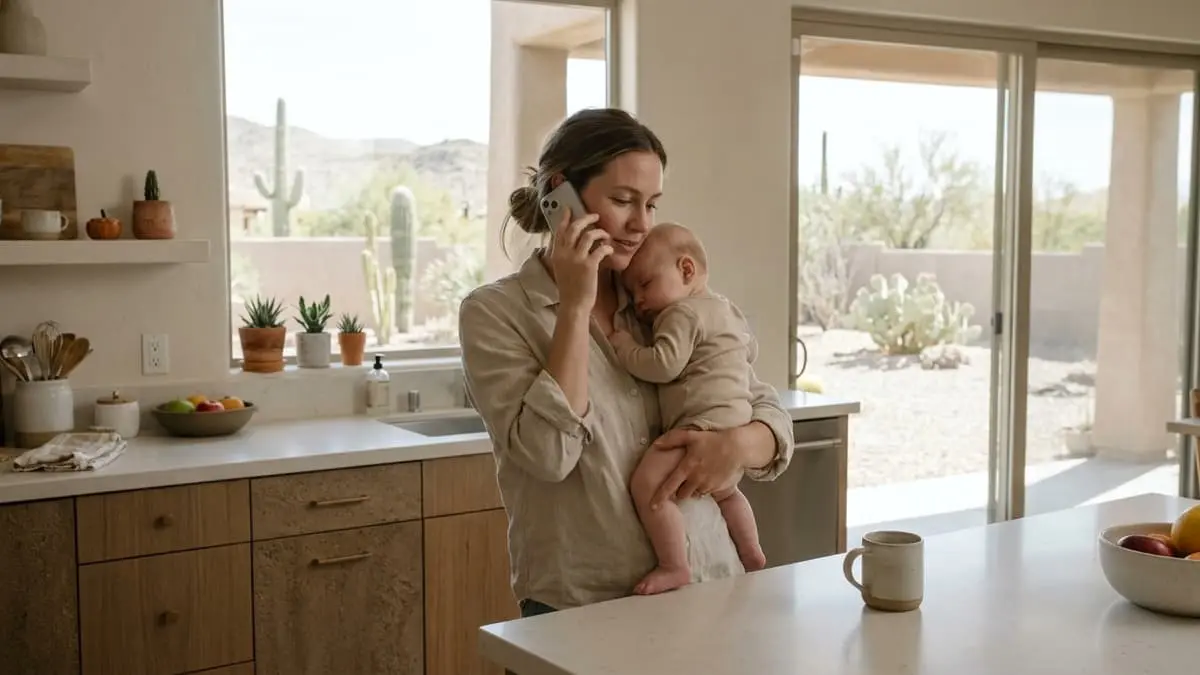
Babies and older relatives face the most risk, and babysitters need to know the house rules. A baby can't tell you something hurt, so it helps to know how can you tell if a baby was stung, using the signs UA and Banner's poison center describe.
UA says stings are most dangerous to the very old as well as the very young. If your parents live with you or come for the winter, take an afternoon to get the house ready before grandparents visit.
Anyone who watches your kids should know the shoe, towel and bedtime rules. Put Poison Control, 1-800-222-1222, on the fridge and in the sitter's phone.
What to do if a child is stung: call Poison Control or 911
Call Poison Control at 1-800-222-1222, or 911 for a severe reaction. UA's scorpion guide says that if a child 9 or under, or under 70 pounds, is stung, call 911 or Poison Help right away, and that children under 9 should be treated as serious cases.
Poison Help is free, confidential and answered around the clock, and it connects you to the local poison center. UA says a certified specialist there reviews the symptoms and tells you what comes next.
For older kids and adults, the call to Poison Control, step by step, covers what the poison center asks and what happens after.
Questions parents ask about scorpions and kids
For parents, the big ones are when scorpions are worst for kids, whether one can get into a crib, and whether kids can help with the blacklight.
When are scorpions worst for kids in Paradise Valley?
Summer nights are the worst. UA says bark scorpions in the low desert are active most of the year and less active from November through March, and the Arizona Poison and Drug Information Center says most stings happen at night during the warm summer months.
Can a scorpion get into a crib?
Yes, a scorpion can get into a crib by climbing or by dropping from the ceiling. A crib pulled off the wall with its legs in clean glass jars stops the climb, but UA says barks can cross ceilings and fall onto beds, so the room needs sealing too.
Can kids help with blacklighting?
Older kids can help, with a grown-up there. UA's extension office warns never to look straight into a UV light, because it can damage the eyes, so I'd make "never at anyone's face" the first rule.
When to call us about scorpions in the house
Call us when you're finding scorpions inside regularly, or when one turns up in a child's room. UA says the same: if you regularly find scorpions inside your home, call a pest management professional who's experienced with scorpions.
What we do on a visit
We follow the order UA recommends. Our techs come out after dark with blacklights to find where barks are living and getting in, starting with the kids' rooms, the block wall and the doors.
Then we seal the gaps we find, treat where they hide and come back on a schedule to check what's changed.
What we can and can't promise
Nobody can promise you'll never see another scorpion, and UA says they're hard to get rid of completely. What we aim for is fewer inside, especially in the rooms where your kids sleep and play.
Arizona licenses pest control companies through the Arizona Department of Agriculture's Pest Management Division, and a company's license number should be on its ads and paperwork. Whoever you call, look for it.
Setting up a prevention plan
If you want the checks, the sealing and the follow-ups handled for you, we set up year-round scorpion prevention for the whole lot, with visits every month, every other month or every quarter. Plans are one part of our scorpion control for Paradise Valley families, along with one-time treatment, sealing and blacklight inspections.
Call us and we'll come out and walk the kids' rooms and the yard with you.