Bark scorpions are the scorpions Paradise Valley homes deal with
The scorpion to worry about here is the Arizona bark scorpion. Arizona has dozens of scorpion species, and the Arizona Poison and Drug Information Center says only the bark scorpion is regarded as life-threatening.
Bark scorpions are usually 1 to 3 inches long, with a long, slender tail and thin pincers. Their color varies, and Banner's poison center says color isn't a reliable way to identify one.
Climbing is the better clue. The University of Arizona (UA) says the bark scorpion is the only Arizona scorpion with both the ability and a strong habit of climbing, so a scorpion on a wall or ceiling is most likely a bark. There's more on the small tan climber that matters most.
If someone is stung, call Poison Control at 1-800-222-1222, or 911 for a severe reaction.
Why Paradise Valley lots suit scorpions: an acre of irrigated yard
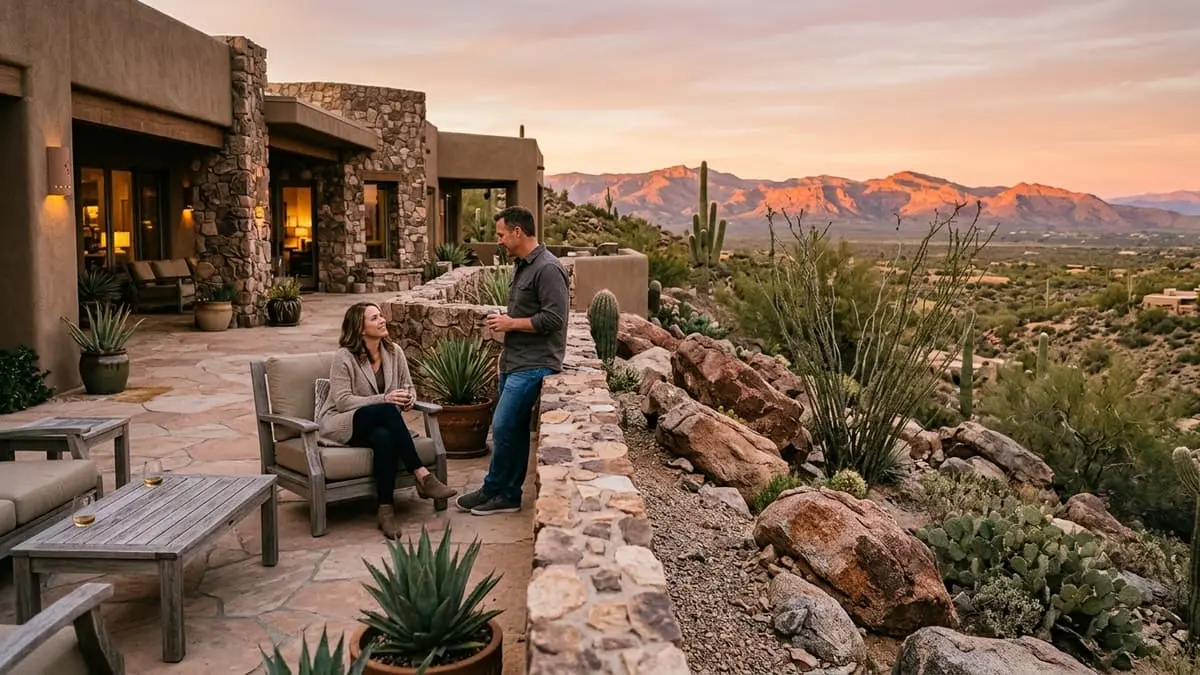
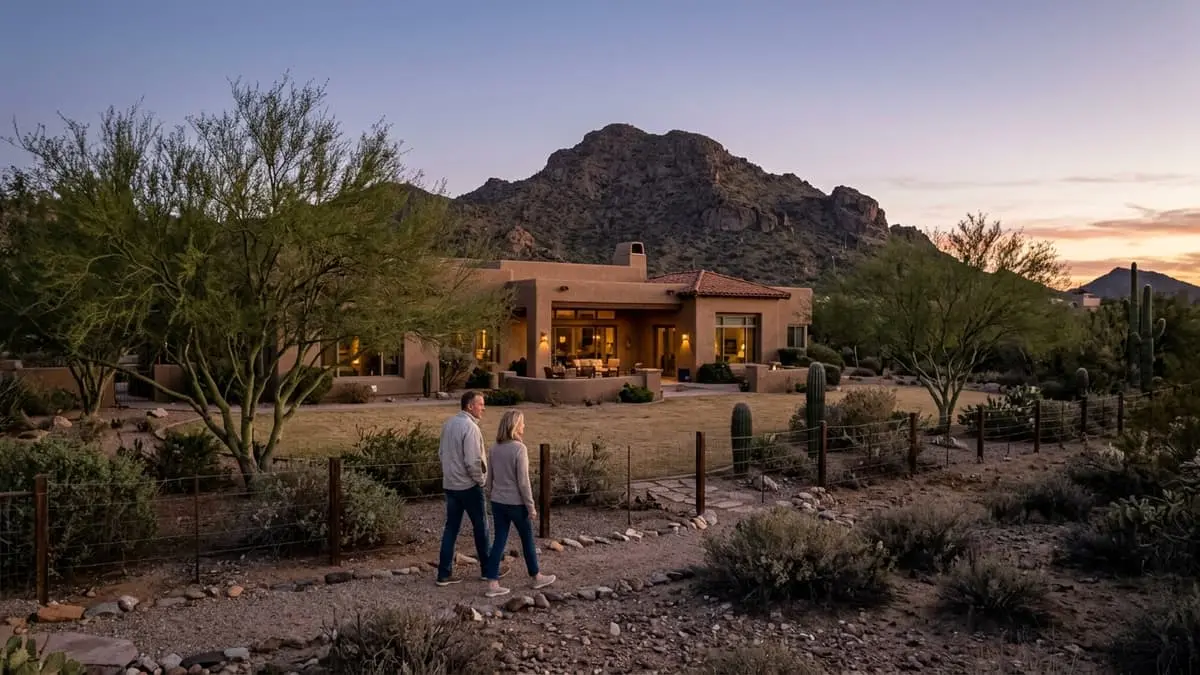
Big watered lots are the first reason. Most of the Town is zoned R-43, and under the Resident Guide's R-43 rule each lot must be at least one acre. Some areas are zoned for four acres, and the Town's General Plan calls Paradise Valley a "primarily one-acre, residential community."
That's a lot of ground to keep watered. UA's research on irrigated yards found that homes with irrigated landscapes "can support healthy populations much higher than in desert wild-land areas." UA also says bark scorpions aren't territorial, so they'll live close together where food is plentiful.
My reasoning from that: big irrigated lots next to open desert give scorpions moisture, crickets and roaches to eat, and rocks, bark and walls to hide in. That's an inference from UA's research, not a Town study. No one has published sting numbers for Paradise Valley itself.
Three mountain areas frame the Town
Paradise Valley is built around high ground. Mummy Mountain sits in the middle of Town, the north slopes of Camelback Mountain run along the southern edge, and a mountain preserve lines the western edge.
The Town's General Plan describes local roads winding around three mountainous and hillside areas. The Town also names Lincoln Drive and Tatum Boulevard as Visually Significant Corridors, part of keeping the desert look along its main roads.
Washes the Town requires you to keep natural
If your lot has a wash, the Town requires you to keep it natural, and that leaves scorpion habitat at the edge of your yard. The Town describes "an extensive wash system." Some of it is public, like the Berneil Wash corridor, which is Town-owned open space.
The Town's Resident Guide says residents must keep the drainage ways and washes on their property "clean and clear," even when the wash sits outside a wall. Washes "must be maintained or restored to their natural condition," and the Town's General Plan calls for preserving natural washes for drainage, views and wildlife habitat.
Why a wash brings scorpions closer to the house
Washes hold the water and prey scorpions want. UA's school newsletter says scorpion numbers run higher where water and prey are plentiful, and it names old washes and irrigated landscapes.
UA also says monsoon rains that flood their hiding spots make them move. When a storm fills the wash, they need somewhere drier, and a house is close by. The season post shows how scorpion season plays out month to month.
The Town's "clean and clear" rule and UA's advice point the same way. Trash, cut branches and junk piles in a wash are more places to hide, so I'd keep them out. The yard post covers what to change in a desert yard.
Hillside lots on Mummy Mountain and Camelback's north slopes
Hillside lots keep more rock and native desert near the house, and Town rules keep much of it in place. According to the Paradise Valley Independent's coverage of the Town's rules, land with a natural slope of 10% or more counts as hillside, along with the Town's Hillside Development Area.
The Resident Guide says hillside building goes through the resident Hillside Building Committee. Walls, fences, roofing, outdoor lighting, lot disturbance and landscaping on those lots all need Town approval. The Town's stated goal is to "preserve drainage patterns and desert vegetation."
Mummy Mountain's higher elevations are protected through the Mummy Mountain Preserve, which the Town Council created in 1997. That keeps native desert close to the homes on its slopes.
UA says bark scorpions spend the day under rocks, logs and tree bark, and in small animal burrows. A hillside lot usually has more of that close by, and the post on living on a hillside lot goes through what I'd do about it.
Block walls give bark scorpions their favorite shelter
Hollow block walls are where bark scorpions like to live. UA's scorpion bulletin says they're "often associated with homes and hollow-block perimeter walls," and in the harborage studies UA cites, 95% preferred hollow block walls over other shelter. UA's school newsletter adds that the blocks shield them from extreme temperatures and can hold water after rain.
UA's advice for a hollow block wall is to stucco and cap it. Walls have Town rules too: the Resident Guide says they aren't allowed in the right-of-way, and hillside walls need Town approval.
How scorpions get into a Paradise Valley house
Scorpions get in through small gaps at the doors, vents and walls. UA says they come in:
- Under poorly fitted doors
- Through window vents
- Through weep holes in the weep screed
- Through openings in exterior walls
Once inside a wall, they can travel through the house and come out at outlets and pipe collars.
That's why I'd seal before anything else, and why we seal the gaps a scorpion uses on a sealing visit. We fit door sweeps and weather-stripping, cover weep holes with coarse steel mesh, and seal the gaps around pipes.
New lots, teardowns and remodels stir scorpions up
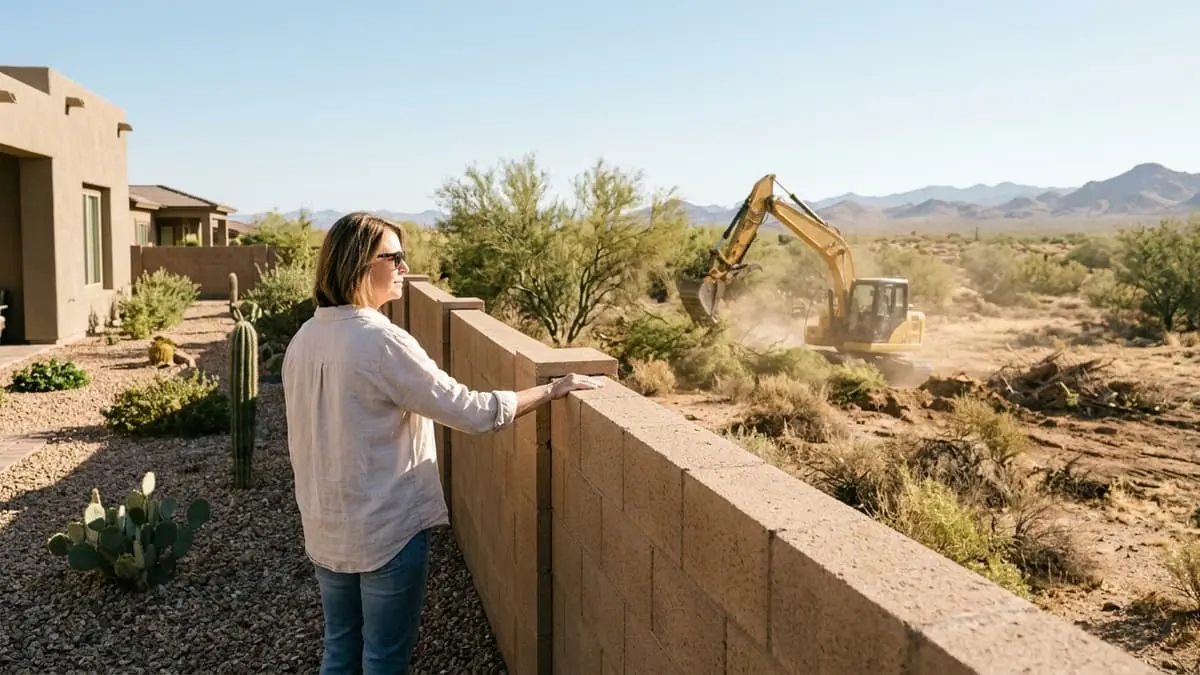
Construction moves scorpions. UA says scorpions are often found in newly developed areas, under three years old, where construction disturbed their territory. UA also says they move when building or landscaping disturbs the soil.
New lots still get approved in the Town. KTAR reported in 2024 on eight estate lots at Quail Run, south of Lincoln Drive, approved by the Town Council. The post on life after a remodel or a teardown nearby covers what to do before, during and after the work.
Some 85253 addresses are outside the Town
ZIP 85253 is bigger than the Town of Paradise Valley. Census Bureau files show about 2.8 square miles of 85253 sits outside town limits, and the ZIP had 17,358 residents in 2020 against 12,658 in the Town.
So an 85253 address on its own doesn't tell you a house is in the Town. The Town's wash, hillside and wall rules apply to homes inside town limits, and the Town of Paradise Valley is the area we serve.
If you're shopping for a house, read up on checking a house before you close.
Casitas and guest houses need their own scorpion check
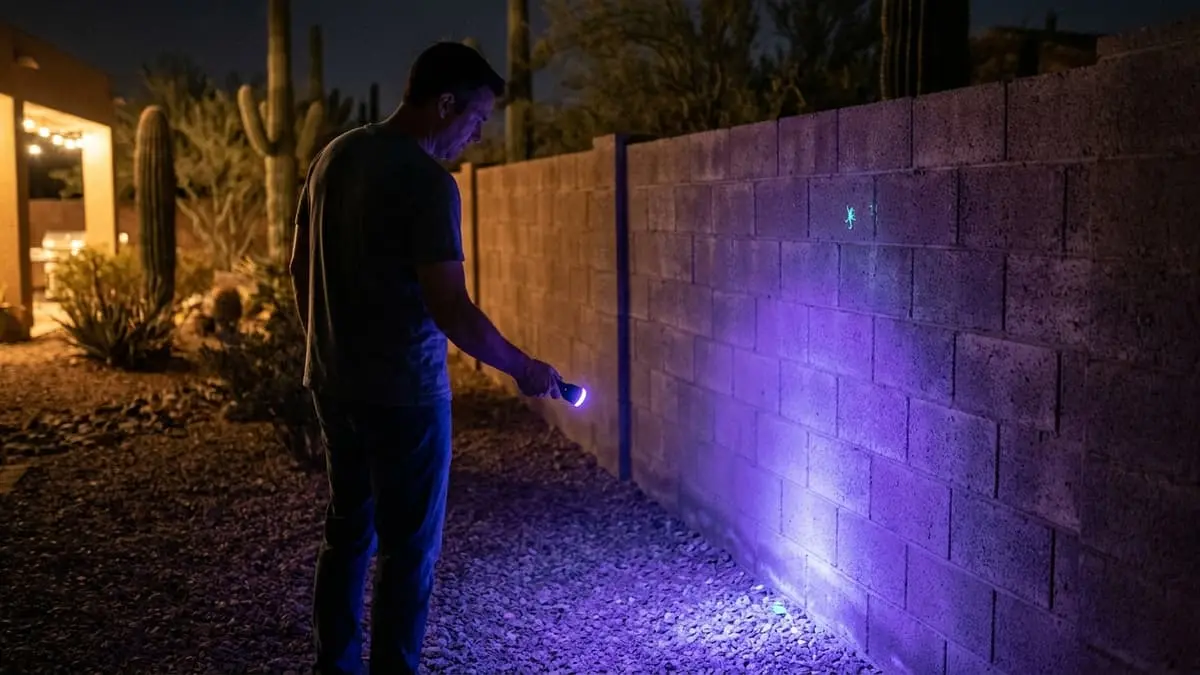
I'd check a casita with a UV light before anyone stays in it. A casita that sits closed for weeks is the kind of sheltered, undisturbed space UA says bark scorpions cluster in during the cold months.
If you rent it out, your guests won't have your desert habits. There's a post on renting out a casita or guest house with a turnover routine.
Scorpions aren't on the Town's pest contact list
The Town's Resident Guide lists pest contacts for mosquitoes, roof rats, sewer roaches and snakes, but not scorpions. The scorpions on your lot are up to you.
Scorpion Hill: a bit of Town history
Local history write-ups say the hill under Barry Goldwater's former home was called Scorpion Hill. It's a private home, so it's history to know, not a place to visit.
The Barry Goldwater Memorial at Tatum Boulevard and Lincoln Drive is the public place to remember him.
Where I'd start against scorpions at a Paradise Valley home
I'd start by sealing the house. UA says pest-proofing is by far the most effective way to cut down on run-ins and stings, and that scorpions are difficult to manage with pesticides alone.
Next, I'd clear the edge of the house. UA says to:
- Keep wood, rocks and clutter off the walls
- Stack firewood 6 inches off the ground
- Keep shrubs and trees at least 24 inches from the walls
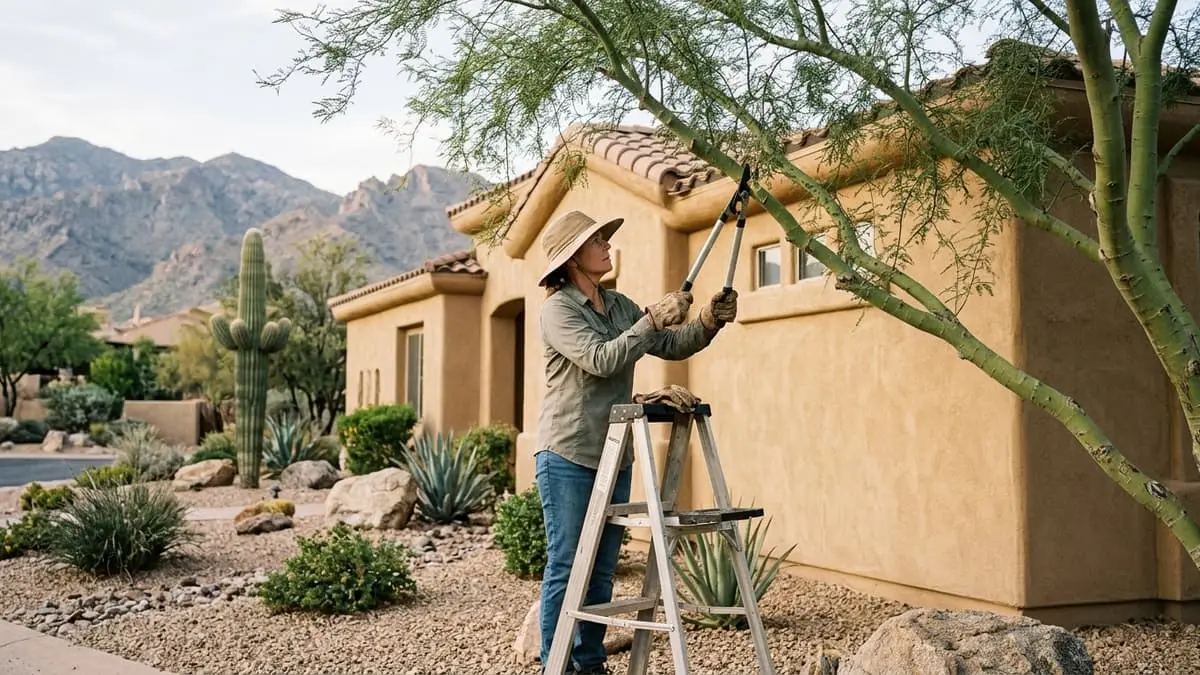
I'd also prune any branch that touches or hangs over the roof, since UA says branches give scorpions a path up.
Then come the habits:
- Keep towels and clothes off the floor.
- Pull beds away from the walls.
- Shake out shoes.
- Check the bedroom with a UV light before bed.
On a hillside lot, I'd check with the Town before changing walls, lighting or landscaping, since those need Town approval there.
Questions about scorpions in Paradise Valley
These questions are about the Town itself: whether Paradise Valley has a lot of scorpions, whether the Town sprays for them, whether every 85253 address is inside it, and what Scorpion Hill is.
Are there a lot of scorpions in Paradise Valley?
There's no published count for the Town. Bark scorpions live across the low desert, and the Town's irrigated one-acre lots, washes and hillsides give them plenty of habitat.
Does the Town of Paradise Valley spray for scorpions?
Not that its Resident Guide shows. The guide lists pest contacts for mosquitoes, roof rats, sewer roaches and snakes, but not scorpions.
Is every 85253 address inside the Town?
No. Census Bureau files show about 2.8 square miles of ZIP 85253 lies outside town limits.
What is Scorpion Hill in Paradise Valley?
It's a name from local history. Write-ups give it to the hill under Barry Goldwater's former home, which is a private residence.
Call us for scorpion control in the Town of Paradise Valley
If you're finding scorpions inside on a regular basis, call us. UA advises bringing in a pest management professional with scorpion experience when that happens.
We'll come out, look at where they're getting in and where they're hiding, and set up a prevention plan built around the Town's seasons. We seal, we treat where they hide, and we keep checking on a schedule that fits your lot.
UA says bark scorpions are very hard to get rid of completely, so scorpion control across the Town of Paradise Valley aims at fewer of them inside your house. Arizona licenses pest control companies through the Arizona Department of Agriculture's Pest Management Division, and a company's license number belongs on its ads and paperwork, ours included.