Water is what scorpions want most from a desert yard
Irrigation matters more than anything else in a desert yard. The University of Arizona (UA) says homes with irrigated landscapes "can support healthy populations much higher than in desert wild-land areas." UA's school newsletter says scorpion numbers run higher where water and prey are plentiful, and it names old washes, rerouted washes and irrigated landscapes.
UA also says bark scorpions drink from small puddles. On a one-acre lot, that's a lot of drip line and a lot of chances for a slow leak.
How I'd water a big lot without helping scorpions
I'd keep extra water away from the house. That means fixing leaking drip lines, emitters and hose bibs, especially near the walls, and looking for spots that stay wet after the water shuts off.
UA suggests keeping grass short and limiting low ground cover. UA also says irrigation that floods their hiding spots gets them moving, so beds soaked right against the foundation can push them toward your doors.
Pools: use the skimmer net, not your hand
A scorpion floating in the pool may still be alive. UA says one found in a pool or spa may still be able to sting, even after a long time in chlorinated water. The Town's Resident Guide also says pools must not become stagnant or "harbor insect infestation."
Boulders and granite: I'd start with the loose rock
UA's guides name rocks, debris and clutter against the house as hiding spots, and they don't single out granite ground cover. So loose rock is where I'd start.
The Town's 1996 landscape guidelines call for desert-colored granite at least 3/4 inch and boulders set one-third buried. They were written for Town and resort plantings, not as a rule for your backyard, but they're a good model.
My reasoning on boulders: one sitting on top of the ground leaves a shady gap underneath, and one set a third of the way in leaves less of one. That matters because UA lists rocks among the places bark scorpions hide by day.
I'd clear the extra rock behind the side gate, stacked pavers and broken block. UA's school newsletter says to remove stones, bricks and boards, and Banner's poison center recommends gloves for yard work.
Ironwood, palo verde and native trees: prune them, don't pull them
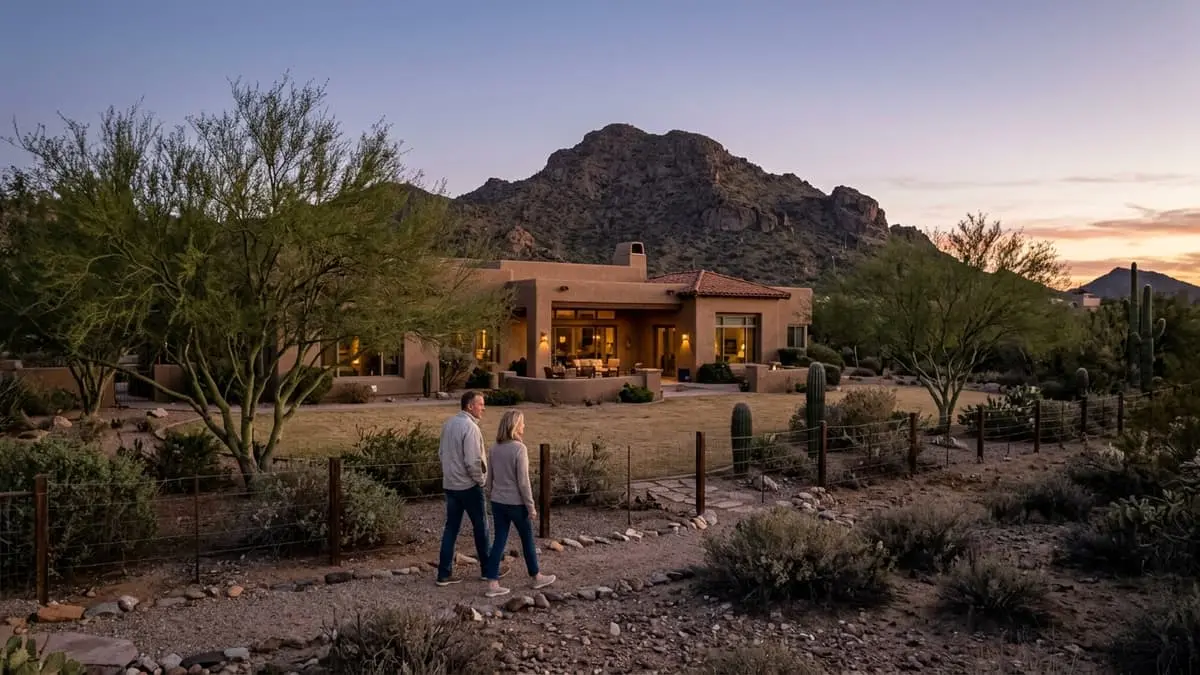
Keep your native trees, but keep them off the house. The Town's landscape guidelines want ironwood to make up at least 20% of street-tree plantings, and they recommend palo verde, mesquite, ironwood, desert willow, acacias and desert hackberry.
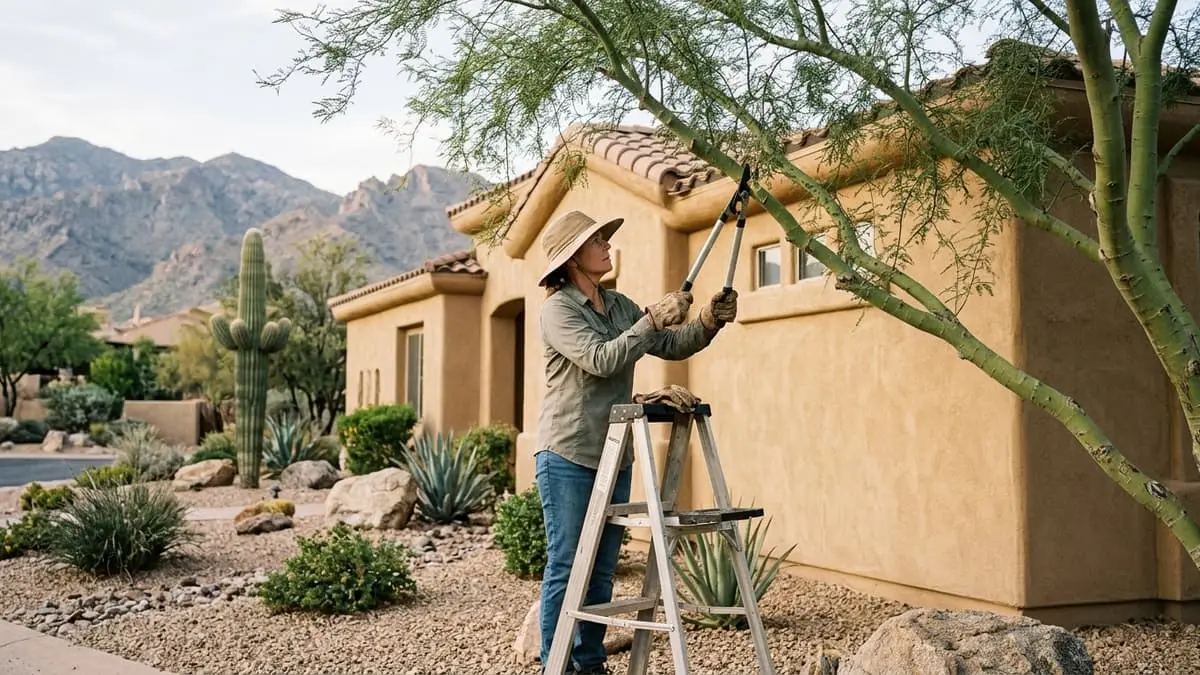
UA says bark scorpions hide under tree bark, and that branches touching or hanging over the roof give them a path onto it. The 24-inch rule in UA's pest-proofing guide keeps shrubs and trees at least that far from the walls.
So the job is pruning. I'd trim limbs off the roof and back from the eaves, and keep hedges from leaning on the house, since UA suggests pruning shrubs away from the house.
Do palm trees attract scorpions?
The Arizona sources don't single out palms. The Town's guidelines call palms "not indigenous" and "out of scale with the Sonoran Desert" for Town plantings, while UA talks about tree bark in general. I'd treat palm fronds touching the roof like any other branch.
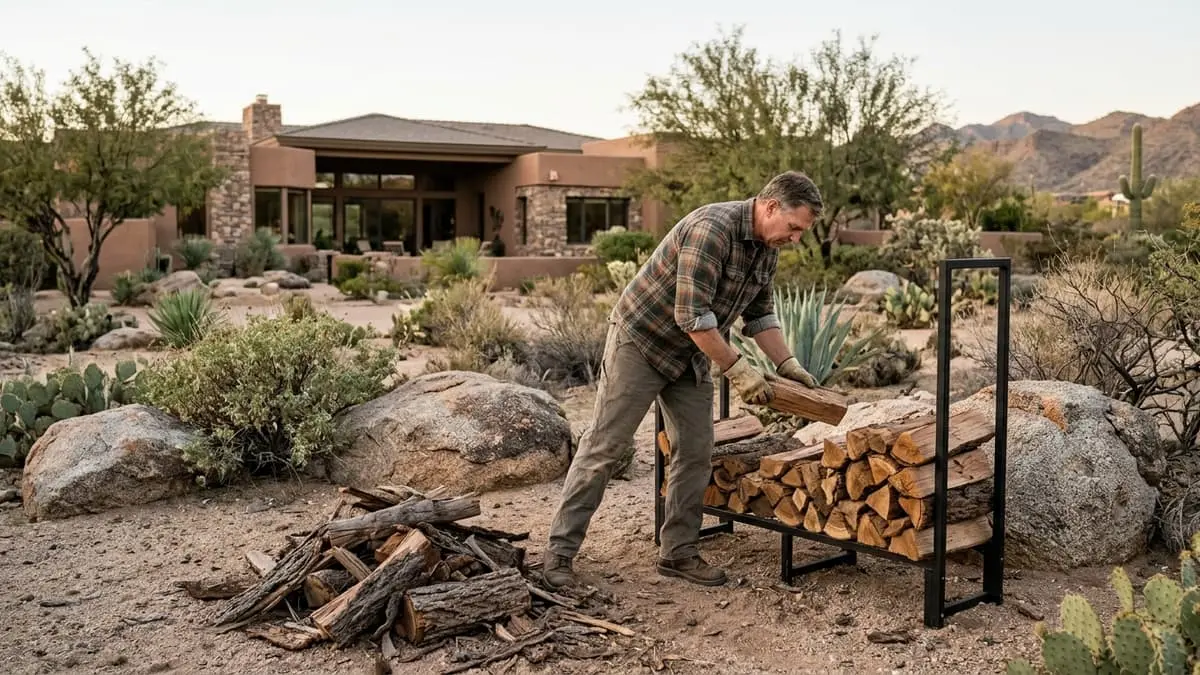
Woodpiles, pots and yard clutter hide scorpions
Firewood and patio clutter are classic daytime hiding spots. UA's pest-proofing guide says to keep firewood stacked 6 inches off the ground, and UA's scorpion bulletin says not to store firewood indoors. UA's Cooperative Extension also lists firewood brought inside as one way scorpions get into a house.
I'd keep the rack away from the walls and bring in only what I'll burn that night. UA's school newsletter lists potted plants, patio debris and door mats as hiding spots too, so lift mats and pots now and then and don't let the patio turn into storage.
UA suggests keeping garbage cans raised off the ground. If you have a wash on the lot, the Town's Resident Guide says to keep it "clean and clear," and dumped branches and junk in a wash are more places for scorpions to hide.
Crickets and roaches in the yard bring scorpions closer
Scorpions follow their food. UA says bark scorpions eat crickets, cockroaches and other insects, and that a cricket or roach problem can make scorpions more common indoors.
UA says controlling insects helps but won't get rid of scorpions on its own. UA's school newsletter also suggests encouraging natural predators like roadrunners, owls and bats. For more on food and water, read what draws barks toward a house in the first place.
How your yard fits the Town-wide picture
For the rest of the outside work, from porch lights to the pool deck, see the yard plan, spot by spot. Your yard is also one part of a bigger pattern in the Town. The washes, hillsides and one-acre lots around it are covered in how lots, washes and hillsides add up.
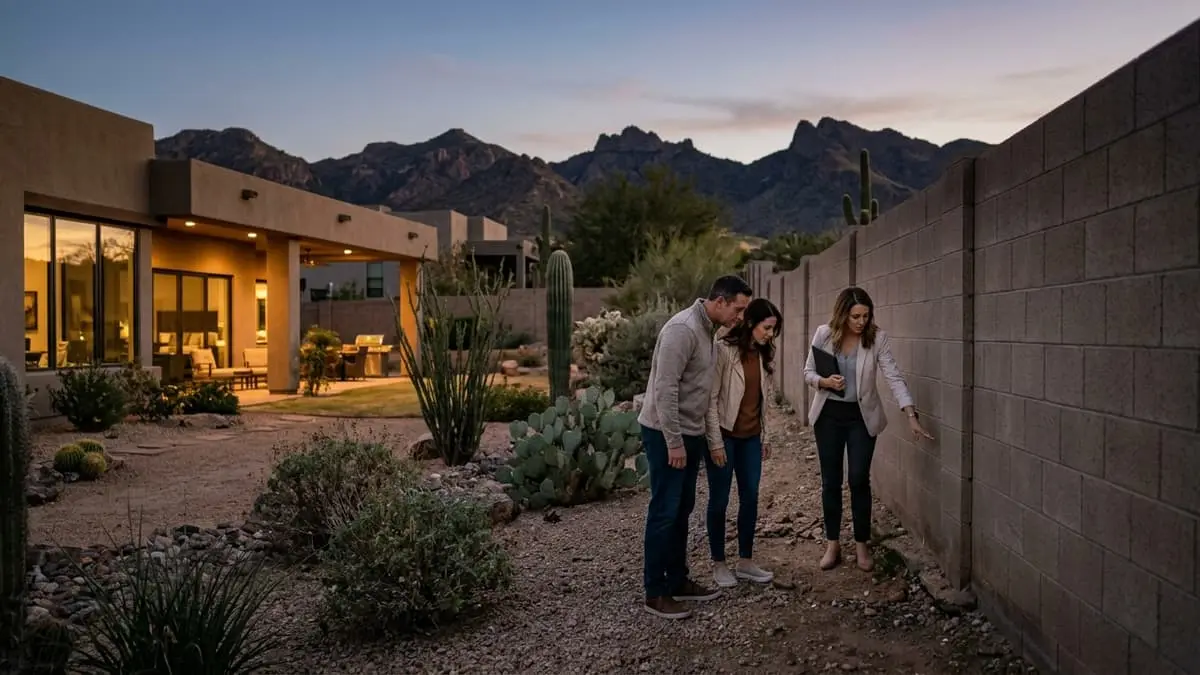
If you're shopping for a house, here's what to look for in a yard before you buy. If you host guests, see getting a rental's yard ready for guests.
Questions about desert landscaping and scorpions
Nothing I found says to rip out a desert yard. UA's advice is to change the habitat near the house, and the answers below cover native trees, granite and irrigation.
Should I rip out my desert landscaping?
No source suggests that. UA's advice is to change the habitat near the house:
- Prune plants away from the walls
- Clear rock and wood piles
- Limit low ground cover
Do palo verde and ironwood trees attract scorpions?
They can give them cover and a way up. UA says bark scorpions hide under tree bark and that branches touching the roof give them a path, so I'd keep trees pruned back from the roof and at least 24 inches from the walls.
Is granite ground cover a problem?
UA's guides don't single it out. They focus on rocks, debris and clutter against the house, so I'd clear loose rock piles first.
Does irrigation make scorpions worse?
Yes, by UA's account. UA says irrigated landscapes can support much higher populations than wild desert, and that irrigation flooding their hiding spots gets them moving.
Call us for scorpion treatment around the yard and foundation
If yard changes haven't kept them out of the house, call us and we'll come out. We treat where they hide, inside and out, with treatment along the foundation and yard, and we'll show you where your landscaping is giving them cover.
We'll tell you what we're treating and where, including the wash, block walls and rock beds. UA says scorpions are hard to manage with pesticides alone, so how we approach scorpion control in Paradise Valley pairs treatment with the yard and sealing work that keeps fewer of them near the house.