Why Your Yard Holds So Many Scorpions
A watered yard next to open desert suits bark scorpions well. The University of Arizona's guide to desert scorpions says homes with irrigated landscapes can support much higher populations than wild desert, and that bark scorpions aren't territorial, so a lot of them can share one good spot.
UA's school and home pest newsletter says numbers run highest where water and prey are plentiful: old washes, rerouted washes and irrigated yards. Most of the Town is zoned for lots of at least one acre, and the Town describes an extensive wash system. That's a lot of watered ground next to a lot of desert.
They also move when the yard changes. UA says irrigation or monsoon rain that floods their hiding spots gets them moving, and so does construction or landscape work that disturbs the soil. UA says their usual hunting trips around buildings cover less than 35 yards a night, which is one reason the part of the yard right around the house matters most.
Start at the Block Wall
The block wall is the first place I'd look. In research UA cites, 95% of bark scorpions picked hollow block walls for shelter over the other options around buildings and yards.
They get in through narrow cracks, and the blocks protect them from the heat and can hold water after a rain. UA suggests stuccoing and capping hollow block walls so they're less inviting. If you want to see what's living in yours, here's how to check the cracks, the cap and the hollow cores of a block wall.
On a hillside lot, check with the Town before anyone changes a wall. The Resident Guide says hillside walls and fences need Town approval.
Clear Rock, Wood and Clutter Away From the House
Anything stacked against the house gives a scorpion a dark place to spend the day a few feet from your door. UA says not to let wood, rocks, clutter or debris build up against the house. Between its guides and its newsletter, these are the spots it names:
- Logs, boards and firewood
- Stones, bricks and rock piles
- Potted plants and patio debris
- Door mats
- Narrow cracks in wood or cement
Firewood and Lumber
Stack firewood about 6 inches off the ground, well away from the walls, and don't store it indoors. UA gives both of those rules. Old lumber and leftover bricks from a project are worth hauling off rather than leaving along the side yard.
Pots, Mats and Patio Furniture
Pick up and move the pots and mats near the doors now and then, and look under them before you do. Banner Health recommends gloves for yard work, and I'd wear them any time I'm lifting something that's been sitting a while.
Garbage Cans
UA says to keep garbage cans raised off the ground, so a can sitting flat against the side of the house isn't one more dark spot.
Trim Plants Back From the Walls and Roof
Plants pressed against the house give scorpions cover and a way up. UA's pest-proofing guide says to keep shrubs and trees at least 24 inches from the walls, and its scorpion guide says to prune branches that touch or hang over the roof.
UA also suggests keeping grass short and limiting low ground cover near the house.
You don't have to lose the native trees. The Town's landscape guidelines recommend palo verde, mesquite, ironwood, desert willow, acacias and desert hackberry. Keep them, just keep them off the house, and if you're weighing a bigger change, read about ripping out desert landscaping versus keeping it first.
Cut Back the Water and the Bugs They Eat
Bark scorpions eat crickets, cockroaches and other insects, and they drink from small puddles, according to UA. A yard that grows bugs and holds water keeps feeding them.
Puddles, Drips and Overwatering
Walk the yard the morning after the sprinklers run and look for standing water near the house. Fix the drips and the low spots that stay wet. UA also says water from irrigation that floods their hiding spots gets scorpions moving.
Porch Lights and Outdoor Lighting
Lights draw the bugs, and the bugs draw the scorpions. A university pest management guide to scorpions says yellow outdoor lights attract fewer insects, which means less food for scorpions. Swapping the bulbs by the back door and over the patio is an easy change.
Around the Pool
UA's newsletter says wet towels left by the pool overnight attract scorpions. Hang them up or bring them in. If you find one in the water, don't reach for it: UA says a scorpion in a pool may still be alive and able to sting. Here's what to know about a scorpion floating in the pool or spa.
Washes, Hillsides and the Desert Edge
Homes next to dry washes and open desert see more of them. UA's pest-proofing guide says homes near dry riverbeds may see an influx during summer rains and after irrigation.
You can't clear a wash to fix that. The Resident Guide says residents must keep washes on their property clean and clear, and maintained or restored to their natural condition, and the Town preserves washes for drainage, views and wildlife habitat. So the work happens in the strip between the wash and the house: no woodpiles, no rock piles against the walls, and a tight seal on the doors facing the desert.
If they started showing up all at once after a monsoon storm or a teardown nearby, these are the reasons barks appear out of nowhere. On the slopes, the rock and native desert come right up to the house, and hillside lots have their own rules about what you can change.
Blacklight the Yard on Warm Nights
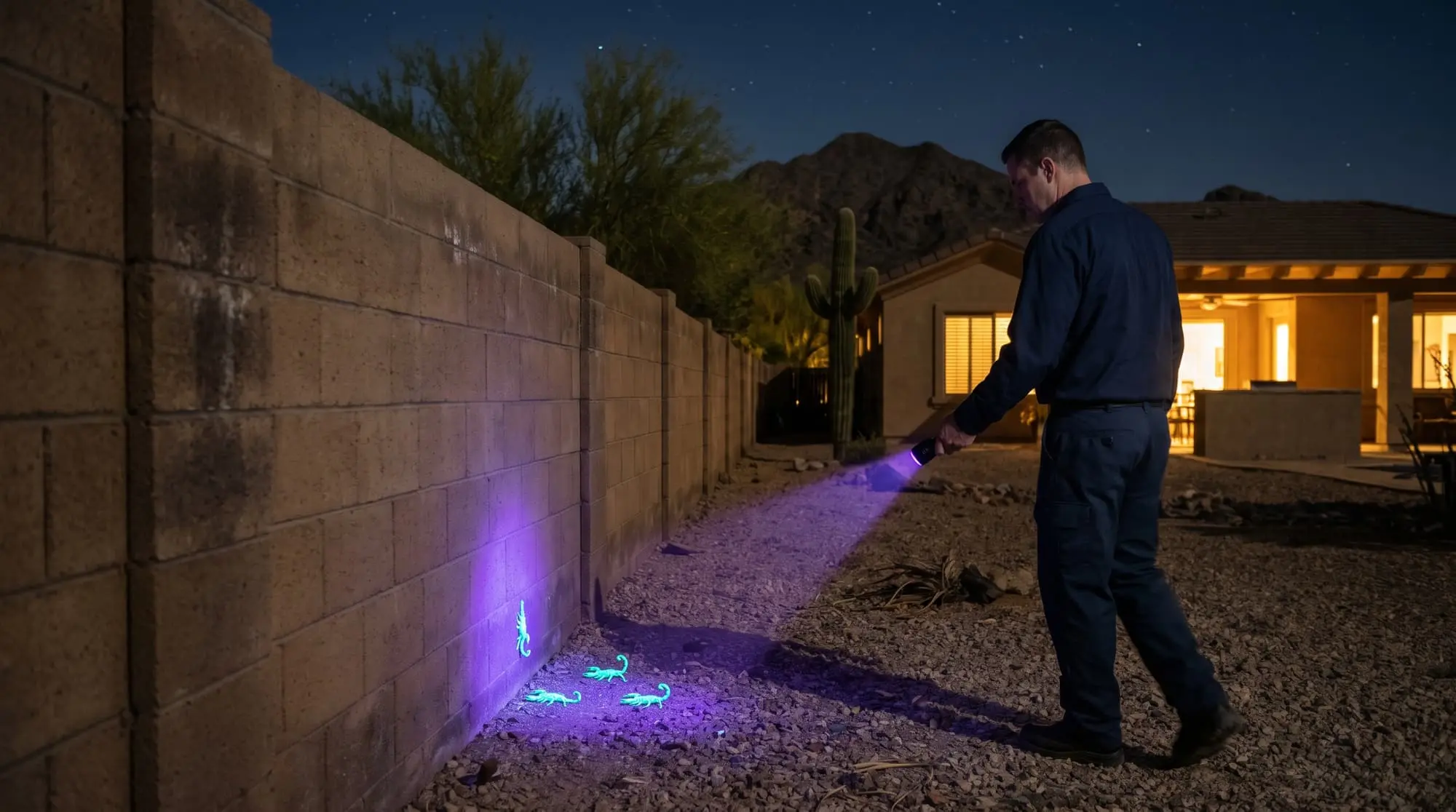
Blacklighting is how you find and remove the ones already out there. UA's pest-proofing guide says repeated blacklight collections, with the scorpions released far from the house, work better than repeated pesticide applications. UA's newsletter adds that three or four collections a summer can cut local numbers well into the next season.
UA suggests going out between 8 and 11 pm in summer, in boots, with long tongs. UA says nights above 70°F are ideal for them in the low desert. Never look straight into the UV light, since UA says it can damage your eyes. Before your first night out, read up on where to point the light and what to bring.
UA's newsletter also suggests encouraging natural predators like roadrunners, owls and other birds of prey, and bats.
What We Treat Outside, and What Treatment Can't Do
Treatment outside is one part of the job. UA says scorpions are hard to manage with pesticides alone, and clearing a whole landscape isn't realistic, so we treat where they live close to the house rather than the whole acre.
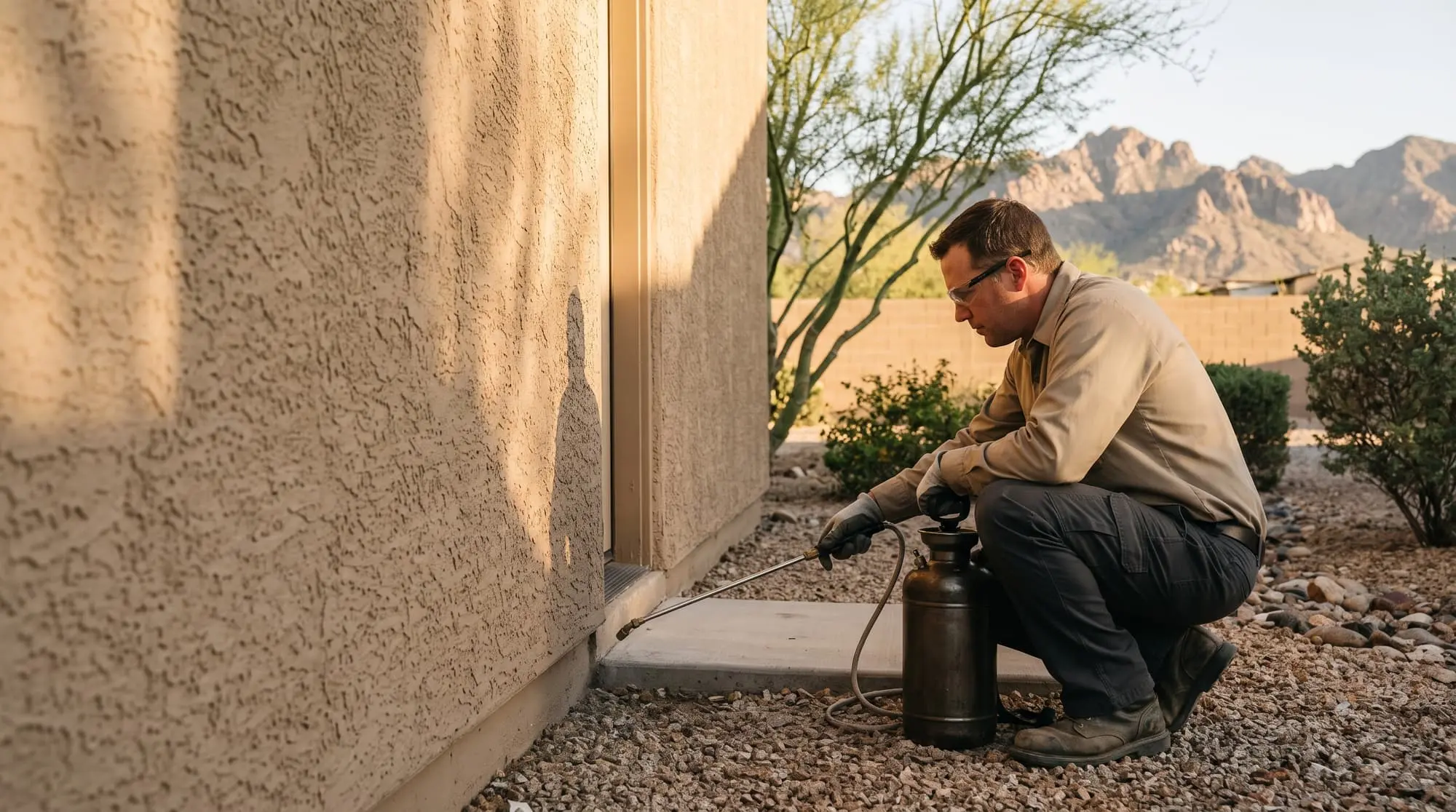
When we come out, we treat the foundation, the block wall, rock piles, woodpiles and anything stacked against the house. We also point out the gaps they're using to get inside, because the yard work and the sealing go together. Before you pay for that part, it helps to know what sealing gets you for the money.
For the inside of the house and how it all fits together, start with the four steps that work inside and out.
Questions About Scorpions in the Yard
These cover when they're out in the yard, whether you can spray it yourself, and whether bug control and yellow bulbs make a difference.
When are scorpions most active in the yard?
In the low desert, bark scorpions are active most of the year and slow down from November through March, according to the University of Arizona. On warm nights, UA's tracking found most movement between 7 and 11 pm and again from 3 am to sunrise.
Can I spray my own yard for scorpions?
Arizona law lets homeowners apply non-restricted pesticides on residential property they own. The University of Arizona says scorpions are hard to manage with pesticides alone, though, so spraying works best alongside clearing the yard, sealing the house and blacklighting.
Will getting rid of crickets get rid of scorpions?
It helps. Crickets and cockroaches are their food, and UA says a cricket or cockroach problem can make scorpions more common indoors. They still need places to hide, so clear the clutter and check the block wall too.
Do yellow porch lights keep scorpions away?
Not directly. Yellow outdoor lights attract fewer insects, according to university pest management guidance, so there's less food near your doors for scorpions to hunt.
Call Us About Scorpions in Your Yard
If you've cleared the walls and you're still finding barks along the block wall or by the back door, call us. We'll come out, look at where they're living on your lot and how they're getting in, and treat the walls and the yard around the house.
For lots that light up every summer, we can set up visits that keep up with the walls and the yard through the warm months.