Why the Arizona bark scorpion is the one that matters
The bark is the only scorpion of medical concern in the U.S., according to the University of Arizona (UA), even though Arizona alone has dozens of species. Every native scorpion can sting, but UA says only the bark's sting is a hazard to human health.
The Banner Poison and Drug Information Center calls the bark (Centruroides sculpturatus) the most venomous scorpion in North America. The CDC says its sting "can be life-threatening."
Most stings are still minor. Dr. Anne-Michelle Ruha, a UA medical toxicologist, says more than 95% of stings have minor effects, and UA says about 90% of the stings reported to the Arizona Poison and Drug Information Center are handled at home.
I wrote up how rare a deadly sting really is for anyone who wants the details on the bad cases.
How big barks get: about 1 to 3 inches
A grown bark is usually somewhere between 1 and 3 inches long, but health sources don't agree on the exact size:
- Banner's poison center puts adults at 1 to 1.5 inches.
- The Arizona Poison and Drug Information Center says about 1.5 inches at maturity, and its bites and stings brochure says about 2 inches, the smallest scorpion in Arizona.
- UA Extension's guide to scorpions of the desert Southwest says adults are 2 to 3 inches, and UA's pest-proofing guide says about 3.
- A UA school and home newsletter says up to 3 inches, counting the tail.
Only that UA newsletter says whether the tail is counted. I wouldn't use size to rule a bark out, because a small scorpion can still be one.
What barks look like: slender tail and pincers, color that varies
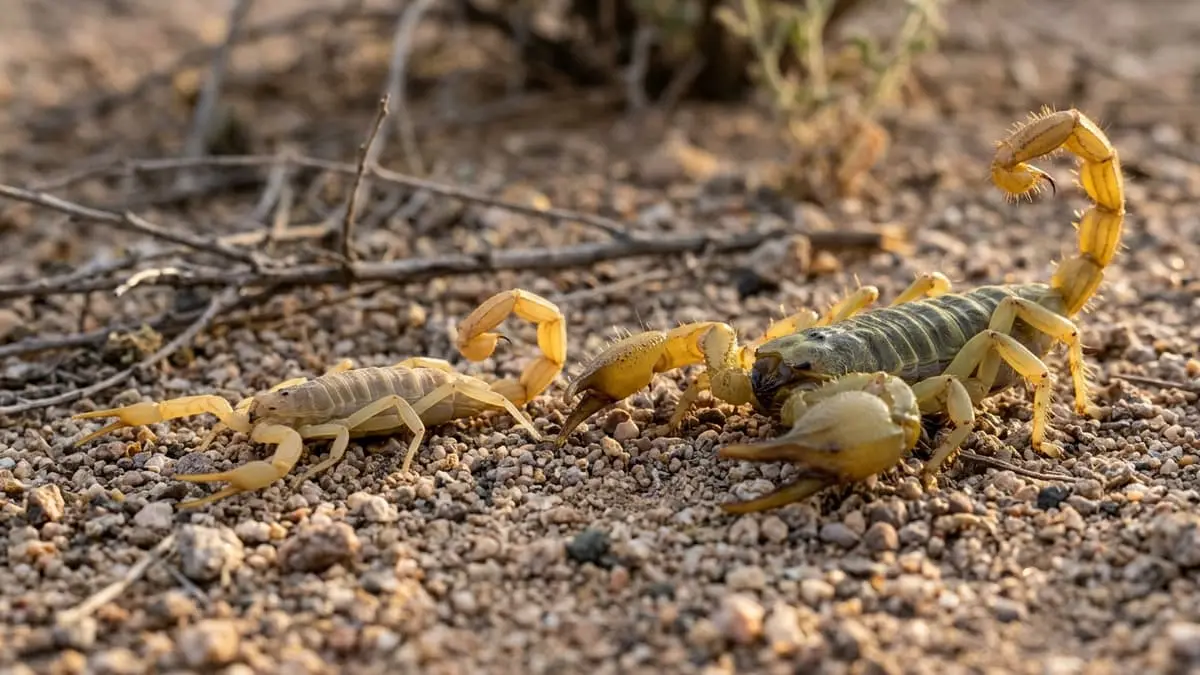
Barks have slender legs and pincers and a long, thin tail, thinner than the less toxic species, according to the Arizona Poison and Drug Information Center. Shape is a better clue than color.
Color varies a lot. A UA newsletter calls barks light tan or yellow-brown, UA's scorpion guide says they range from pale to darker with stripes or a checkered pattern, and Banner says color isn't a reliable way to identify one.
Up close, UA's pest-proofing guide gives two more clues: a small tooth at the base of the stinger, and a long, triangular plate on the underside where other Arizona species have a five-sided one. Both may take a magnifier to see.
I put together a guide to telling a bark apart from the big hairy one and the other ground species. If you're not sure it's a scorpion at all, UA names a few look-alikes: sun spiders, vinegaroons and pseudoscorpions.
Barks climb walls and ceilings, and other Arizona scorpions don't
A UA newsletter calls the bark the only Arizona scorpion with both the ability and a strong tendency to climb. It often sits straight up on a wall or upside down, so if I found a scorpion on a wall, ceiling or window frame, I'd treat it as a bark.
Banner says barks can climb almost anything except clean glass or plastic, and they're often found on ceilings and cement walls. UA says textured walls are easy for them.
UA's scorpion guide says they cross ceilings and can drop into beds, sinks, tubs and toilet bowls, and may not be able to climb back out of a sink or tub. A scorpion in the tub in the morning may have dropped in hours earlier.
An older UA guide says barks "make little progress across ceilings." The newer UA guide and Banner both say they cross them, so I'd count ceilings as part of their range.
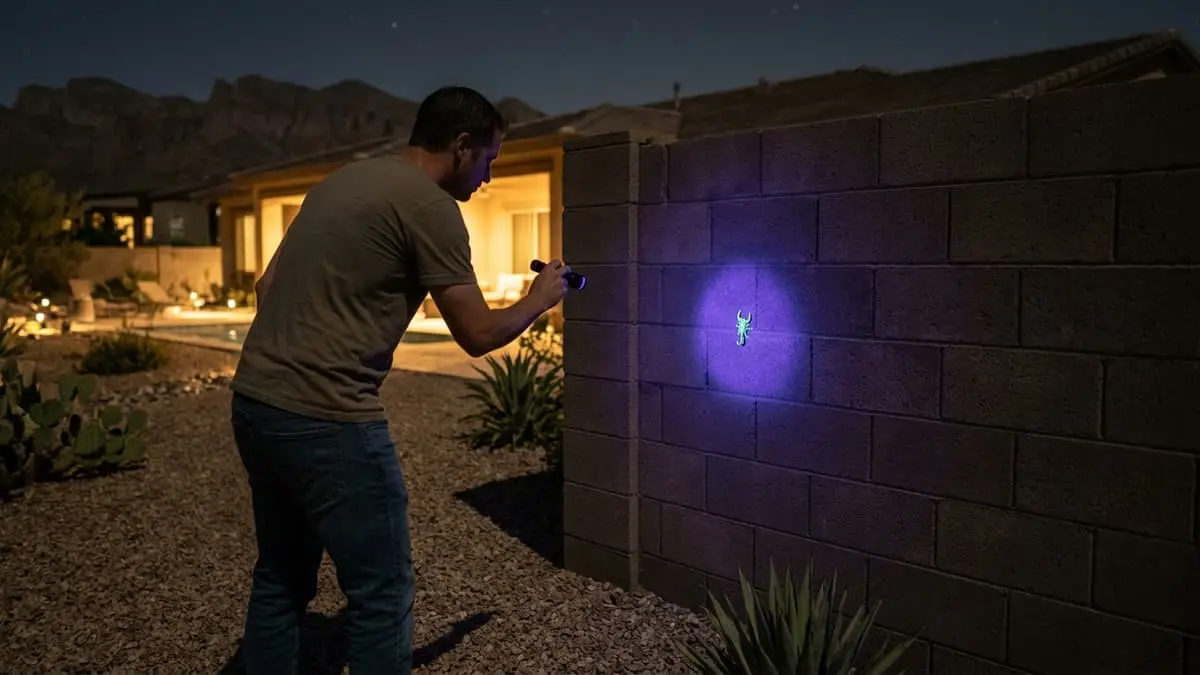
Why scorpions glow green under a blacklight
Scorpions glow bright green under UV light because of a natural substance in a layer of their exoskeleton, which Banner calls the hyaline layer. Banner says even fossil scorpions still glow.
UA's pest-proofing guide says scorpions show up under a blacklight from several yards away. UA suggests a UV check inside the house before bed, and outdoor checks between 8 and 11 pm in summer.
UA also warns never to look straight into a UV light, because it can damage your eyes. The glow tells you it's a scorpion, not which kind, since UA and Banner describe glowing as something scorpions do in general.
Where barks live around a Paradise Valley home
Around a house, barks hide in these spots, according to UA:
- In hollow block walls
- In cracks and crevices
- In wall voids
- Under rocks, logs, tree bark, potted plants, patio debris and door mats
That includes the door mat you step over every morning.
Block walls top the list. In research UA cites, 95% of bark scorpions picked hollow block walls over the other shelter around buildings and yards, and UA says the blocks protect them from heat and cold and can hold water after rain.
Barks follow food and water. They eat crickets, cockroaches and other insects and drink from small puddles, and UA says homes with irrigated landscapes can support far more of them than open desert.
Barks aren't territorial, UA says, so they often live in groups. UA also says 98% of scorpion exposures reported to U.S. poison centers happen in or around homes.
There's a separate post with a room-by-room tour of their hiding spots, inside and out.
When barks come out: warm nights, evening to sunrise
Barks come out at night, mostly between 7 and 11 pm and again from 3 am to sunrise, in UA tracking studies. Males roam farther than females, and pregnant females move the least.
UA says nights above 70°F are ideal for barks in the low desert. The Arizona Poison and Drug Information Center says most stings reported to it happen at night in the warm summer months.
From November through March, barks slow down and cluster in sheltered, undisturbed spots, UA says. Those clusters sometimes turn up during winter remodeling or when a block wall comes down.
UA says light, extreme heat, flooding from irrigation or monsoon rain, and soil disturbed by building or landscaping all get them moving. Typical foraging around a building covers less than 35 yards a night.
How barks get inside: doors, vents and weep holes
Barks get in a few ways, according to UA:
- Under doors that don't fit tight
- Through window vents
- Through openings at the base of exterior walls
- Through weep holes in the weep screed (the openings that let water drain out of the wall)
Once they're inside a wall, UA says they can move through the building and come out around outlet and switch plates, pipe collars and similar gaps.
UA's door test: with the door shut, no light should show around it when you look from inside. If it were my house, I'd try it on the back door tonight with the patio light on.
How many babies a bark carries, and how long barks live
A female bark gives birth to about 25 to 35 live young on average, by UA's count, and they ride on her back for one to three weeks. A UA newsletter gives a lower range, 15 to 30.
Barks live 5 to 7 years, according to UA. Banner says baby scorpions aren't more venomous than adults, and a separate post covers whether the babies on her back carry more venom in more detail.
What a sting from a bark feels like, and who's most at risk
A bark sting usually brings pain at the spot with little swelling, plus numbness and tingling that can spread, according to the Arizona Poison and Drug Information Center. UA says symptoms usually start within 20 minutes and can keep getting worse for the first 4 hours.
Small children and older adults face the highest risk of a severe reaction, according to the Arizona Poison and Drug Information Center and UA. The CDC lists severe signs like these:
- Roving eyes
- Drooling
- Muscle twitches
- Trouble breathing
UA says most stings happen by accident, when someone grabs, presses against or steps on a scorpion. If anyone is stung, call Poison Control at 1-800-222-1222, or 911 for a severe reaction.
I wrote a separate post on who to call in the first minutes after a sting, including what a UA toxicologist says about Benadryl.
Quick answers about bark scorpions
Not every small tan scorpion is a bark, and the ones that are can't climb clean glass. These answers also cover winter activity and whether barks live in block walls.
Is every small tan scorpion a bark?
No. UA says the stripe-tailed and yellow ground scorpions are often mistaken for barks, and Banner says color isn't a reliable clue. A slender tail, slender pincers and a scorpion up on a wall or ceiling all point to a bark.
Can bark scorpions climb glass?
Not clean glass. Banner says barks can climb almost anything except clean glass or plastic, and UA says textured walls are easy for them.
Are bark scorpions active in winter?
Less so. UA says barks slow down from November through March in the low desert and cluster in sheltered spots, and that nights above 70°F are ideal for them.
Do bark scorpions live in block walls?
Often. In research UA cites, 95% of barks chose hollow block walls over the other shelter around homes and yards.
Getting help with bark scorpions in Paradise Valley
Call us if you're finding barks inside on a regular basis, and we'll come out. UA says that's the point to bring in a pest management professional who knows scorpions.
UA also says bark scorpions are extremely hard to get rid of completely and that pesticides alone don't manage them. Pest-proofing the house works best.
We come out after dark, when barks are out and glowing, and walk your walls and yard with a UV light. We check the block walls, door gaps, weep screeds and pipe openings and show you what we find.
That night check is the first step in the scorpion control we do for homes around Mummy Mountain and the rest of the Town. Arizona licenses pest control companies through the Arizona Department of Agriculture's Pest Management Division, and a company's license number should be on its ads and paperwork.