Do Glue Traps for Scorpions Work? They Catch the Ones That Cross Them
Glue traps catch scorpions, but only the ones that happen to walk across them. I looked for research on how much they lower scorpion numbers around a house and couldn't find any, so I can't give you a catch rate or a number of traps.
A trap also doesn't change why scorpions are there. It does nothing about the gap under the door, the block wall out back, or the crickets they came in to eat.
What a Sticky Trap Is Good For: Showing Where They Come In
A sticky trap is best at showing you which doors and rooms scorpions are using. Each catch gives you a door, a side of the house, a room and a date.
It also holds a scorpion still so you can look at it. The University of Arizona (UA) says the bark scorpion is the only one here whose sting is a real health concern, and that it has a more slender tail and thinner pincers than the milder species.
Glue Traps vs. What Actually Lowers the Numbers
To lower the numbers, UA points to pest-proofing and blacklight collections, not traps. UA's scorpion guide calls pest-proofing the home by far the most effective way to cut down on stings.
UA's 2015 bulletin on sealing out household pests says repeated blacklight collections, with the scorpions released far from the house, work better than repeated pesticide applications. So I'd use traps to find the problem spots, and put the real effort into those two steps.
Where to Put Glue Traps for Scorpions
If it were my house, I'd put traps flat against the wall:
- Inside each outside door
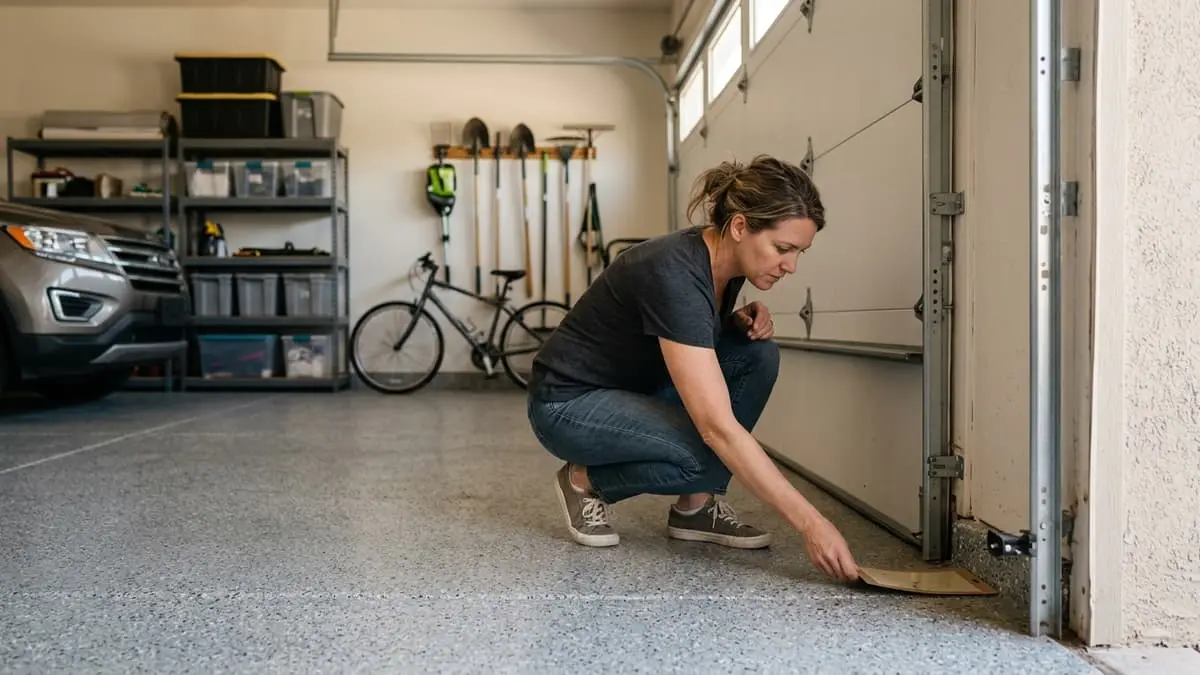
- Along the garage door edges and between the bays
- Behind the washer and dryer
- Under the bathroom and kitchen sinks
Those are the spots where scorpions come in or end up.
UA says scorpions get in under and around doors that don't fit tight, through window vents and through the weep holes along the bottom of stucco walls. Once they're inside a wall, they can come out around electrical faceplates and pipe collars, which is why I'd include the sinks.
If most of your catches come from the garage, here's why garages turn up so many scorpions and what to change there.
Which Doors Need a Trap: UA's Light Test
Any door that shows daylight around its edges, seen from inside, gets a trap. UA's door test says no light should show around a closed door.
If you see light at the bottom or the sides, set a trap there and add a new door sweep or weather-stripping to your list.
Floor Traps Miss Scorpions on Walls and Ceilings
A trap on the floor won't catch bark scorpions that stay up high. UA says they climb walls and cross ceilings, so a floor trap only gets the ones that come down and walk over it.
Keeping Glue Traps Away From Kids and Pets
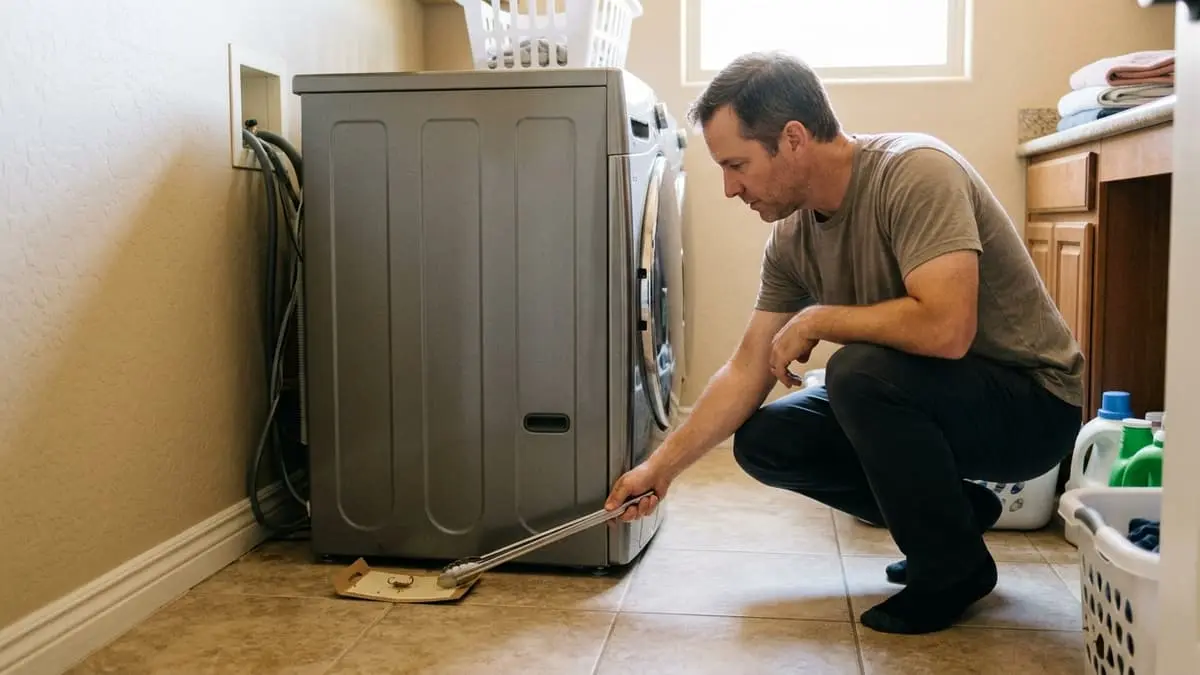
Put traps where small hands and paws can't reach. A glue trap grabs whatever touches it, including a toddler's hand, a cat's paw or a dog's nose.
I'd use spots like these:
- The space behind the washer
- Under furniture too low for a dog
- Inside cabinets with child locks
- A garage the kids don't play in
If a trap has to go in a room the kids use, put it where they can't get to it.
UA suggests teaching kids not to touch scorpions and to tell an adult. I'd add the traps to that rule.
If Your Pet Gets Stuck on a Glue Trap
Call your vet or an emergency animal hospital. Then pick up any other traps in that room.
How to Remove a Trap With a Scorpion on It
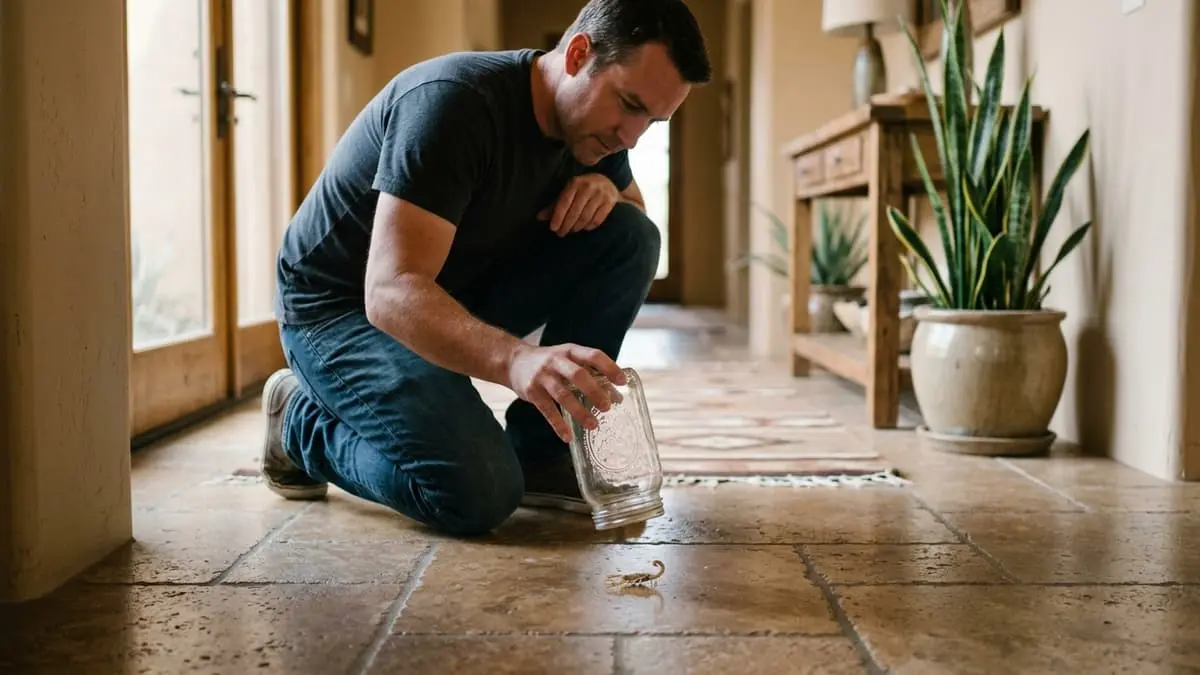
Handle the scorpion as if it can still sting, and lift the trap by the far edge with gloves or long tongs. UA says most stings happen when someone grabs, presses against or steps on a scorpion by accident, and it suggests long tongs for collecting them.
Fold the trap over on itself before it goes in the trash. Replace any trap that's covered in dust or bugs, since there's little sticky surface left.
Check your traps every few days and write down where and when each catch turned up. After a few weeks, that list shows you which doors and rooms need work.
If you find a live one on the tile instead of on a trap, here's what to do when a live scorpion turns up. And if a catch has you asking, does one scorpion mean there's a nest in the walls?
Glue Traps Near Paradise Valley Washes After Monsoon Rains
If your lot backs onto a wash, check the traps on that side of the house after summer storms. UA says scorpions move when irrigation or monsoon rains flood their hiding spots, and that homes near dry washes can see more of them during summer rains.
The Town has an extensive wash system, including the Berneil Wash corridor, which is Town open space. The traps facing a wash will show you what's moving after a storm.
Questions About Glue Traps for Scorpions
A glue trap only catches scorpions that walk across it, so it won't catch one on the wall or keep them out of the house. I couldn't find research on how many to set.
Will a glue trap catch a scorpion on the wall?
Only if it comes down and walks across the trap. UA says bark scorpions climb walls and cross ceilings.
How many glue traps do I need?
I couldn't find research that gives a number. I'd start with one at each outside door plus the garage, laundry room and bathrooms, then add more where the catches pile up.
Do glue traps keep scorpions out of the house?
No. They catch scorpions that are already moving through. UA puts pest-proofing first: door sweeps, weather-stripping and sealed openings.
Call Us for a Blacklight Check When the Traps Keep Filling
If your indoor traps keep catching scorpions, call us for a nighttime blacklight check. At that point you're regularly finding them inside, and that's when UA says to bring in a pest management professional who's experienced with scorpions.
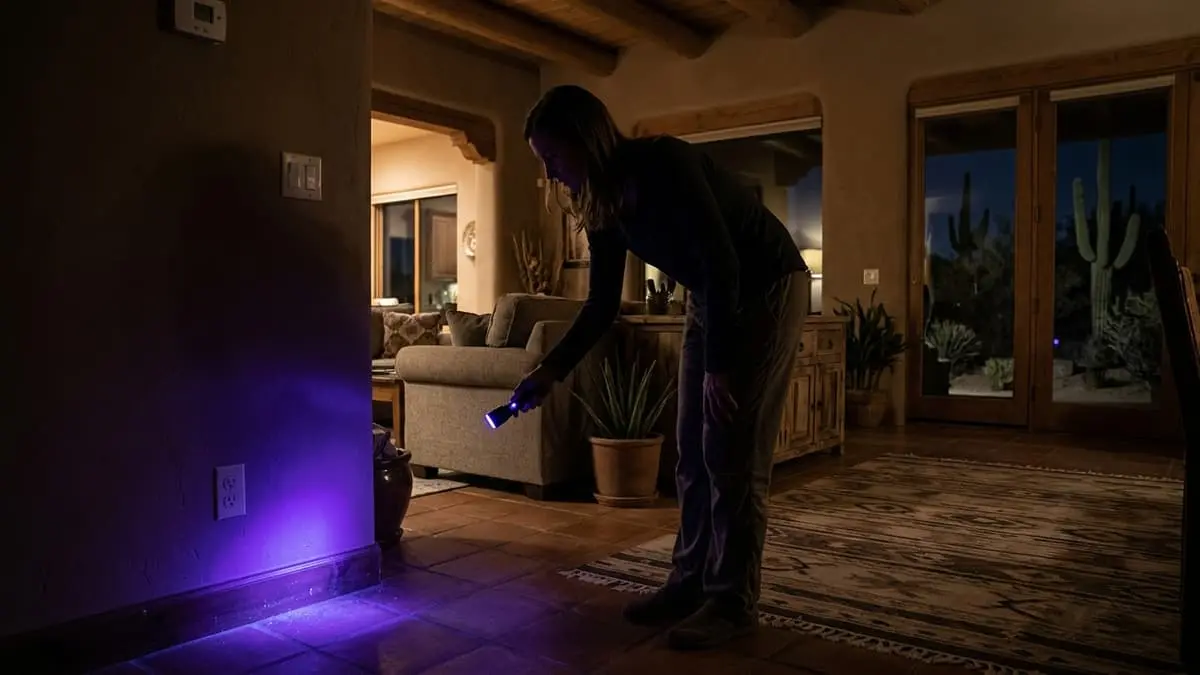
A trap shows you one scorpion in one spot. A blacklight shows you the whole wall, because UA says scorpions are very visible under black light from several yards away.
That's where we come in with help with scorpions around the Town. Call us and ask for a UV walk-around of your walls after dark, and we'll come out, light up the walls and show you where they live and how they're getting in. For how that fits with sealing and treatment, here's the bigger plan for getting rid of barks.