Do Scorpions Build Nests? Bark Scorpions Don't
No, bark scorpions don't build nests. They hide in tight, dark gaps, and a lot of them can end up in the same one.
"Nest" is still the word most people use, and it's easy to see why. You find one in the hallway, then another in the bathroom a week later, and it feels like there must be a home base behind the drywall.
Where Bark Scorpions Hide During the Day
During the day, bark scorpions tuck into cracks and crevices: inside walls, under rocks, logs and tree bark, and in small animal burrows. The University of Arizona (UA) includes the hollow spaces inside a building's walls on that list.
UA also names these spots around a house:
- Potted plants
- Patio clutter
- Door mats
- Narrow cracks in wood or cement
None of those is a nest. They're places to wait out the day.
What Looks Like a Nest: Groups in Block Walls and Wall Voids
What looks like a nest is usually a crowd sharing one good shelter. UA says bark scorpions aren't territorial and often live together, sometimes packed in tight where food is plentiful.
Hollow Block Walls Hold the Most
In research UA cites, 95% of bark scorpions chose hollow block walls over every other shelter around buildings and yards. UA says they get in through narrow cracks, and the blocks protect them from heat and cold and can hold water after rain.
Here's more on why hollow block walls hold so many.
Inside Your House's Walls
Once a scorpion gets into a wall, UA says, it can travel through the building and come out around electrical faceplates, pipe collars and similar openings. That's how one ends up in a room nowhere near a door.
Winter Clusters
From November through March, bark scorpions are less active, and in the coldest stretches they cluster in sheltered, undisturbed spots. That's the closest thing to a nest you'll find.
Those clusters sometimes turn up during winter remodeling or when a block wall comes down. That comes from what UA Extension found about where barks shelter.
A Cluster of Baby Scorpions Is a Mother, Not a Nest
A clump of tiny scorpions is most likely one mother with her young. UA says bark scorpion mothers give birth to about 25 to 35 young on average, and the babies ride on her back for one to three weeks.
That's one family. It still means a mother found her way into your house, so I'd want to know how.

What One Scorpion in the House Means: It Found a Way In
One scorpion means there's a way in, and it doesn't tell you how many more there are. UA lists the usual entry points:
- Under and around doors that don't fit tight
- Window vents
- Openings under exterior walls
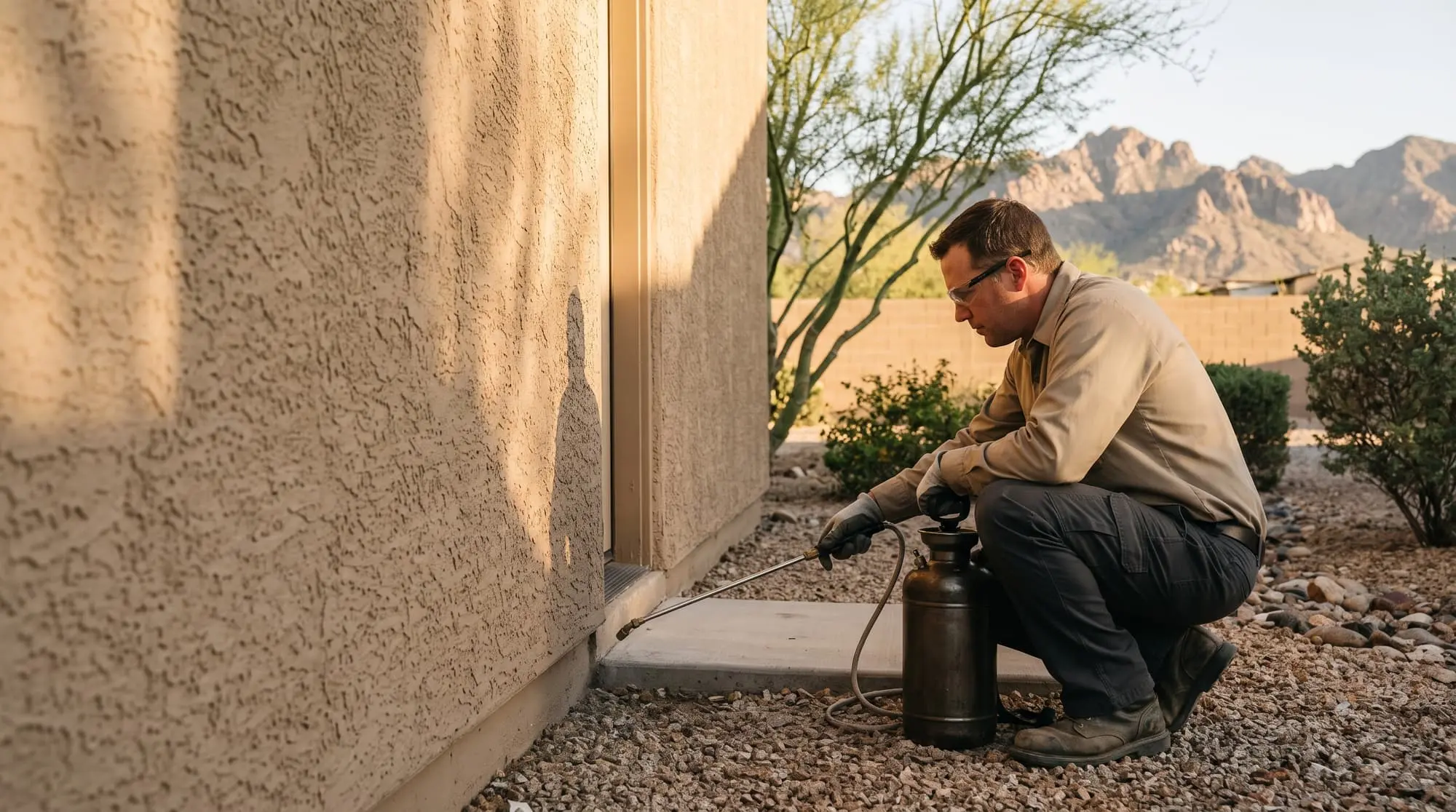
- The weep holes along the bottom of stucco walls
Check Your Doors With UA's Light Test
Look at each closed door from inside. If you can see daylight around the edges, UA says it needs a tighter sweep or new weather-stripping.
Where You Found It Points to Why
Here's what I'd read into where it turned up:
- In the bathroom or laundry room, it was probably after moisture. Banner Health's poison center says people often run into them in damp rooms, hiding in towels and clothes left on the floor.
- In a tub, sink or bed, it may have dropped from above. UA says bark scorpions climb walls and cross ceilings, can fall into beds, sinks and tubs, and may not be able to climb back out of a sink or tub.
- In a room with no outside door, it may have come through the wall, out around an outlet or a pipe.
One Sighting Doesn't Tell You How Many
A single scorpion can't tell you whether there are a few or a lot. UA says typical foraging around buildings is under 35 yards a night, so the one in your kitchen most likely lives close by.
Numbers also vary a lot from house to house. UA says populations run higher where water and prey are plentiful, such as irrigated yards and old washes.
How to Check for More Scorpions: Use a Blacklight
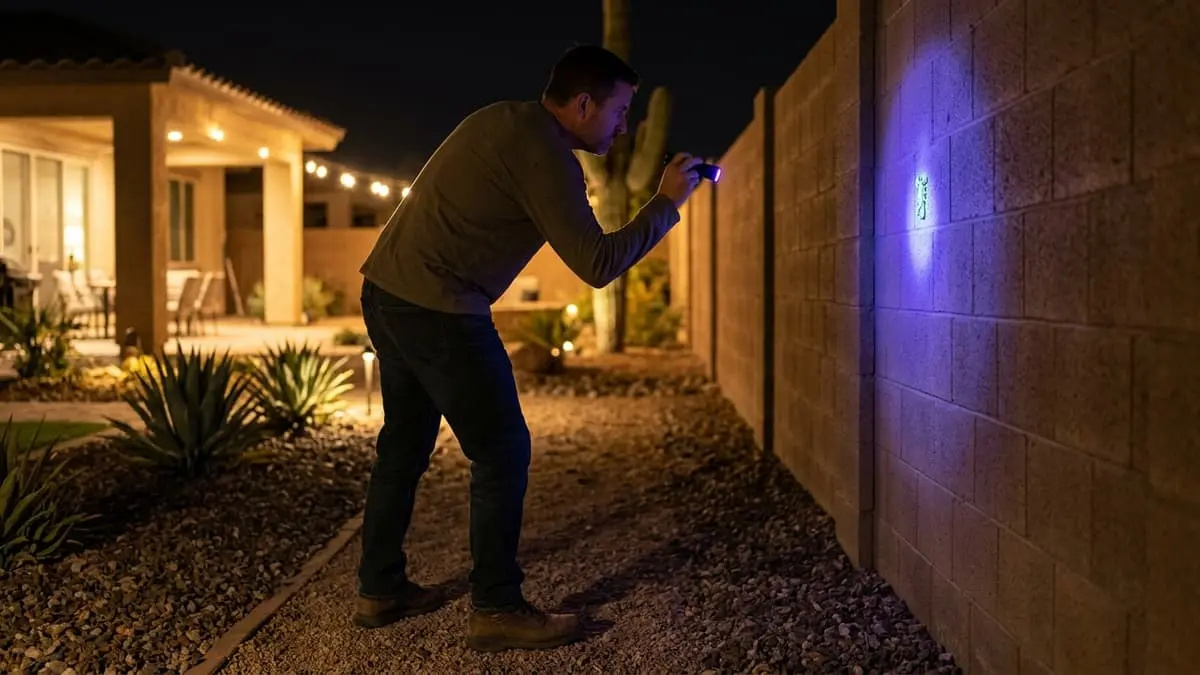
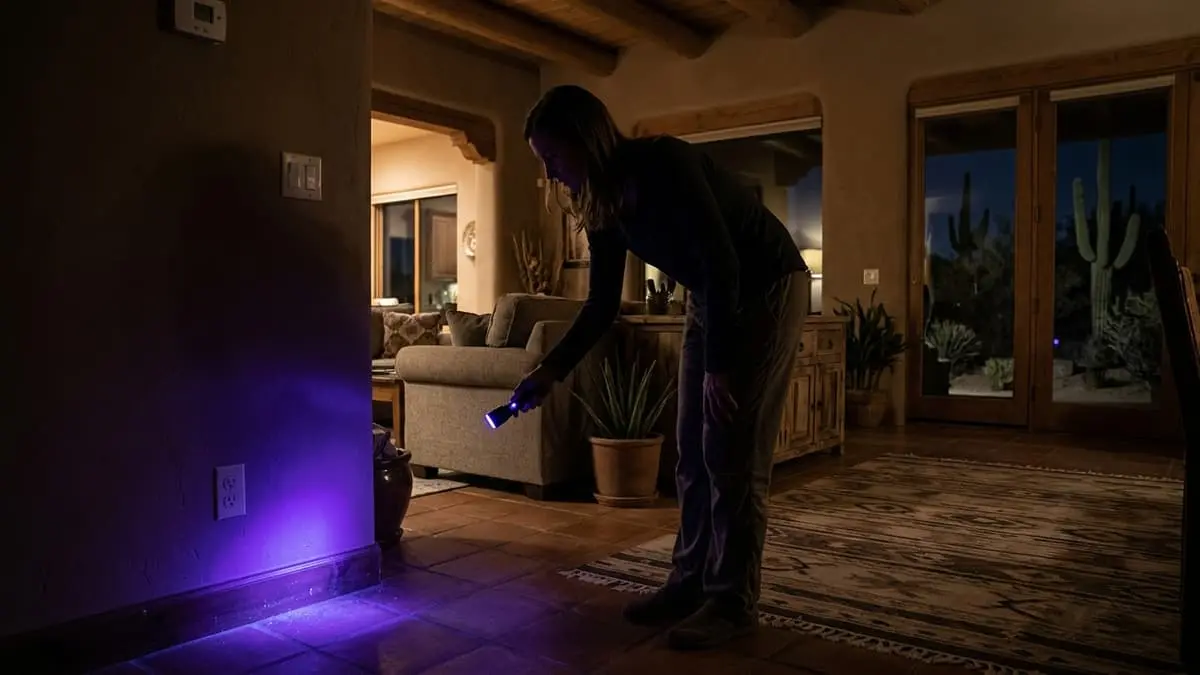
A blacklight is how you find out, because scorpions glow under UV light. UA suggests a UV check inside before bed, so walk the baseboards, the bathroom and the laundry room, and look up at the ceiling corners.
Outside, UA's summer window for UV collections is 8 to 11 pm. Start at the block walls and the base of the house. If you've never done it, here's where to shine the light on a summer night, and how to do it without putting your hands or eyes at risk.
Write down where, when and how many. If they keep turning up in the same spots, that's where they're getting in or where they're living.
If you went years without seeing one and now you're seeing them often, read when they seem to show up out of nowhere to see what usually changed.
Why Paradise Valley Lots Can Hold So Many
An irrigated acre can hold far more scorpions than open desert. UA says homes with irrigated landscapes can support much higher scorpion populations than desert wildland, and most of the Town is zoned for lots of at least an acre.
Add a block wall, boulders, or the rock on Mummy Mountain or the north slopes of Camelback Mountain, and a Paradise Valley lot has plenty of shelter without anything you'd call a nest.
Questions About a Scorpion Nest in the House
If you're worried about a nest, these answer whether scorpions can live inside your walls, whether opening a wall helps, and what a single scorpion tells you.
Can scorpions live inside my walls?
Yes. UA lists the hollow spaces inside a building's walls among their daytime hiding spots, and says they can travel through walls and come out around outlets and pipe openings.
Should I open up the wall to find the nest?
No, there's no nest to dig out. I'd spend the time finding how they're getting in, starting with door gaps, weep holes and pipe openings.
Does one scorpion mean I have an infestation?
Not on its own. It means one got in. If you keep finding them inside, UA advises calling a pest management professional who's experienced with scorpions.
Finding Them Every Week? Call Us for a Blacklight Inspection
If you keep finding scorpions inside, call us. UA says that if you regularly find scorpions inside your home, it's time for a pest management professional who's experienced with scorpions.
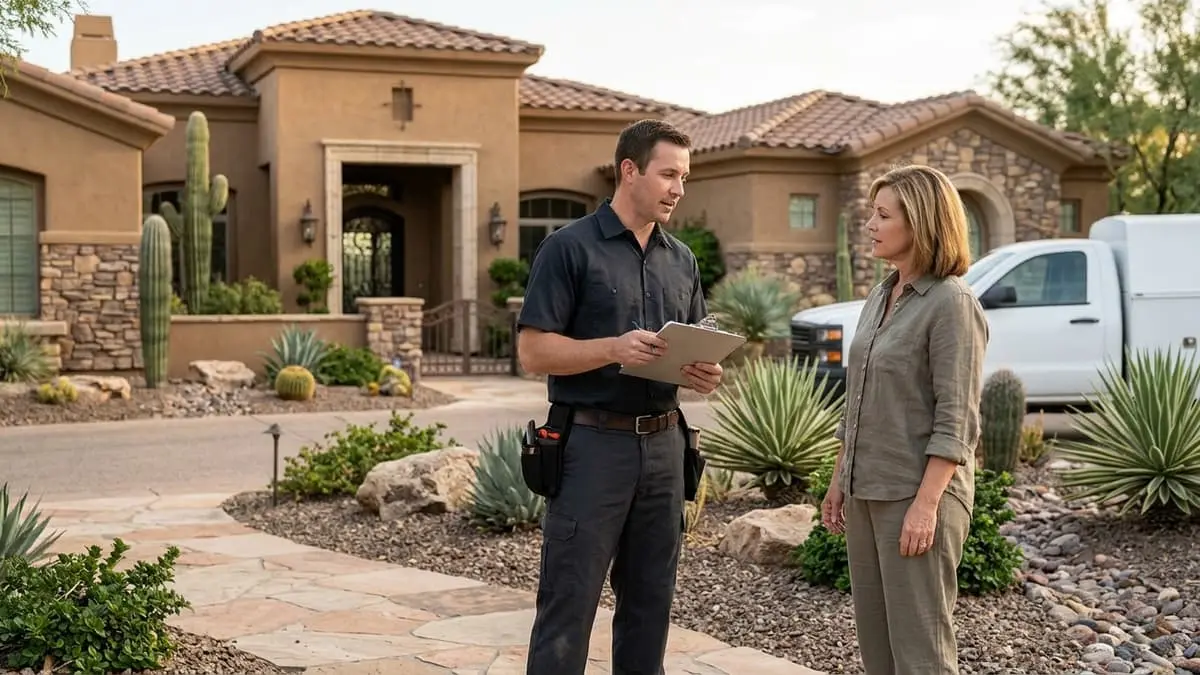
We handle scorpion control here in 85253, and it starts with finding where they live. Call us to find out where exactly they're living on your lot. We'll come out after dark and check the walls, the yard and the ways in.
To see what comes after that, here's how a treatment visit runs, start to finish. For the order to do things in, see what actually brings the numbers down.